
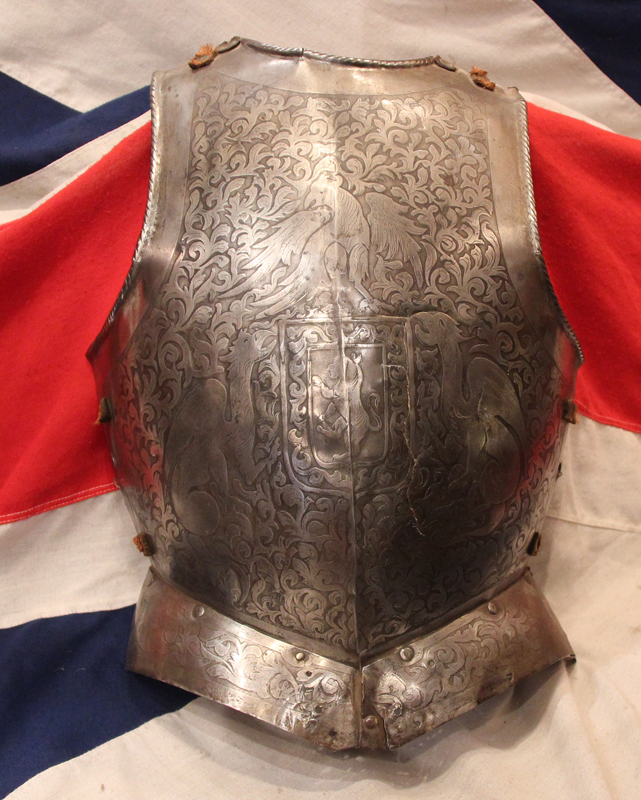
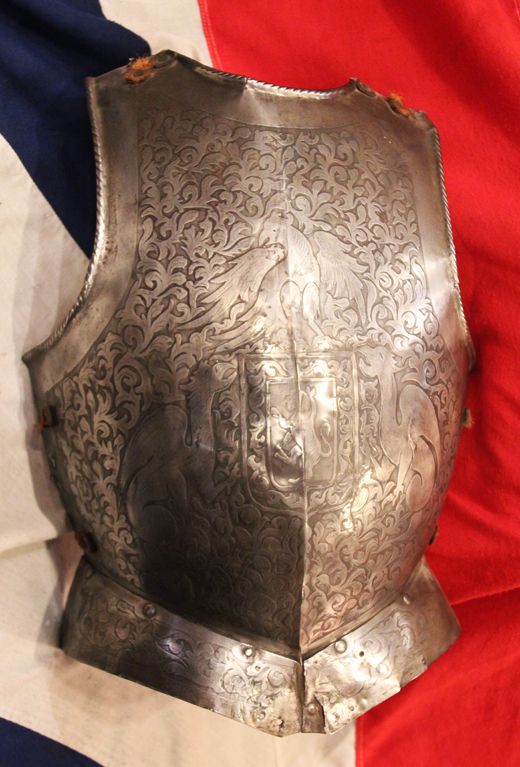
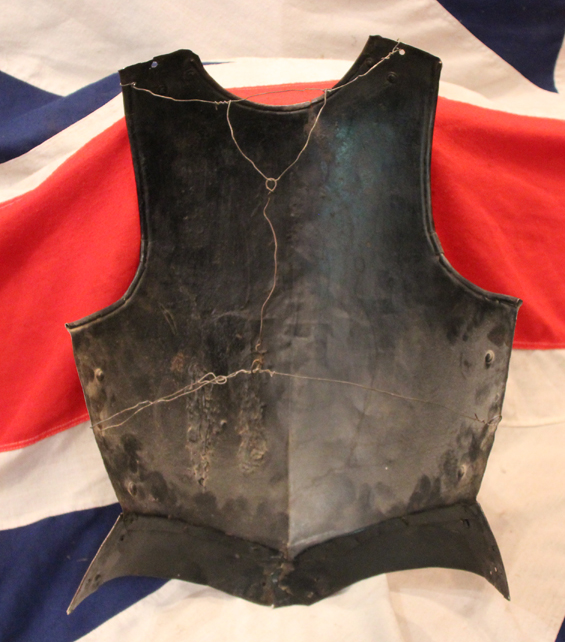
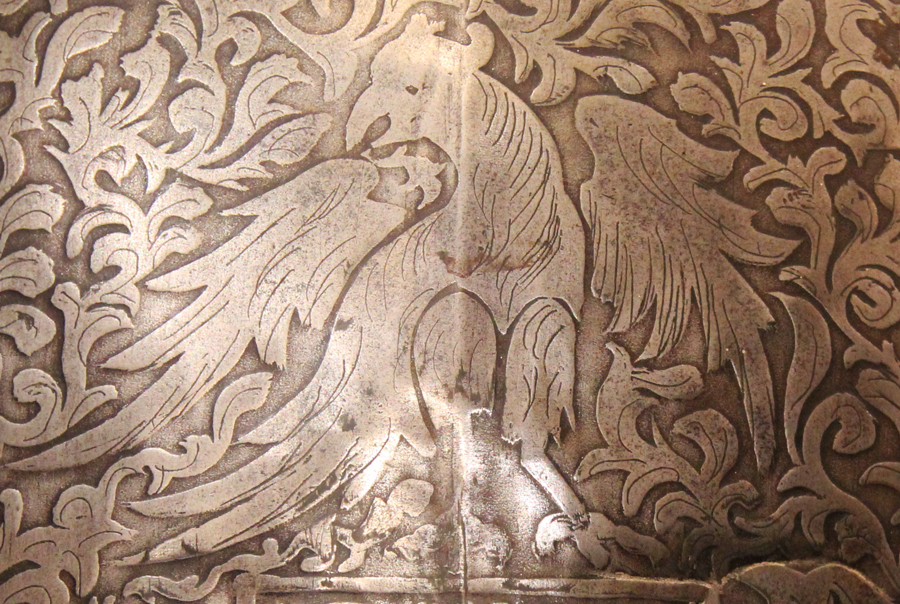
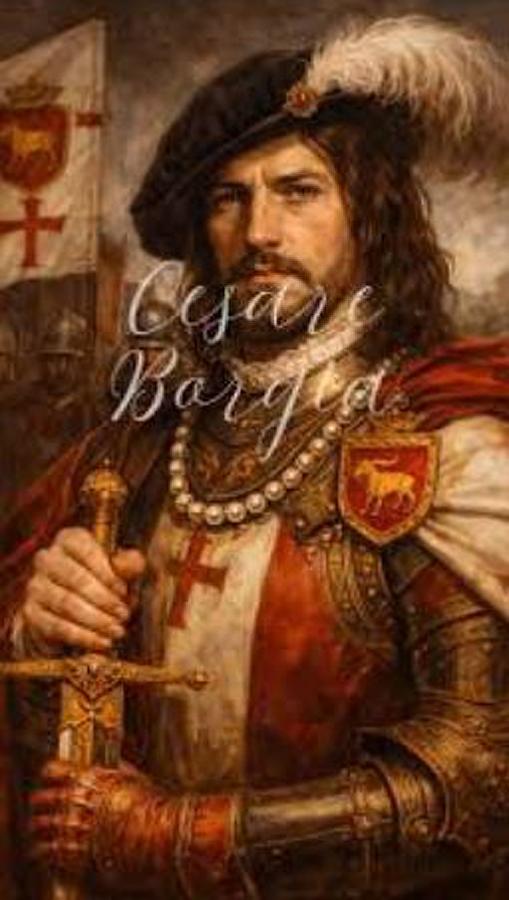
A Fine Renaissance Heraldic ‘Grand Tour’ Antique Armour. Armour Breastplate Stunningly Etched With Heraldic Beasts, The Form of Armour Worn by Renaissance Noblemen From The Era Of the Borgias. Such as Cesare Borgia.
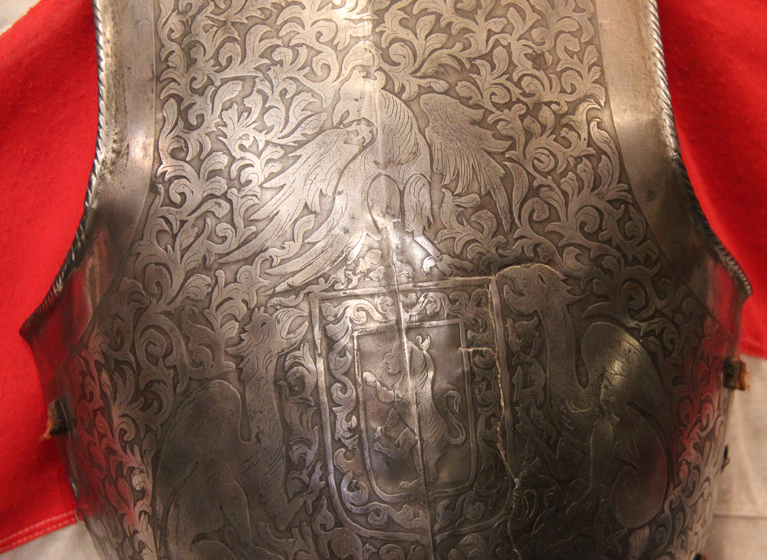
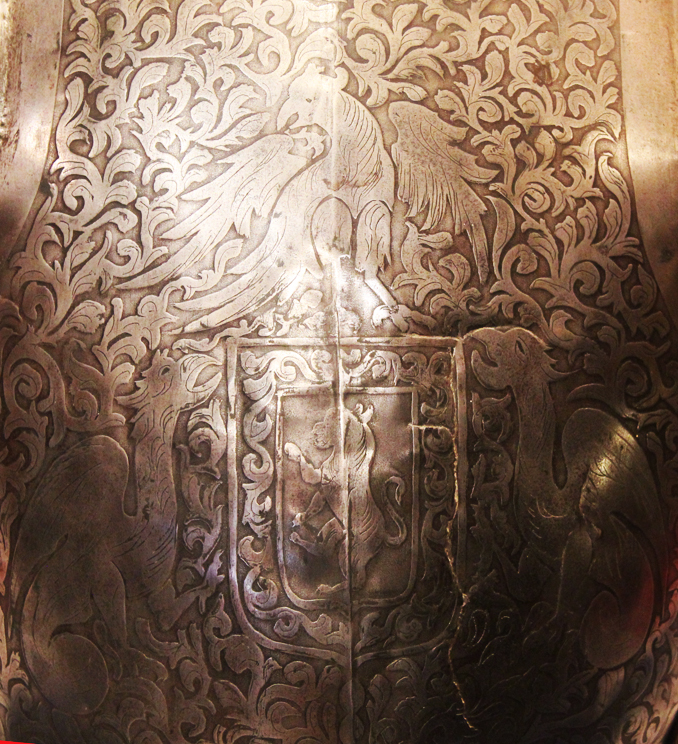
A beautiful piece of chest parade armour, with an etched crest of nobility comprising three winged Griffins and a central Lion rampant within a shield. The Griffin (or Gryphon) is a legendary creature with the body of a lion and the head and wings of an eagle. Combining the attributes of the "King of the Beasts" and the "King of the Air", it was thought to be especially powerful and majestic.
A fabulous object d’art from the early ‘Grand Tour’ era, when young members of the nobility travelled around Europe and acquired classical art, original antiquities and all form of stunning ‘Grand Tour’ pieces. The were representations ‘after’ the original classical antiques, from Ancient Rome, Greece and the Italian Renaissance.
In the right location this stunning breastplate armour will look magnificent. One could create a 'stand of arms' with a pair of crossed swords mounted behind the armour
It was in this era that great Continental tourists and travelers such as Lord Byron, Percy Bysshe Shelley, his wife, Mary, and John William Polidori, travelled Europe and took up residence in palatial villas on the Swiss and Italian lakes. It was during such a tour, by those just mentioned, who were in their ‘Grand Tour’ years, while in their villa on Lake Geneva, in the Year Without Summer’ in 1816, wrote, one stormy night, The Vampyre {by Polidori} and Frankenstein, The Modern Prometheus, {by Mary Shelley}. Bearing in mind this was merely by means of a distraction from the poor weather. Can you imagine, the stratospheric talent of such like, that two of the greatest origin stories of horror, ever written, and still as read and performed in the performing arts, as much today as they were 200 years ago, were created in the same house, by two English travellers, at the very same time, and as a mere ‘distraction’ due to boredom.
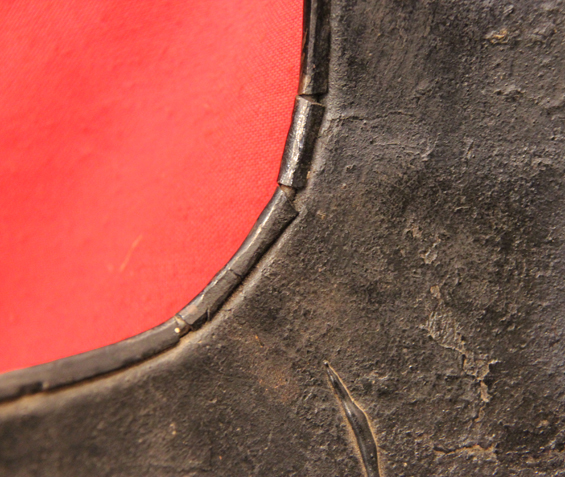
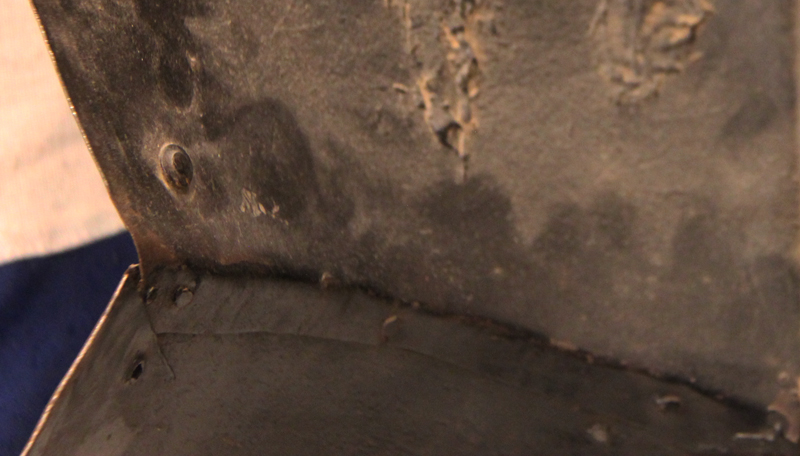
A light armour breastplate, 16th century style in the manner of the 1550's, with old restoration, 19th century and earlier.
Parade armour became an elaborate and ornate Renaissance art form intended to both glorify war, and flatter the military prowess of the royal subject. Surviving examples include decorated shields, helmets, and full suits of armour. Delaune was an important contributor to the form, and Henry II of France commissioned a number of similar works, including a panel for his horse, and some bucklers (shields) now in the Louvre, both by Delaune. In addition surviving works for Henry include a full suit at the Museum of Ethnology,
In the ‘Grand Tour’ era of 19th century France such pieces of fine art were created for the highly classical ‘after the antique’ market. Such as gilt bronze miniature copies of ‘Napoleons’ column in Place Vendome, and small yellow simulated marble versions of Ancient Greek and Roman columns and arches, and architectural features, and sometimes whole structures, such as Cleopatra’s Needle. Bronzes and marbles ‘after the antique’ of busts of Roman Emperor’s, and elegant statuary. Companies such as Granger of Paris, that worked in the 1840's, created wonderful miniature suits of armour, mounted on horse armour or free standing, and they are of incredibly detailed quality. Such pieces by Granger are in such incredible demand, by collectors or interior decorators, that can they achieve values in the tens of thousands of pounds, even approaching six figures today, and for most that are no more than two feet or around 50 cms high complete. Wondrous full size armour was also created, such as extravagant armour helmets from the Renaissance, the designs made fore the kings of France in the 16th century. Also shields, gauntlets, and gorgets exactly as this fabulous piece. That were ideal for classical art displays and interior décor of the finest Georgian country estates, and the glorious Palladian terraced mansion houses in the cities, such as London, Edinburgh, Bath and Brighton.
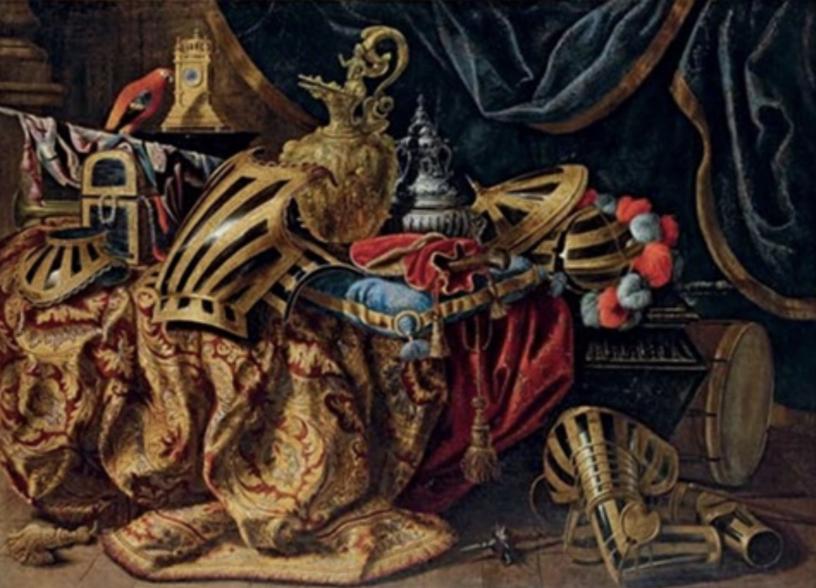
Last picture in the gallery is a painting by
Madeleine Boulogne (French, 1648–1710)
Titled;
Pieces of parade armour, a plumed helmet, a pistol in a case, a gilt ewer, a silver perfume burner, a jewellery box, a trumpet and a flag on a partly-draped cassone. 18.5 inches x 14.5 inches
Code: 21569
1650.00 GBP