
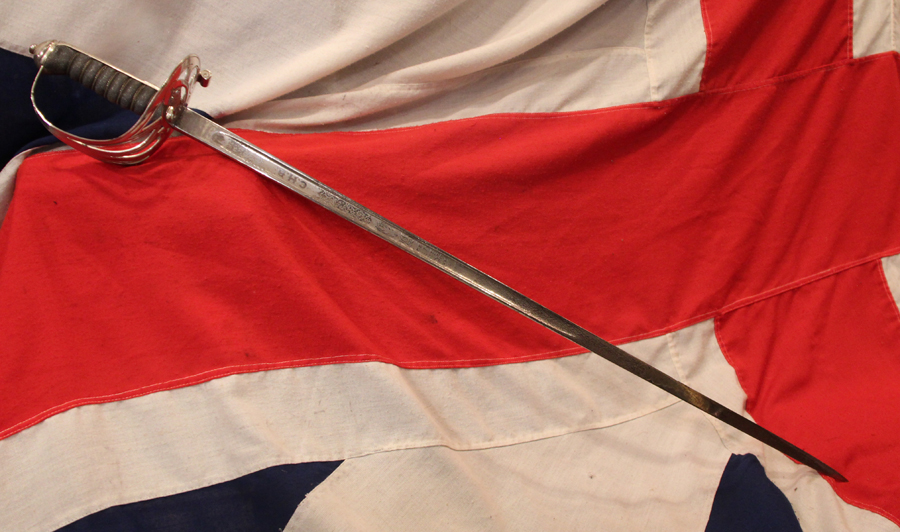
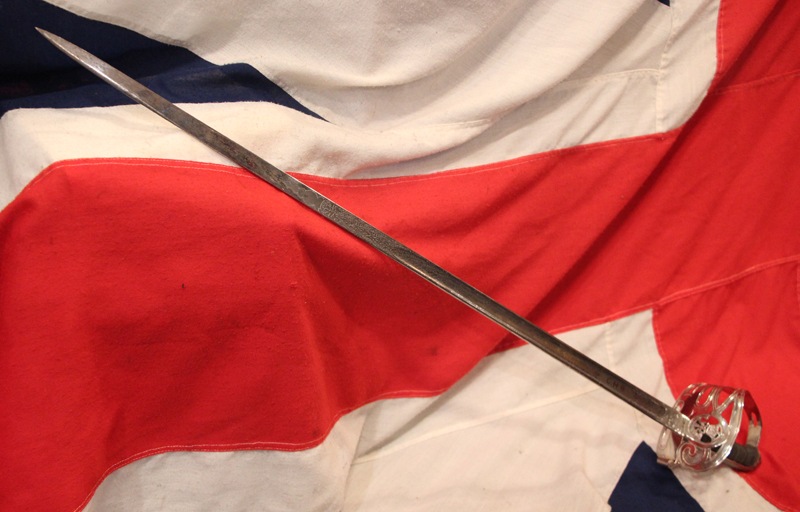
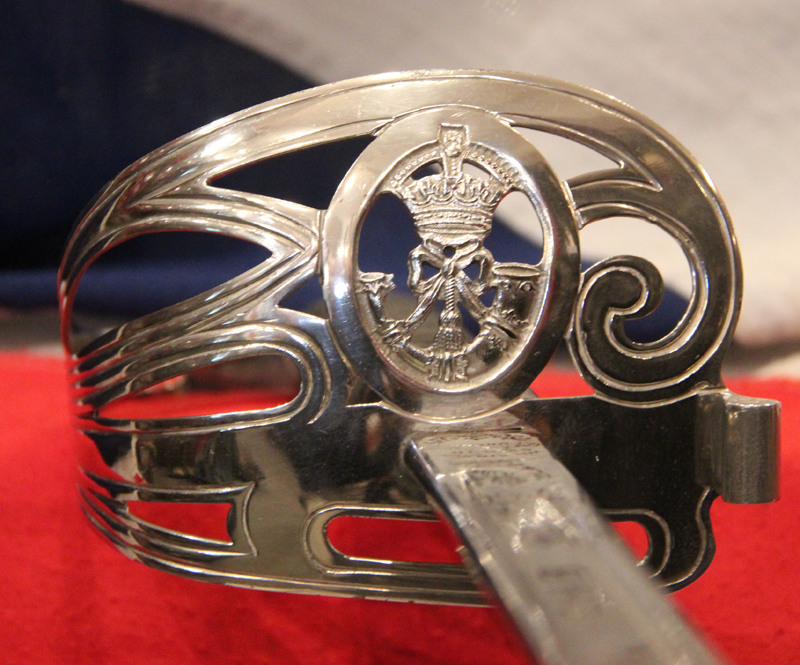
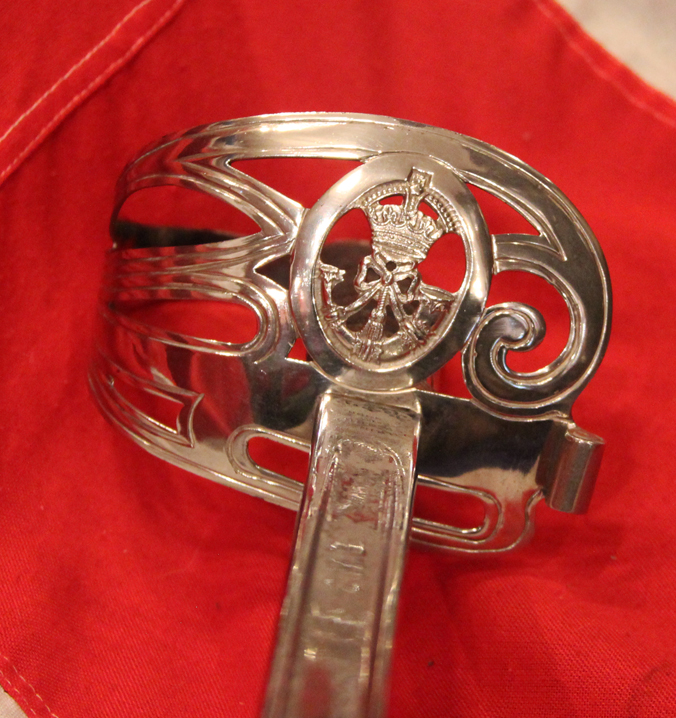
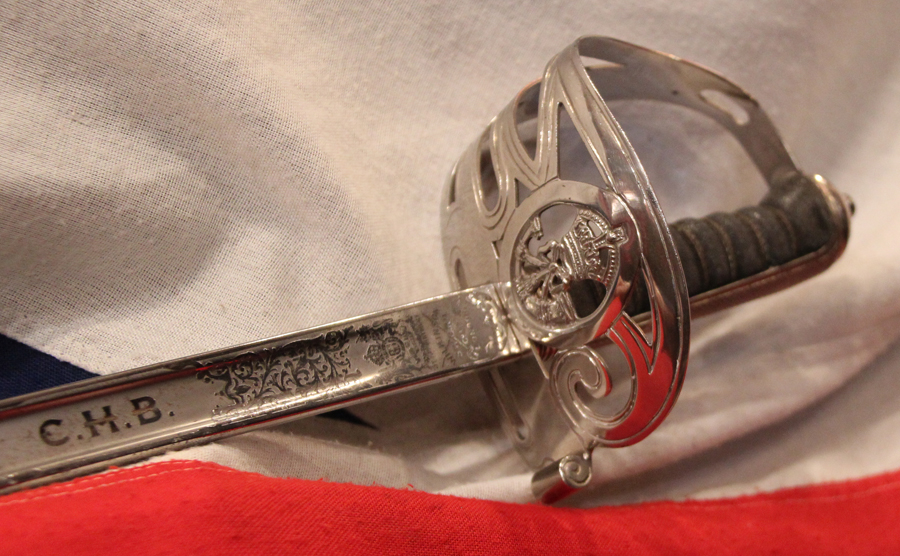
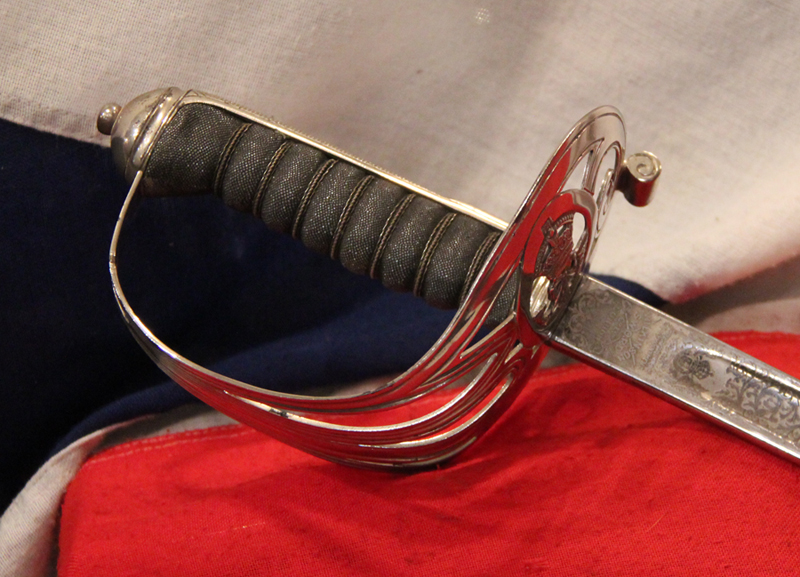
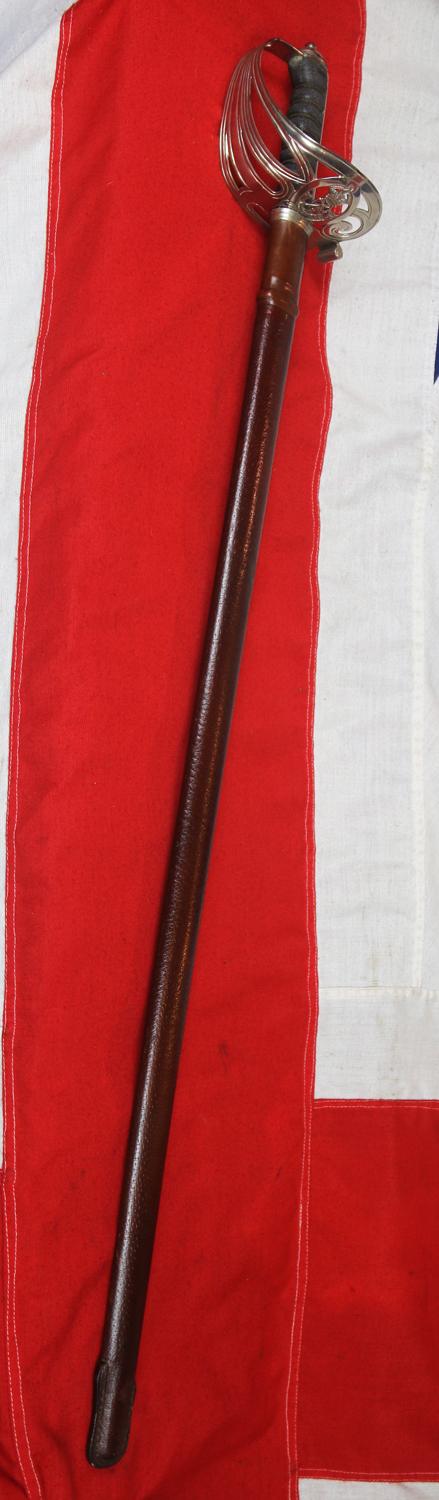
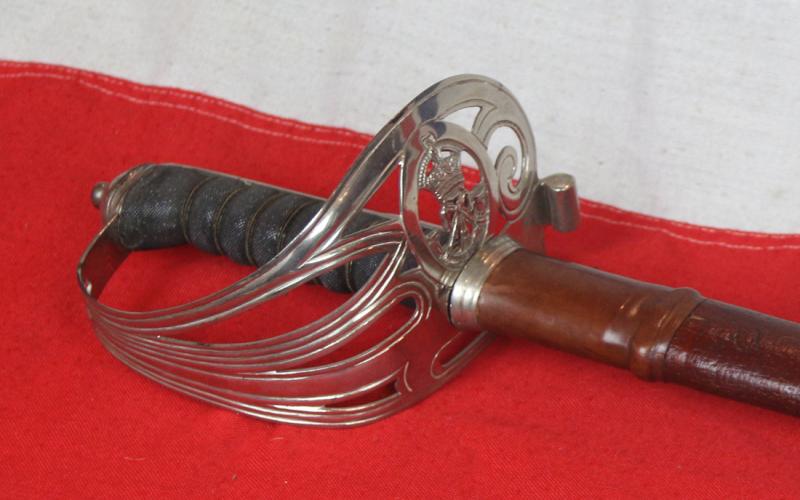
Stunning & Very Rare Kings Royal Rifles Corps Officer's 'Battle Honour Blade' Presentation, Wilkinson Sword Co. Combined Combat and Dress Sword, Used In WW2. A Deluxe Grade Bespoke Beauty. Ideal For Current Service Use In ‘The Rifles’
This is likely the finest British battle honour bladed sword we have ever had the privilege to acquire and possess. In near mint condition and better than any we have ever seen in the numerous museum collections, such as the National Army Museum and the Imperial War Museum.
The next owner of this sword would be likely the bearer of the finest, historical issue, KRRC {now known as The Rifles} officer’s sword still in existence today. Yet it is ‘parade ground’ ready for any currently serving, or yet due to serve, officer of The Rifles today.
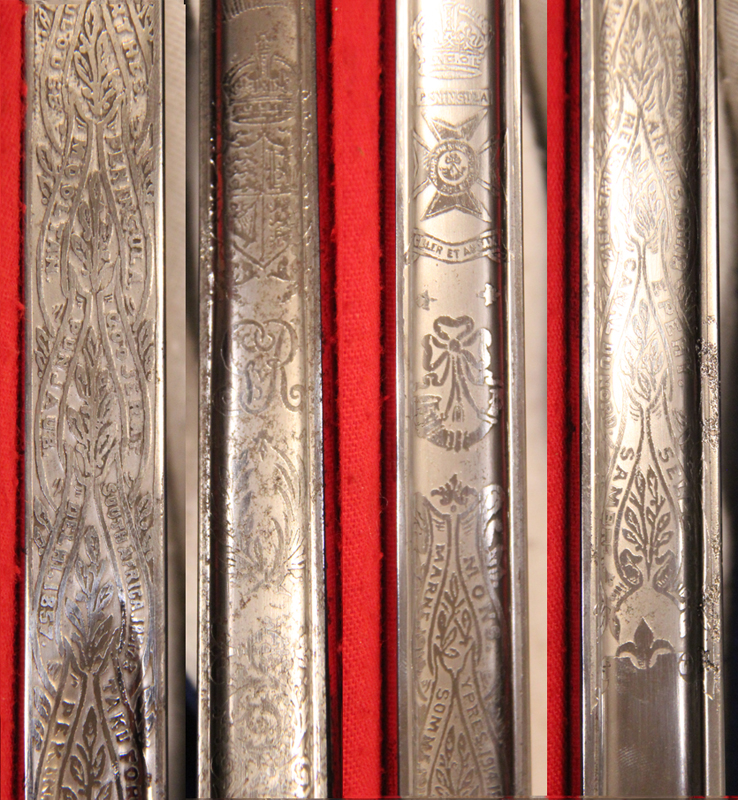
With KRRC battle honour embellished blade, etched with the regiments battle honours awarded to the regiment up to the close of WW1 in 1918. Made in 1931 by Wilkinson Sword Co. and used by an officer in the KRRC through WW2. It is very rare to find a KRRC ‘Battle Honour’ presentation pattern sword, in fact this is the first we have seen in over 20 years.
Despite being almost 100 years old it is still the current service pattern of sword for a Rifles officer today. Especially as it now has the same pattern of hilt currently in use bearing King Charles’ crown { the same crown symbolising his late beloved grandfather King George VIth.}
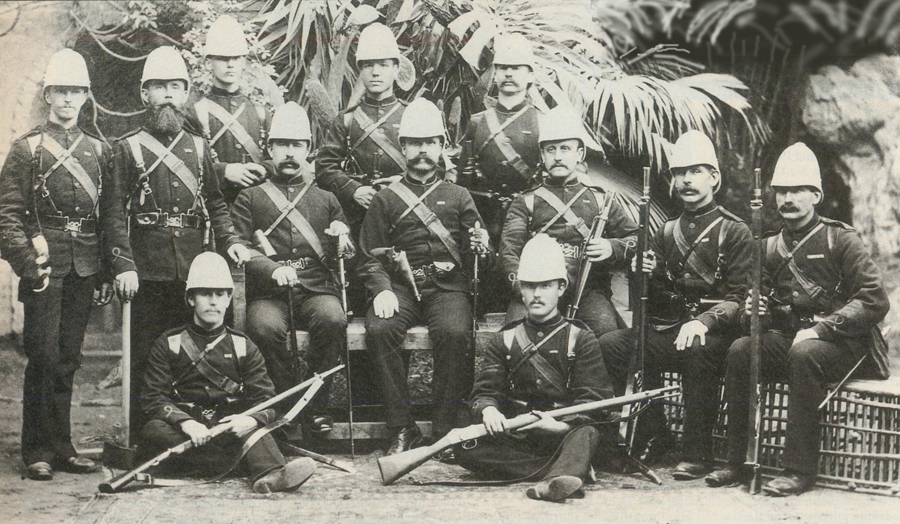
The King's Royal Rifle Corps was an infantry rifle regiment of the British Army that was originally raised in British North America as the Royal American Regiment during the phase of the Seven Years' War in North America known as 'The French and Indian War.' Subsequently numbered the 60th Regiment of Foot, the regiment served for more than 200 years throughout the British Empire.
The King's Royal Rifle Corps (KRRC) served extensively in World War II as a motorized infantry regiment, fighting in France (1940), North Africa, Greece, Italy, and Northwest Europe (1944–45). Key actions included the defense of Calais, the battle of Sidi Rezegh, and operations with armored divisions, winning 41 battle honors.Key Theatres and Battalions:1940 (France): The 2nd Battalion was captured at Dunkirk after fighting in the defense of Calais, while other territorial battalions (Queen Victoria's Rifles, The Rangers, Queen's Westminsters) also served.North Africa (1940–43): The 1st Battalion served with the 7th Armoured Division, and later the 2nd Battalion joined the campaign. They were heavily involved in the motorized, fast-moving, and intense tank battles.Italy (1943–45): 1st and 2nd Battalions fought throughout the Italian campaign, protecting tanks and conducting operations in close, mountainous country.North-West Europe (1944–45): The 2nd Battalion landed in Normandy, fighting in the Battle of Normandy and Operation Market Garden.
In the First World War the 1st Battalion landed at Rouen as part of the 6th Brigade in the 2nd Division in August 1914 for service on the Western Front. It saw action at the Battle of Mons in August 1914, the First Battle of the Marne and the First Battle of the Aisne in September 1914 and First Battle of Ypres in October 1914. It fought at the Battle of Festubert in May 1915, the Battle of Loos in September 1915 and the Battle of the Somme in Autumn 1916 before taking part in the advance to the Hindenburg Line, the Battle of Arras in November 1917, the Battle of Cambrai in November 1917, the Second Battle of the Somme in Autumn 1918 and the Battle of the Selle in October 1918.
The 2nd Battalion landed at Le Havre as part of the 2nd Brigade in the 1st Division in August 1914 for service on the Western Front and saw action at the Battle of Aubers Ridge in May 1915.
The 3rd Battalion landed at Le Havre as part of the 80th Brigade in the 27th Division in December 1914 for service on the Western Front and saw action at the Second Battle of Ypres in April 1915.
The 4th Battalion landed at Le Havre as part of the 80th Brigade in the 27th Division in December 1914 for service on the Western Front and saw action at the Second Battle of Ypres in April 1915 but moved to Salonika in November 1915 before returning to France in June 1918.
New armies
The 7th (Service) Battalion landed at Boulogne-sur-Mer as part of the 41st Brigade in the 14th (Light) Division in August 1914 for service on the Western Front and saw action the Second Battle of Ypres in May 1915, the Battle of Delville Wood in July 1916 and the Battle of Flers Courcelette in September 1916 as well as the advance to the Hindenburg Line, the Battle of Arras in April 1917, the Battle of Langemark in August 1917, the First Battle of Passchendaele in October 1917 and the Second Battle of Passchendaele in November 1917 before taking part in the Battle of St Quentin in March 1918 and the Battle of the Avre in April 1918.
The 8th (Service) Battalion landed at Boulogne-sur-Mer as part of the 41st Brigade in the 14th (Light) Division in May 1915 for service on the Western Front and saw action most of the same battles as the 7th Battalion. The 9th (Service) Battalion landed at Boulogne-sur-Mer as part of the 42nd Brigade in the 14th (Light) Division in May 1915 for service on the Western Front and saw action most of the same battles as the 7th and 8th battalions.
The 10th (Service) Battalion and 11th (Service) Battalion landed at Boulogne-sur-Mer as part of the 59th Brigade in the 20th (Light) Division in July 1915 for service on the Western Front and saw action at the Battle of Mont Sorrel in June 1916, the Battle of Delville Wood in July 1916 and the Battle of Guillemont in September 1916 as well as the Battle of Flers Courcelette in September 1916, the Battle of Morval in September 1916 and the Battle of Le Transloy in October 1916 before taking part in the advance to the Hindenburg Line, the Battle of Langemarck in August 1917, the Battle of the Menin Road Ridge in September 1917, the Battle of Polygon Wood in September 1917 and the Battle of Cambrai in November 1917.
The 12th (Service) Battalion landed at Boulogne-sur-Mer as part of the 60th Brigade in the 20th (Light) Division in July 1915 for service on the Western Front and saw action most of the same battles as the 10th and 11th Battalions. The 13th (Service) Battalion landed at Boulogne-sur-Mer as part of the 111th Brigade in the 37th Division in July 1915 for service on the Western Front and saw action at the Battle of Morval in September 1916, the advance to the Hindenburg Line and the Battle of Arras in April 1917 as well as the Battle of Passchendaele in Autumn 1917, the Battle of Cambrai in November 1917 and the Hundred Days Offensive in Autumn 1918 before taking part in the Battles of the Hindenburg Line and the Final Advance in Picardy.
Seven members of the regiment received the Victoria Cross. Complete with its field service leather scabbard
This below is the full list of the heroic ‘Battle Honours’ awarded to this most noble of regiments/corps.
Battle of Ahmed Khel
Aisne 1914
Albert 1916
Battle of Albuera
Battle of the Argenta Gap
Arras 1917
Arras 1918 (Battle honour)
Battle of Aubers
B
Siege of Badajoz (1812)
Battle of Arleux
Battle of Bailleul
Battle of Beaurevoir
Battle of Bellewaarde
Battle of Bethune
Battle of Courtrai (1918)
Battle of Drocourt-Queant
Battle of Épehy
Battle of Festubert
Battle of Flers–Courcelette
Battle of Frezenberg
Battle of Gheluvelt
Battle of Goojerat
Battle of Gravenstafel
Battle of Kemmel
Battle of Martinique (1762)
Battle of Menin Road
Battle of Nonne Bosschen
Battle of Rosières
Battle of St. Julien
Battle of the Ancre
Battle of the Canal du Nord
Battle of the Hindenburg Line
Battle of Bazentin Ridge
Battle of Broodseinde
Battle of Bussaco
C
Calais 1940
Battle of Cambrai (1917)
Battle of Cambrai (1918)
Chitral Expedition
D
Defence of Alamein Line
Defence of Ladysmith
Delhi 1857
Battle of Delville Wood
E
Egypt 1882
F
First Battle of the Marne
France and Flanders 1914–18
Battle of Fuentes de Oñoro
G
Battle of Gazala
Greece 1941
Battle of Guillemont
H
Battle of Havrincourt
I
Italy 1943–45
K
Kandahar 1880
L
Relief of Ladysmith
Battle of Langemarck (1917)
Battle of Le Transloy
M
Macedonian front
Martinique 1762
Martinique 1809
Battle of Morval
N
Battle of the Nive
Battle of Nivelle
North-West Europe 1940
O
Battle of Orthez
P
Pekin 1860
Battle of Pilckem Ridge
Battle of Poelcappelle
Battle of Polygon Wood
Battle of Pozières
Battle of the Pyrenees
Q
Quebec 1759
R
Battle of Roliça
S
Battle of St Quentin Canal
Battle of Salamanca
Capture of Schwaben Redoubt
Second Anglo-Afghan War
Battle of the Selle
South Africa 1851–53
South Africa 1879
South Africa 1899–1902
T
Battle of Talavera
Battle of Tell El Kebir
Battle of the Ancre Heights
Battle of the Sambre (1918)
Tobruk 1941
Battle of Toulouse (1814)
V
Battle of Vitoria
Y
Ypres 1914
Ypres 1915
Ypres 1917
A best quality modern example available today would cost ‘from’ £1450 but would not have the Battle Honour presentation blade, and naturally possess no antique historic value at all.
However, 21 years ago when Wilkinson Sword Co. ceased the manufacture of all sword making, a presentation, bespoke, Battle Honour sword would cost well north of £2000. plus vat.
Code: 22171
1150.00 GBP