
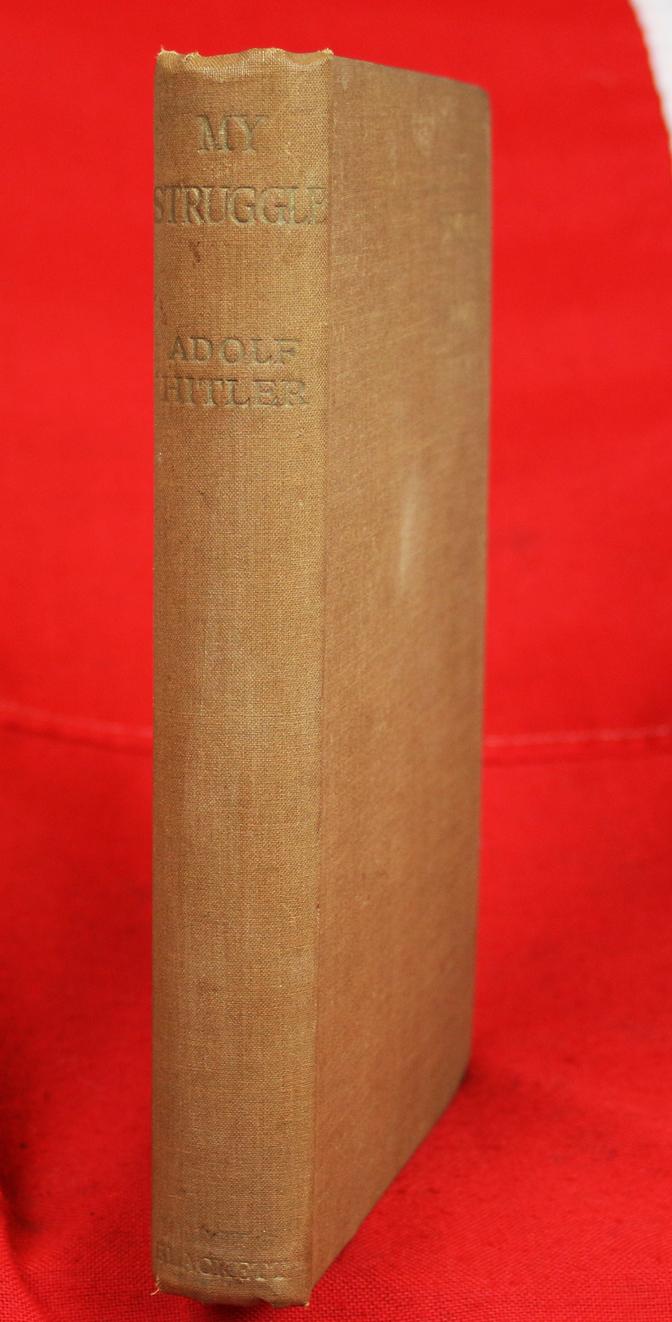
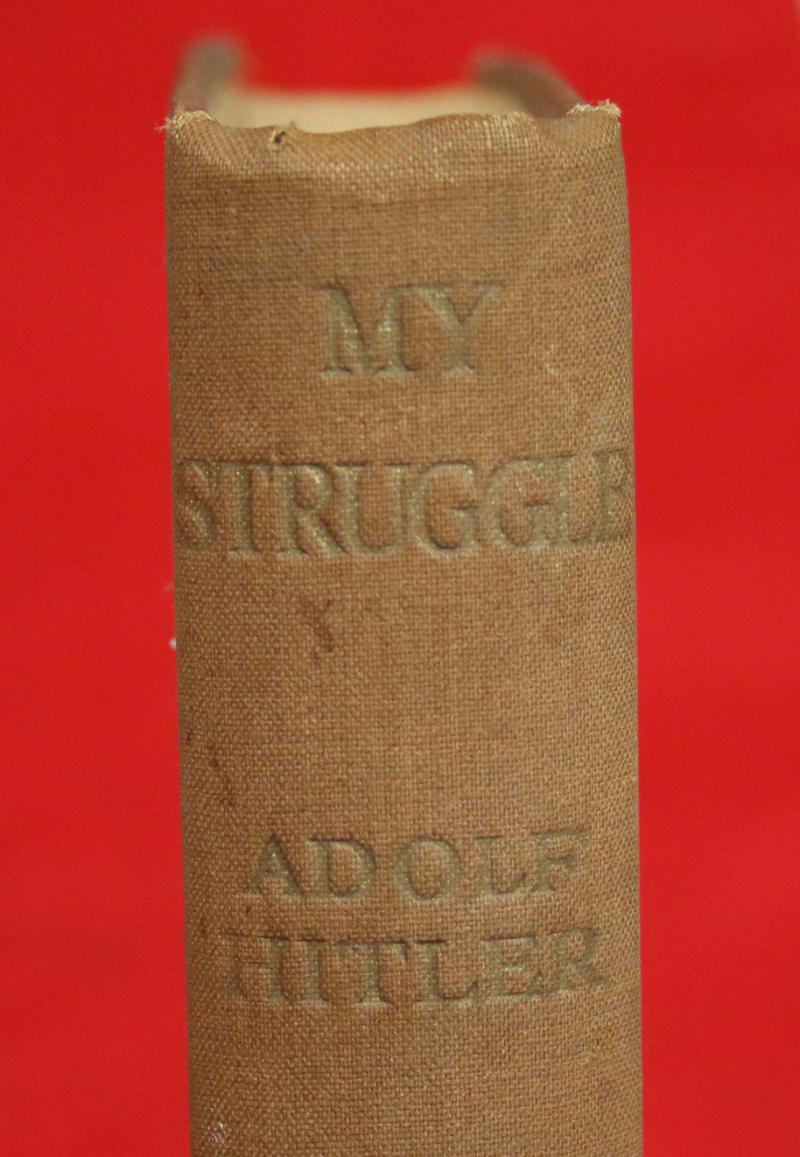
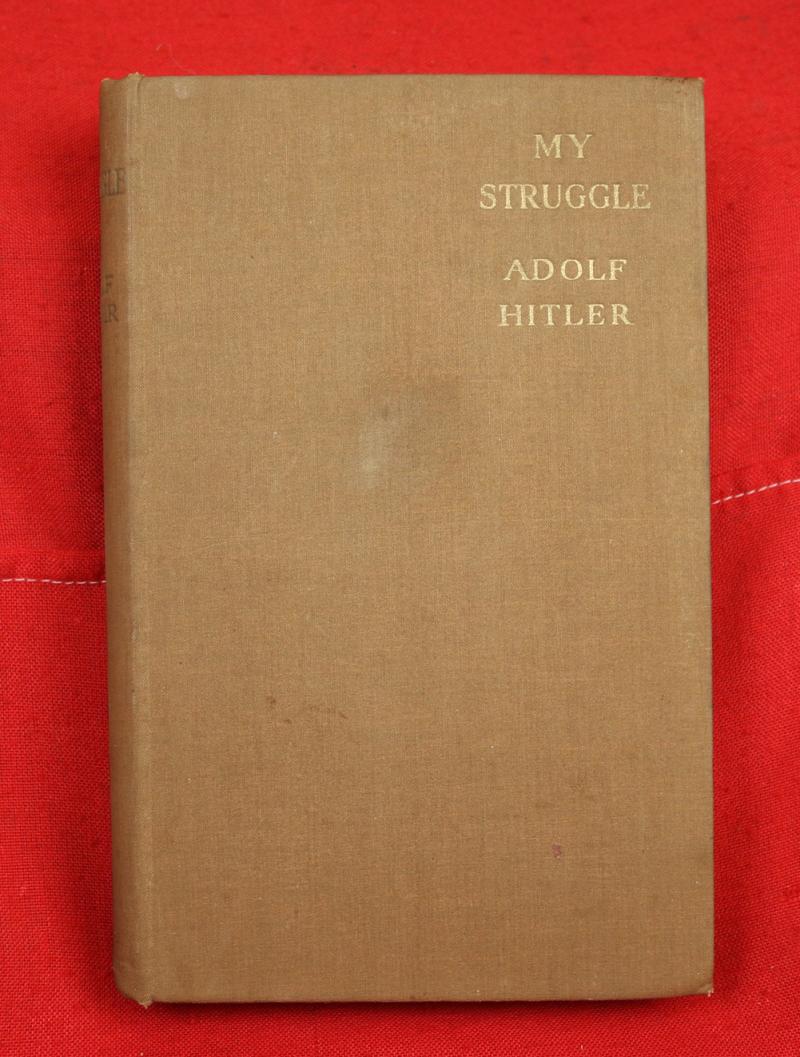
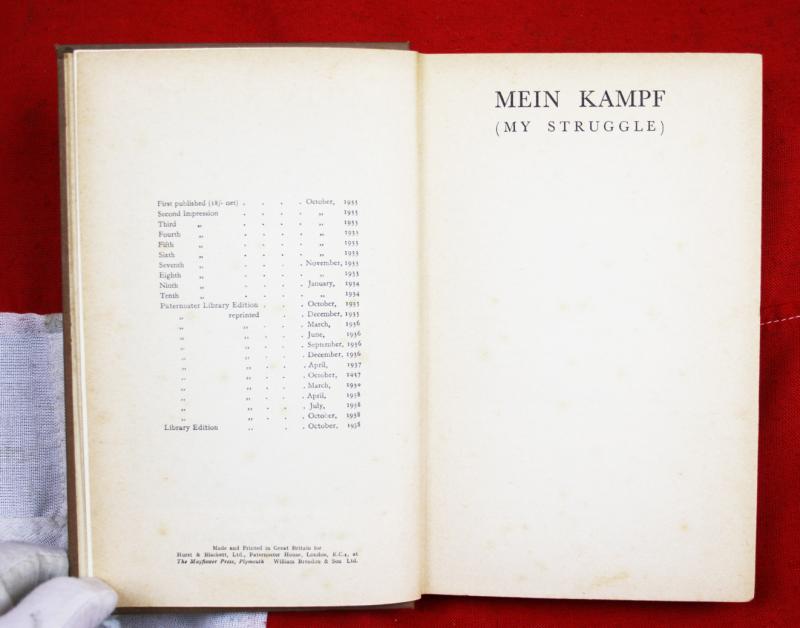
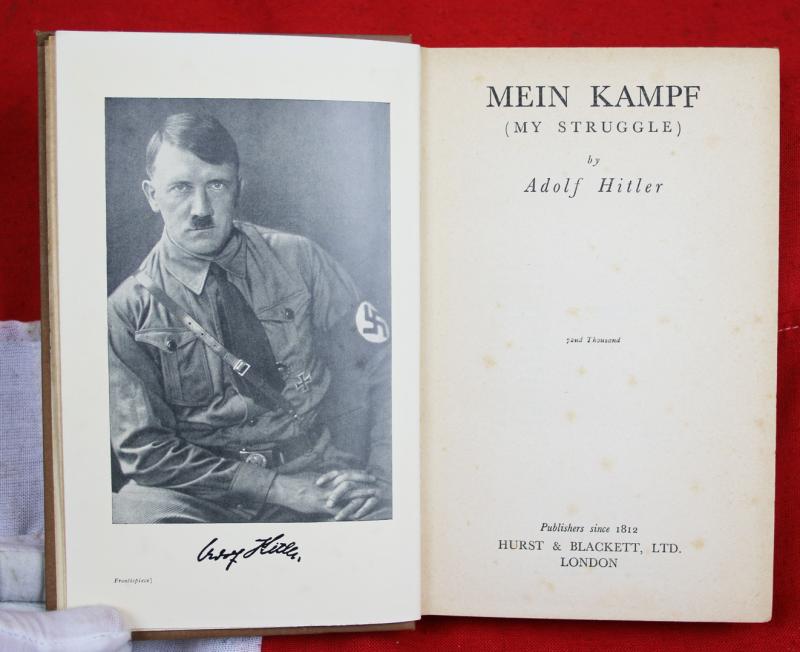
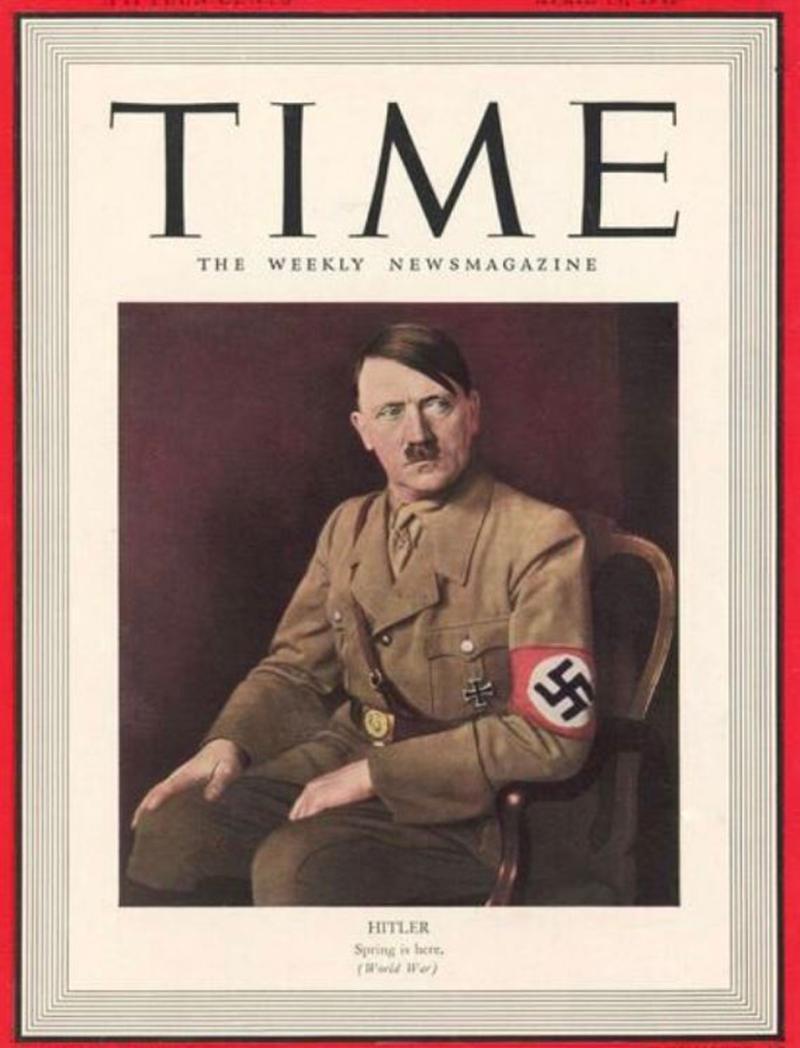
English Translation of Mein Kampf by A. Hitler, My Struggle. Published by Hurst and Blackett. 1938, The Year Hitler Was Named Time Magazine's "Man of the Year"
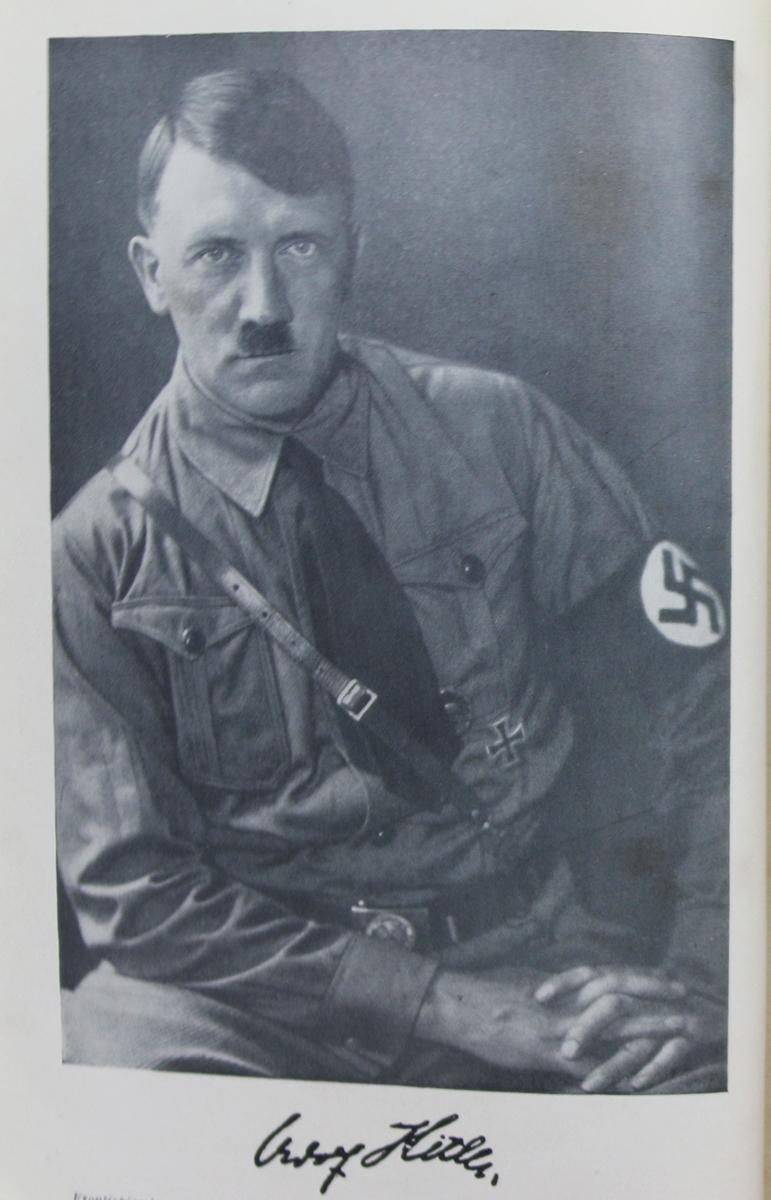
First library edition, October 1938. Published in London by Hurst and Blackett. With author's photograph and publication autograph signature, and a further publication signature to the Author's Forward.
Very good condition for age, usual yellowing to pages.
Hurst and Blackett.
In October 1933, just nine months after Hitler rose to power in Germany, started to publish, in English, Hitler's infamous biographical book, Mein Kampf. Probably the most famous biography in publishing history.
Hitler began dictation of the book while imprisoned for what he considered to be "political crimes" following his failed Putsch in Munich in November 1923. Although Hitler received many visitors initially, he soon devoted himself entirely to the book. As he continued, Hitler realised that it would have to be a two-volume work, with the first volume scheduled for release in early 1925. The governor of Landsberg noted at the time that "he hopes the book will run into many editions, thus enabling him to fulfil his financial obligations and to defray the expenses incurred at the time of his trial."
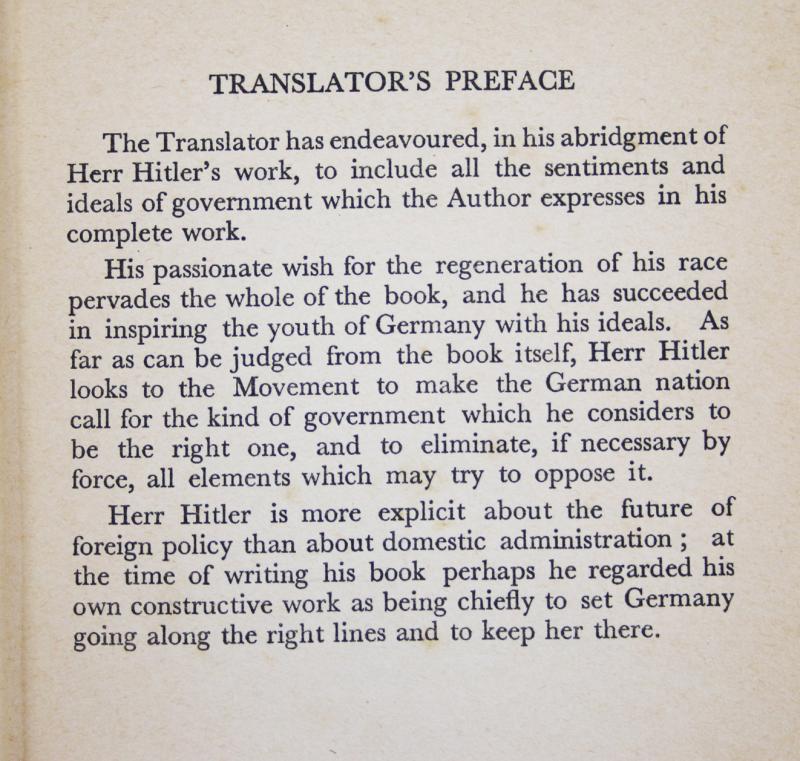
Hitler originally published his book in German in 1925. There was a little if any interest in Mein Kampf outside the country as he was an unknown Bavarian fringe candidate. When he unexpectedly vaulted to power in January 1933, European publishers rushed to obtain the contract to translate his work and publish it in other countries. Because the German Mein Kampf was so telling about the coming war and atrocities he would inflict on the French, the Soviet, and most of all the Jewish people, Adolf Hitler was hesitant to allow any translations or publishing rights in different countries. As most of you know, Hitler fought bravely during the entire four years of the Great War and he was wounded twice. During that time, as he later recounts in Mein Kampf, Hitler became convinced the French rather than the British were his true western enemies. In fact during the first three years of his chancellorship, Hitler tried repeatedly to secure a military alliance with England so they could help him destroy France, or at least stand by while Hitler obtained his sweet revenge for Germany's humiliation at the Versailles peace table. So the newly-appointed German leader authorised Mein Kampf to be translated into English and published by London's Hurst and Blackett in the spring of 1933. However, Hitler never allowed a complete translation. After an Englishman named Edgar Dugdale completed his work on the actual translation, the Nazis insisted on revising and censoring the 700 page book. Hitler employed Nazi party official Dr. Hans Thost to specifically go through and remove offending passages in Mein Kampf and to also surgically alter his original German words to make a direct appeal for his British alliance. Dr. Thost was the sole Nazi party official living in London at this time. He spent the summer of 1933 altering and removing over 400 pages from this new English translation and when he was finished, he finally allowed Hurst and Blackett to take this edition to print that September. Even though Hitler was now the leader of Germany, the British publishing house Hurst and Blackett was hesitant about printing too many copies of this book initially. 1933 was the height of the Great Depression, and books were only for the few. It wasn't until 1937 that Hurst and Blackett started cranking out a cheaper, smaller My Struggle because Europeans started to become nervous as Hitler was clearly rearming and reindustrializing Germany. Most copies were purchased by British intellectuals or those keenly interested in foreign policy. Most of those people lived in London, and quite a few of the copies of this book were destroyed in the Blitz. Indeed the Hurst and Blackett Publishing house was completely destroyed by German bombs in 1940.
The book was edited by the former Hieronymite friar, catholic priest and journalist, Bernhard Stempfle, who later died during the Night of the Long Knives.
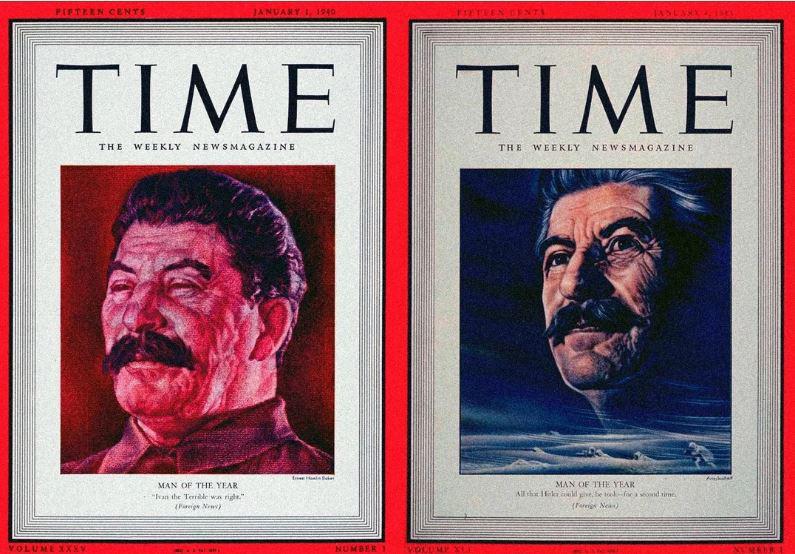
The book was so successful around the world Hitler used the proceeds to fund his entire election campaign, tours and lectures. And due to its and the authors success he was named Time Magazine's "Man of the Year" in 1938. A later Time Magazine "Man of the Year" {not once, but twice} was 'Uncle' Joe Stalin, also Ayatollah Ruhollah Khomeini {in 1979}, and Vladimir Putin {2007}
The first 1933 Hurst and Blackett English edition can now achieve values up to £6,500
After Hitler's death, copyright of Mein Kampf, along with other Nazi assets, was given to the state government of Bavaria, which refused to allow any copying or printing of the book in Germany. In 2016, following the expiry of the copyright held by the Bavarian government, Mein Kampf was republished in Germany for the first time since 1945, which prompted public debate and divided reactions from Jewish groups. A team of scholars from the Institute of Contemporary History in Munich published a two-volume, almost 2,000-page edition annotated with about 3,500 notes. This was followed in 2021 by a nearly 900-page French edition based on the German annotated version, with about twice as much commentary as text.
Code: 25039