
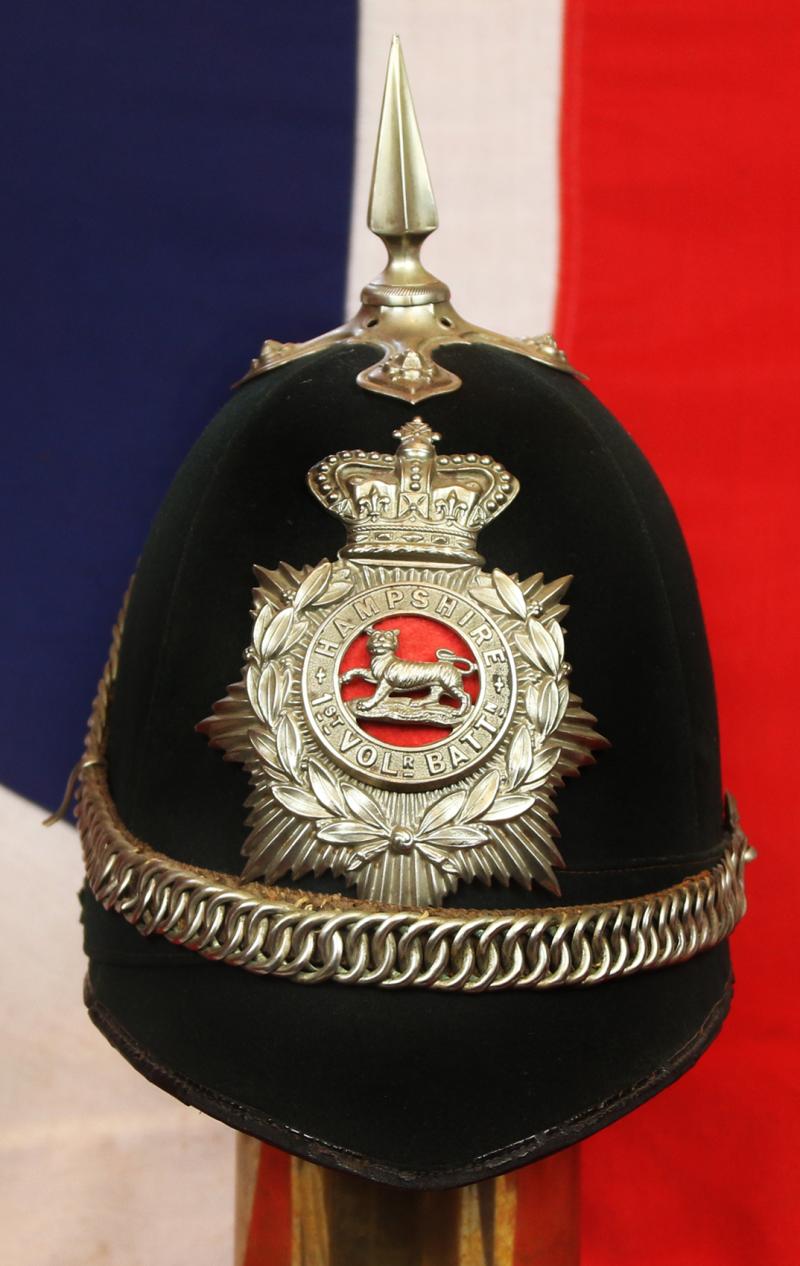
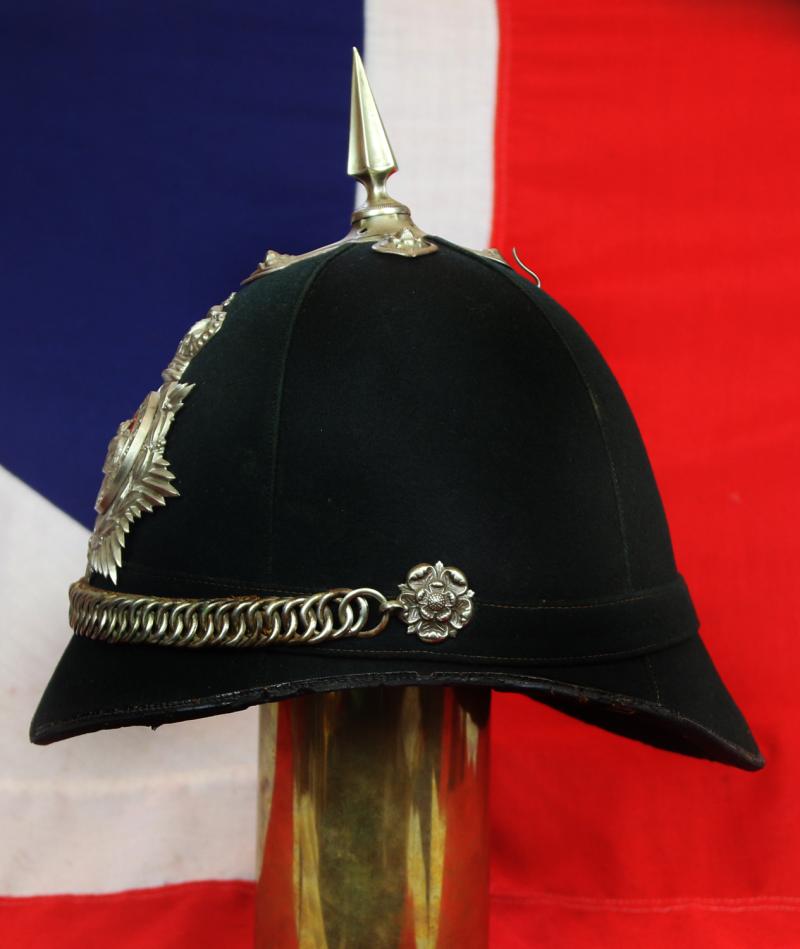
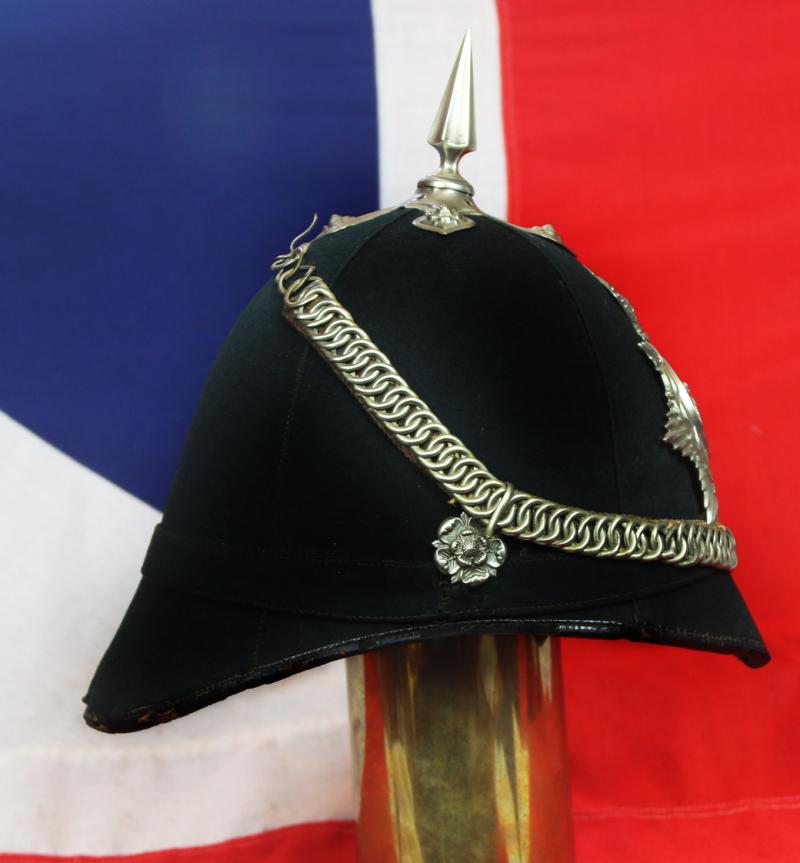
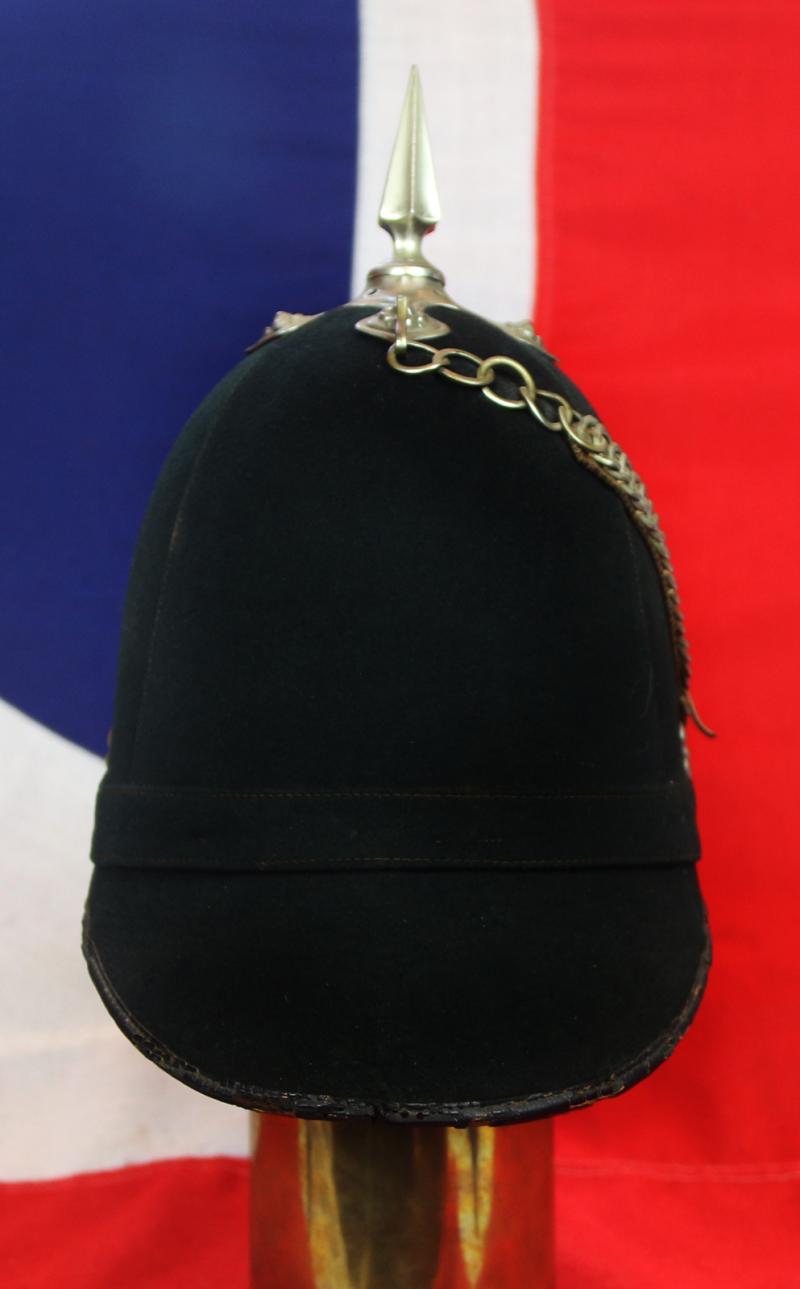
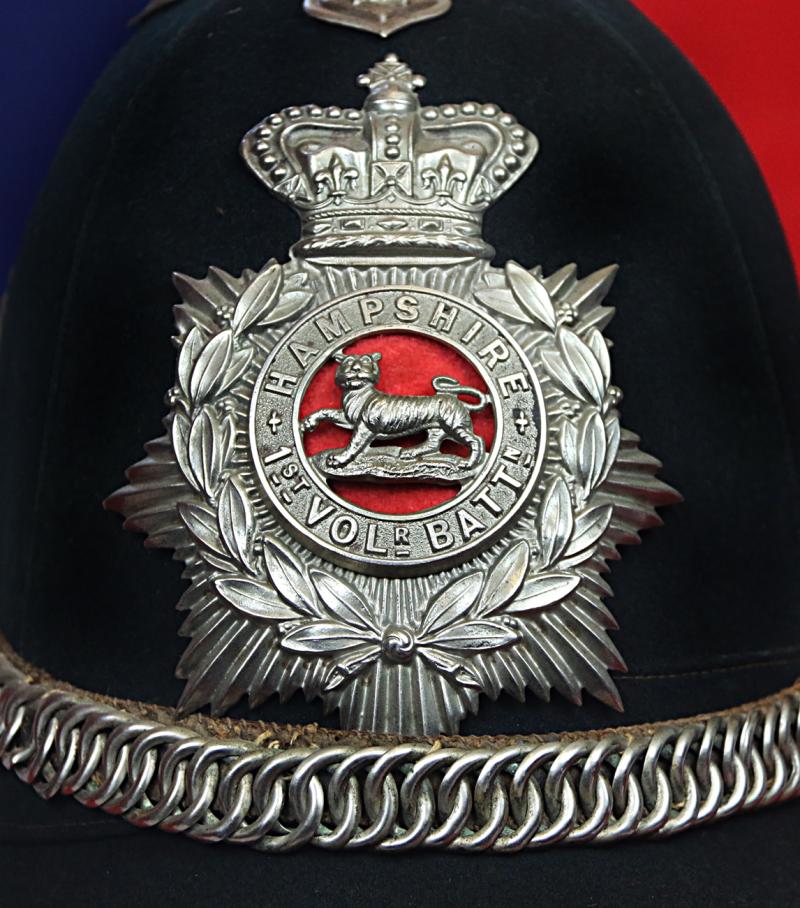
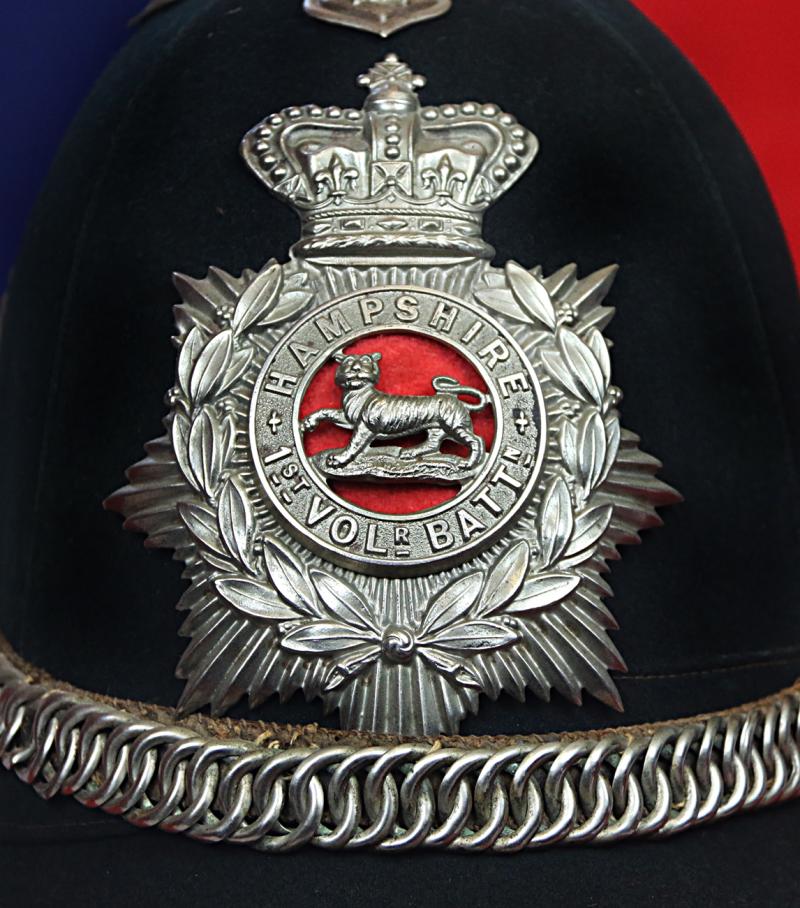
A Superb Victorian Service Helmet of the Hampshire Regiment, the Ist Volunteer Battalion. Blue Cloth with Silver Badge, Fittings, Spike, & Rose Head Curb Chain Mounts and Chin Chain
The Volunteers came into being as a result of the war scare of 1859 when Anglo-French relations were very strained. They provided their own arms and equipment and served at their own cost, except if called out for actual service. They were under the lords lieutenant of counties who authorised the formation of corps and gave commissions to their officers. Their purpose was to act as auxiliaries to the regular army and militia.
In the early part of the South African War the War Office gave notice that active service companies from volunteer battalions would be sent out to their county regiments at the front. The Hampshire Volunteer Infantry Brigade was called upon to supply one company, each battalion contributing a section of 23 rank and file. The first company under Captain Seward served in South Africa some 15 or 16 months, losing the six young men whose names appear on a brass plate. Four of them died and two in the Barberton railway accident.
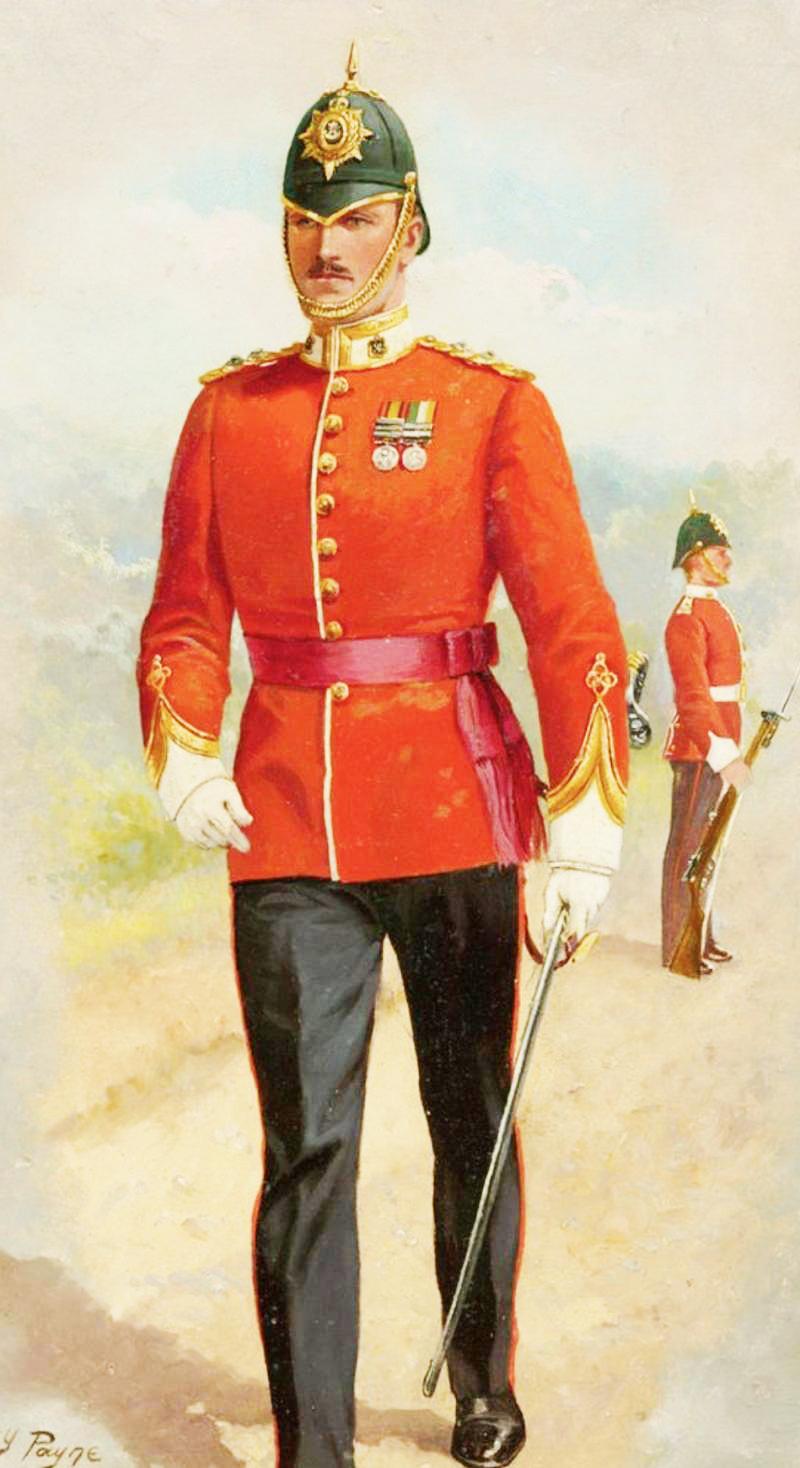
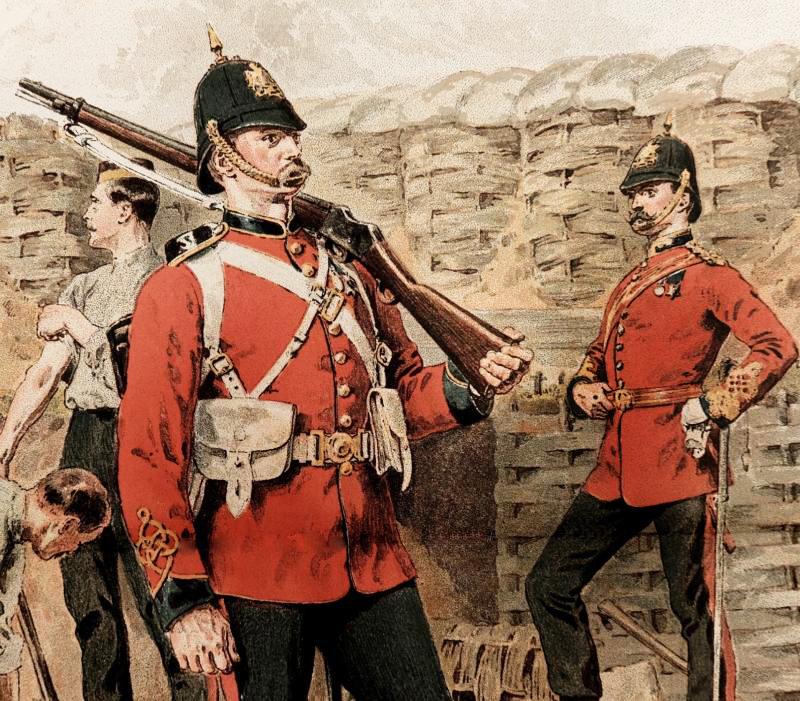
The British Army’s Home Service Helmet was introduced in 1878. It was of a German influence and would replace a long line of shakos going back to the days of the Peninsular War and Waterloo. In blue cloth, sometimes green, sometime grey, sometimes with a spike, sometimes with a ball, the stiff cork headdress would become a common site on parade grounds throughout Britain for more than thirty years. Most Regular Army regiments and corps took to the helmet, as did their Militia, Volunteer and Territorial counterparts.
With the new headdress came the helmet plate, those highly desirable items of militaria much sought after today by collectors. Large, star-shaped mostly and displaying both ancient and new regimental devices, brightly they shone in their silvers, gilts, gilding and white metals, covering almost the entire front of the headdress as they did so.
The British Army during the Victorian era served through a period of great technological and social change. Queen Victoria ascended the throne in 1837, and died in 1901. Her long reign was marked by the steady expansion and consolidation of the British Empire, rapid industrialisation and the enactment of liberal reforms by both Liberal and Conservative governments within Britain.
The British Army began the period with few differences from the British Army of the Napoleonic Wars that won at Waterloo. There were three main periods of the Army's development during the era. From the end of the Napoleonic Wars to the mid-1850s, the Duke of Wellington and his successors attempted to maintain its organisation and tactics as they had been in 1815, with only minor changes. In 1854, the Crimean War, and the Indian Rebellion of 1857 highlighted the shortcomings of the Army, but entrenched interests prevented major reforms from taking place. From 1868 to 1881, sweeping changes were made by Liberal governments, giving it the broad structure it retained until 1914.
Upon Victoria's death, the Army was still engaged in the Second Boer War, but other than expedients adopted for that war, it was recognisably the army that would enter the First World War. The Industrial Revolution had changed its weapons, transport and equipment, and social changes such as better education had prompted changes to the terms of service and outlook of many soldiers. Nevertheless, it retained many features inherited from the Duke of Wellington's army, and since its prime function was to maintain an empire which covered almost a quarter of the globe, it differed in many ways from the conscripted armies of continental Europe.
The disciplinary system was not notably more harsh than the contemporary civil Penal System, although soldiers stood less chance of severe penalties being commuted. The death sentence could apply for crimes such as mutiny or striking an officer, but was generally reserved for actions that were capital crimes in common law, such as murder. Minor infractions could be summarily punished with extra duties or stoppages of pay, but flogging remained a punishment for many offences, including minor offences, on the discretion of a court martial. A court martial could be held at regimental level (which might well be influenced by the attitude of the colonel or other senior officers), or district level where convenient, or a General Court Martial might be convened under the authority of the Commander-in-Chief for serious matters or offences involving officers.
The maximum number of strokes inflicted on a soldier sentenced to flogging (which had been a barbaric 2,000 in 1782, essentially a death sentence for nearly any man) was reduced to 300 in 1829, and then to 50 in 1847. Some regiments nevertheless rejoiced in the nicknames of the "bloodybacks" if they were notorious for the number of floggings ordered.
Only a small portion of soldiers were permitted to marry. Soldiers' wives and children shared their barracks, with only blankets slung over a line for privacy. Wives often performed services such as laundry for their husbands' companies or barracks. A particularly cruel feature of the Army's practices was that fewer soldiers' wives were allowed to accompany a unit overseas (one per eight cavalrymen or twelve infantrymen) than were permitted when serving at home. Those wives not chosen by lot to accompany the unit when it embarked were forcibly separated from their husbands, for years or for life.
Soldiers' pay was nominally one shilling per day, but this was decreased by "stoppages" of up to sixpence (half a shilling) for their daily rations, and other stoppages for the issue of replacement clothing, damages, medical services and so on. In 1847, it was laid down that a soldier must receive at least one penny per day, regardless of all stoppages. A privileged life indeed.
Typical natural age and wear to the helmet, slight internal crack to rear neck tail cork underneath the blue cloth
Every single item from The Lanes Armoury is accompanied by our unique Certificate of Authenticity. Part of our continued dedication to maintain the standards forged by us over the past 100 years of our family’s trading, as Britain’s oldest established, and favourite, armoury and gallery
Code: 25417
925.00 GBP