
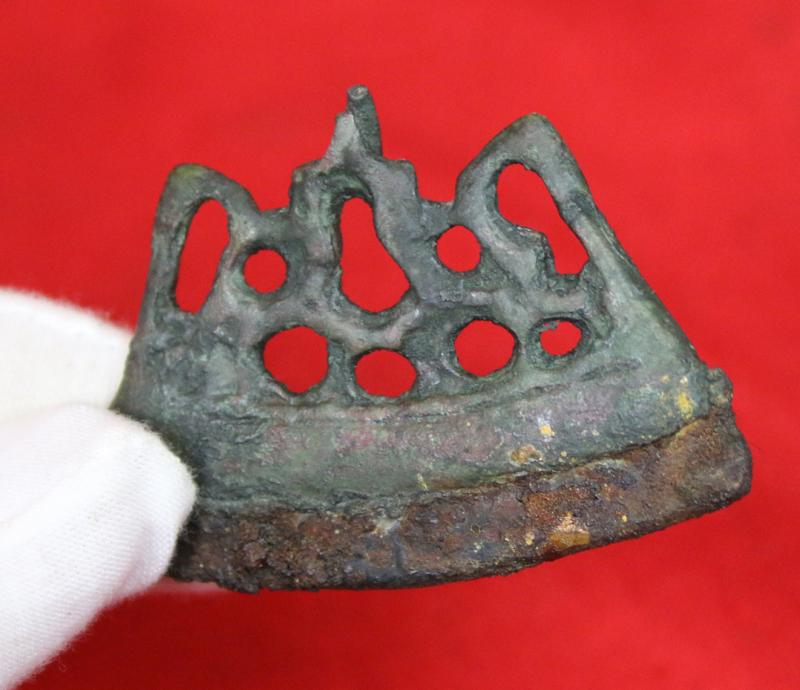
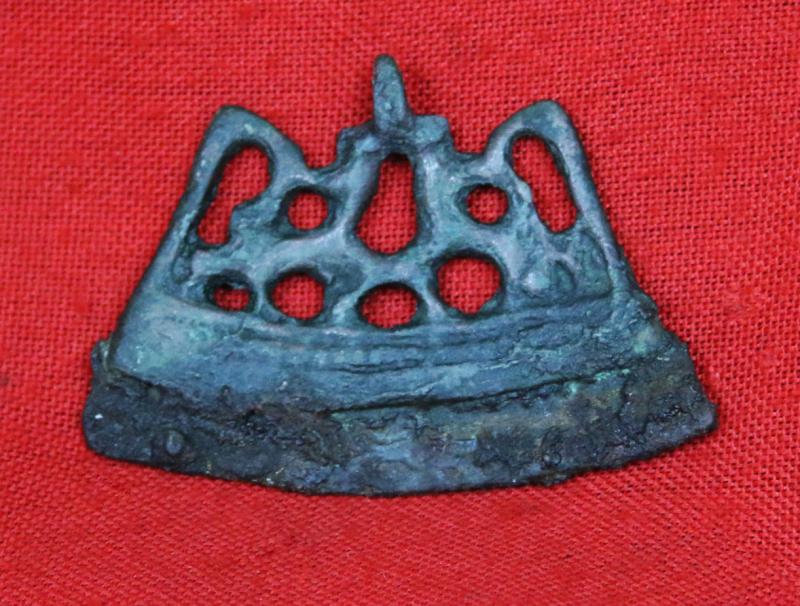

Very Rare Ancient 10th Century Viking Fire-Starter, A 'Drepa Upp Eld '. Viking Riders on Horses & Steel Striking Blade. Used With Amadou Touchwood Fungus {Fomes Fomentarius}. To Make Fire At Sea, Whilst Sailing In a Viking Long Boat
Around 1100 years old. with partial ring mount present as it was originally worn as a large but functional pendant.
This kind of highly distinct ‘horse and rider figures’ firesteels must have been symbols of wealth and power of the richest people during the viking age. They have been excavated from several places around western Finland and even from viking age town of Birka, Sweden.The firesteel had a loop in it, so it could be worn in chain, visible for all to see the user's wealth.
Earlier this year we had an amazing other one, a twin Draken head example, likely the very rarest of all the surviving Viking designed fire-starter, and this one may well be as rare as that or somewhat close.
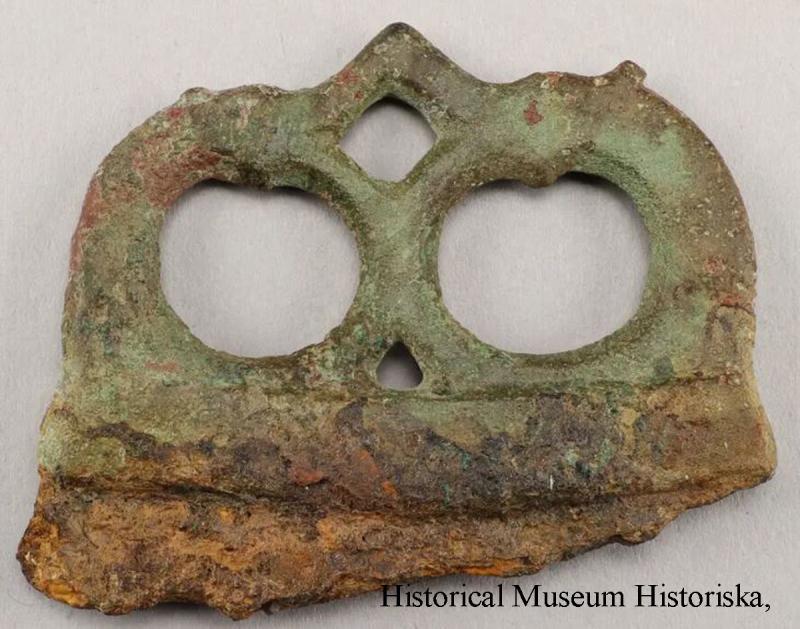
The only other known example of the rarest type of Viking bronze and steel striker, is a specimen from a Chamber Tomb found in in Ekka, Birka, in Uppland. See a photo in the gallery of that example from the Historical, Museum Historiska, Photo taken by Camilla Hällbrink, that one is also, as this one we offer, likely from second half of the 10th century. Museum item number 458255_HST.
How often is it one can own, a rarest, original, Viking artifact, that apparently, according to the national historical museum of Sweden, its only known similar surviving example is in that same museum in Sweden. Our example is of good quality, and in better condition. But of a different scene. There are some other styles that have been found, also in Scandinavian museums
Fire-Starting Using Flint and Steel. The term in Old Norse for percussion fire-making is drepa upp eld, from the verb drepa, "to strike, beat, knock; to produce by a blow or blows", thus drepa upp eld is "to strike up a fire." True flint and steel fire starting is a low temperature method of spark-based fire starting.
The Vikings, renowned for their seafaring prowess and ingenuity, utilized a unique method for creating fire that involved a specific type of fungus and urine. They employed the touchwood fungus, also known as Amadou (Fomes fomentarius), which grows primarily on birch and beech trees. This fungus, when processed correctly, becomes highly flammable. The Vikings would boil the fungus for several days, then soak it in human urine. The urine contains nitrates, which, when absorbed by the fungus, significantly enhance its ability to catch and sustain a flame.
After the fungus had soaked long enough to absorb sufficient nitrates, it was dried and pounded into a soft, fibrous material. This prepared fungus could then be easily ignited with a spark, making it an excellent tinder for starting fires in harsh and damp conditions. This innovative use of natural resources showcases the Vikings' deep understanding of their environment and their resourcefulness in overcoming the challenges posed by their often cold and wet climate. Their ability to produce reliable fire under adverse conditions, such as in violent stormy seas, was crucial for survival, navigation, and their various activities, including cooking and metalworking.
Every Viking torch lit march had to use exactly such a device to create the flame, every camp fire and every flaming arrow needed exactly this amazing piece of Viking history.
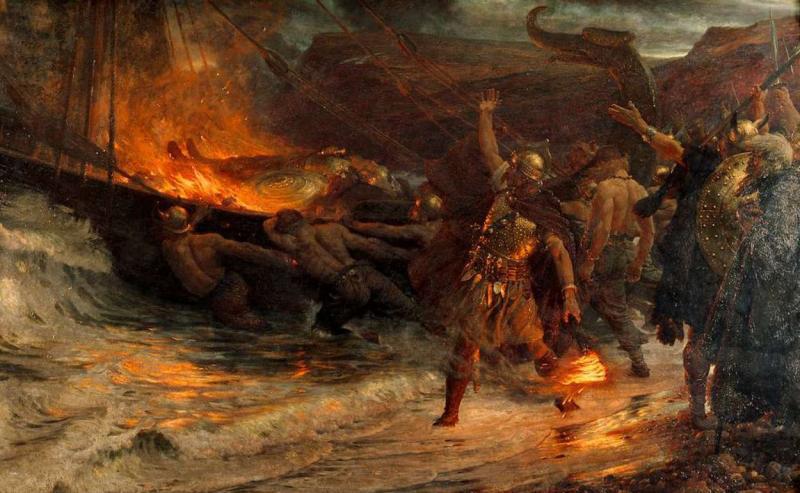
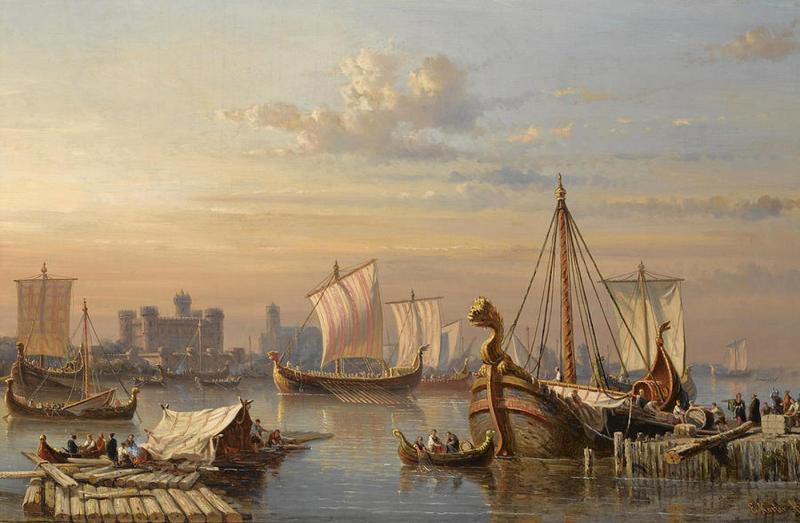
In the gallery are two 19th century paintings by
Everhardus Koster
& Frank Dicksee 1893
Hällbrink, Camilla, Historical Museum
Location: Björkö, North of Borg, Ancient monument: L2017:1478, Parish: Adelsö parish, Municipality: Ekerö municipality, Region: Uppland, Country: Sweden 1878
Picture no 6 is a page of early line drawings of Viking fire-steels in Viking museum collections. Our example is very close to fire-steel number 8
See Cacciandra, V. & Cesati, A., Fire Steels, Turin, 1996, for discussion.
Code: 26046
995.00 GBP