
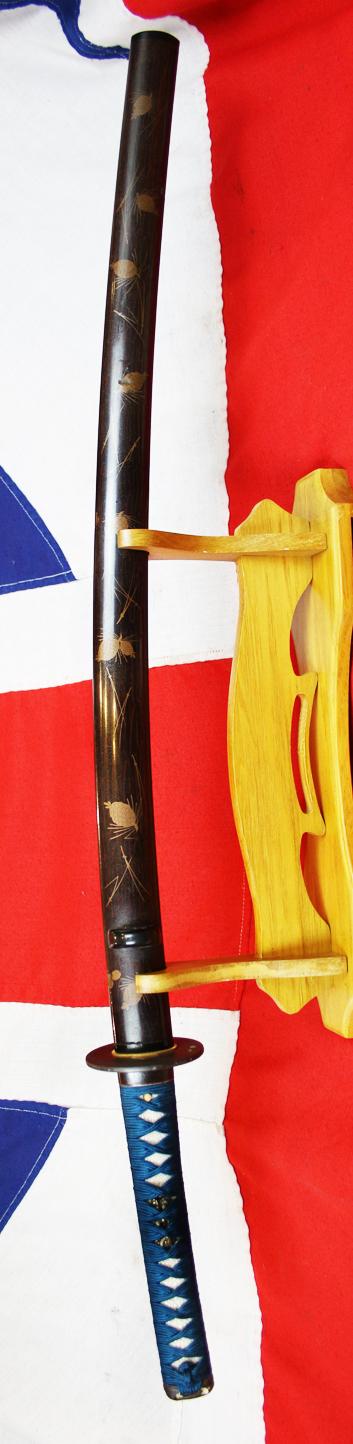

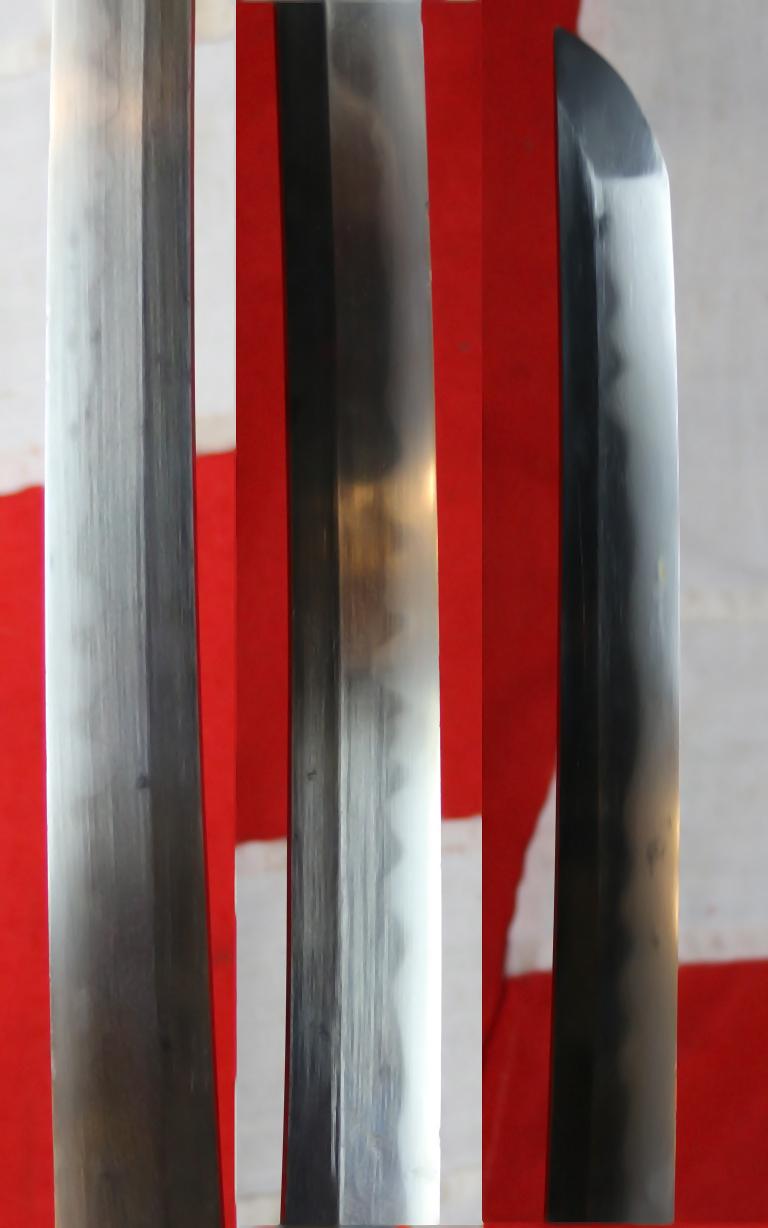

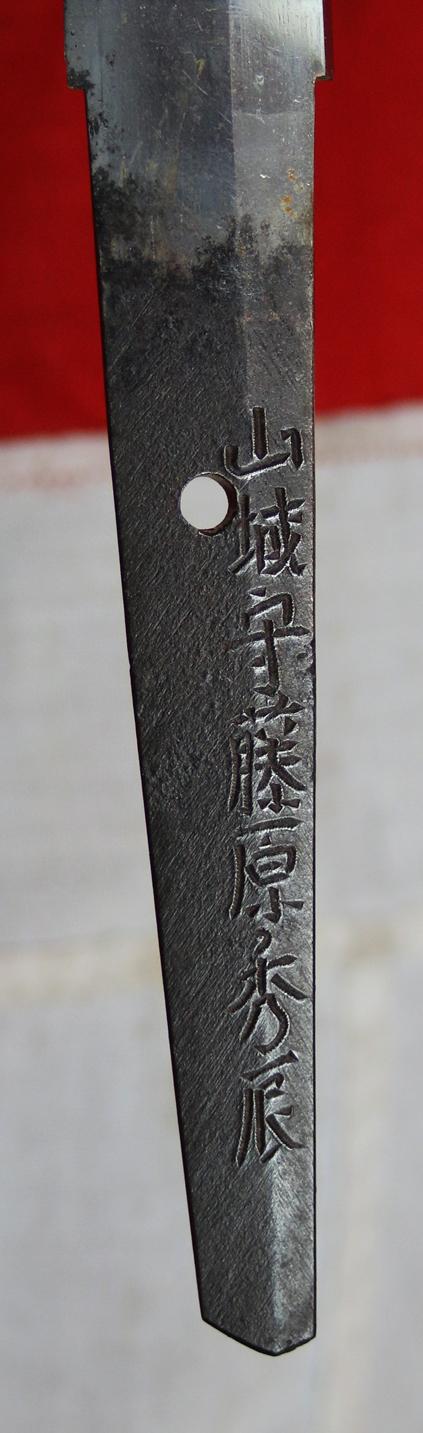

A Beautiful, Signed (山城守藤原秀辰) Hidetoki, Shinto Chisa Katana With Exceptional, Original Edo Period, Nashiji Gold & Contrasting Brown and Red Ground Urushi Lacquer Saya, Decorated With Representations of Longevity, Strength, Loyalty, & Good Fortune
A katana signed Hidetoki (山城守秀辰) a respected swordsmith from the Seki (Tokuin school), with several generations known, particularly the second-generation Hidetoki from the Early Edo period (Shōhō era, 1644–1648), known for producing sharp, highly-rated blades (Wazamono). These signatures often appear as "Seki-jū Yamashiro no Kami Fujiwara Hidetoki" (関住山城守藤原秀辰) for the first generation, and later as just "Yamashiro no Kami Hidetoki" by the second generation.
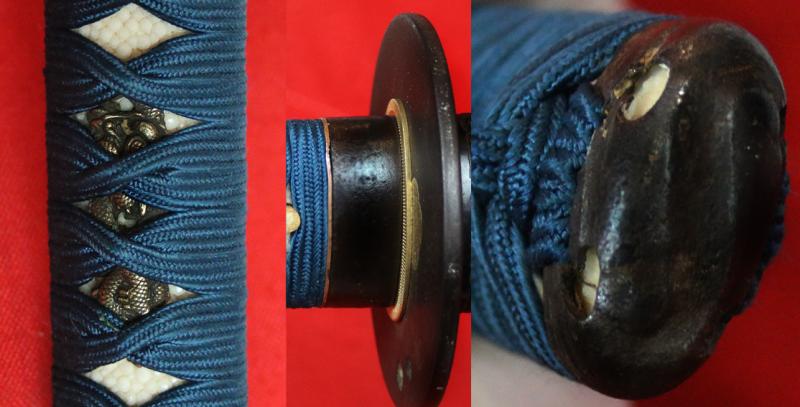
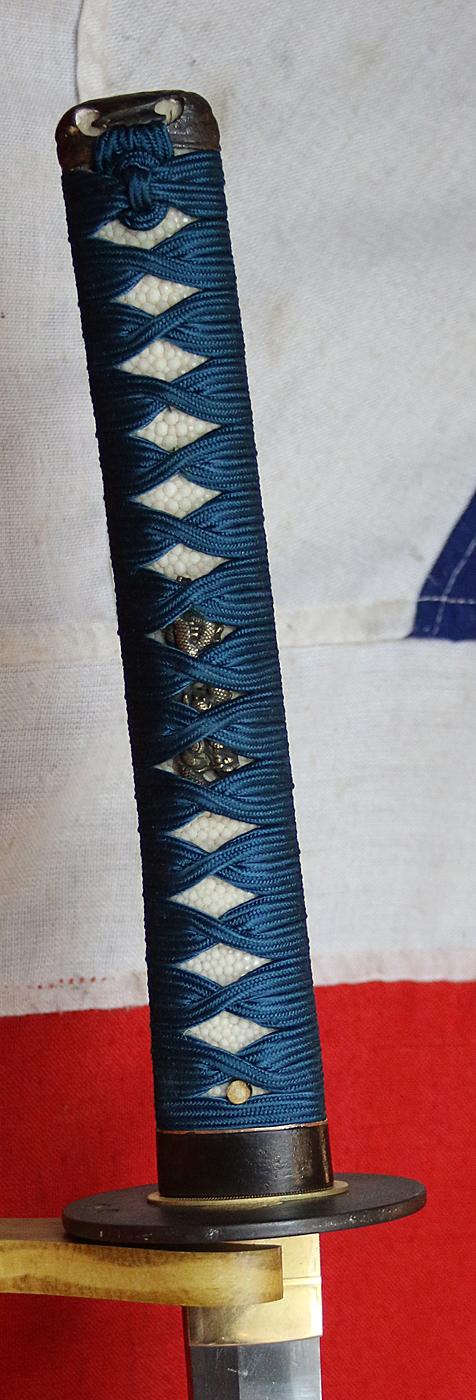
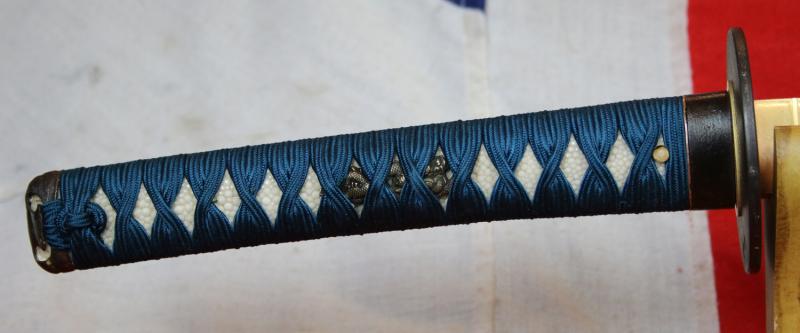
The katana is mounted in superb original Edo koshirae, with a Higo school iron kashira, and a tetsu fuchi, made in two slotted together parts, with a brass rimmed inner liner. Also, including a pair of shakudo menuki of dragons wrapped beneath beautiful, blue, tsuka-ito. A superb round tetsu tsuba with gold and copper filled kodzukana. With {two holes} udenuki no ana for the tying of an udenuki no O {wrist cord} that is done in a specific way, that requires these two holes in a specific position. It should be fastened/looped (called shirushizuke) on the fuchi part of the sword (the metal bordering piece between the swords tsuba (guard) and the tsuka (handle). Ideally, for both short and long swords- they should be the same length. It stops the samurai from dropping their katana during combat
It further assists the samurai in holding the strap in his mouth when dismounting or mounting a horse)
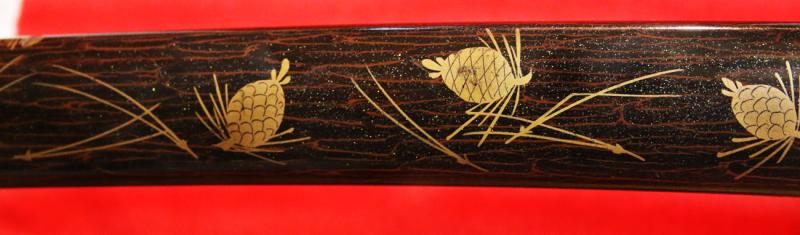
The original Edo saya of the sword is utterly amazing, it is decorated in dark brown and mid red urushi lacquer to simulate the bark of the pine tree with tiny speckles of abilone shell representing minuscule snow flakes, above that decor ground are nishiji lacquer pine-cones with their elongated bunched fascicle which are actually pine tree leaves, but physically, more greatly resemble elongated needles. The quality of the craftsmanship to create such a desgn is breathtaking.
In the gallery is a powerful Japanese woodblock print attributed to Tsukioka Yoshitoshi (1839–1892), from the 100 Aspects of the Moon series (1885–1892).
It depicts a samurai with his attendant beneath a pine tree, gazing toward a moonlit sky, embodying Yoshitoshi’s fascination with loyalty and reflection.
Japanese decor featuring pine cones often highlight the tree's symbolism of longevity and resilience, appearing in traditional kacho-ga (bird-and-flower) art by masters like Kono Bairei (1844–1895)
Pine (Matsu): Represents longevity, strength, and good fortune, often used in New Year's decorations and art for its evergreen nature.
Pine Cones: A specific symbol of fertility and the continuation of life, beautifully complementing the pine's overall meaning.
The chisa katana was able to be used with one or two hands like a katana (with a small gap in between the hands) and especially made for double sword combat a sword in each hand. It was the weapon of preference worn by the personal Samurai guard of a Daimyo Samurai war lord clan chief, as very often the Daimyo would be often likely within his castle than without. The chisa katana sword was far more effective as a defence against any threat to the Daimyo's life by assassins or the so-called Ninja when hand to hand sword combat was within the castle structure, due to the restrictions of their uniform low ceiling height. But in trained hands this sword would have been a formidable weapon in close combat conditions, when the assassins were at their most dangerous. The hilt was usually around ten to eleven inches in length, but could be from eight inches or up to twelve inches depending on the Samurai's preference. Chisa katana, Chiisagatana or literally "short katana", are shoto mounted as katana. It is fair to say wakizashi are shoto which are mounted in a similar way to katana, but in this instance we are considering the predecessors of the daisho. In the transitional period from tachi to katana, katana were called "uchigatana", and shoto were referred to as "koshigatana" and "chiisagatana", in many cases quite longer than the later more normal length wakizashi.
There are many reasons why people enjoy collecting swords. Some people are drawn to the beauty and craftsmanship of swords, while others appreciate their historical and cultural significance. Swords can also be a symbol of power and strength, and some collectors find enjoyment in the challenge of acquiring rare or valuable swords.
One of the greatest joys of sword collecting is the opportunity to learn about the history and culture of different civilisations. Swords have been used by warriors for millennia, and each culture has developed its own unique sword designs and traditions. By studying swords, collectors can gain a deeper understanding of the people who made and used them.
Another joy of sword collecting is the sheer variety of swords that are available. There are swords in our gallery from all over the world and from every period of history. Collectors can choose to specialize in a particular type of sword, such as Japanese katanas or medieval longswords, or they can collect a variety of swords from different cultures and time periods. No matter what your reasons for collecting swords, it is a hobby that can provide many years of enjoyment. Swords are beautiful, fascinating, and historically significant objects.
Every item is accompanied with our unique, Certificate of Authenticity. Of course any certificate of authenticity, given by even the best specialist dealers, in any field, all around the world, is simply a piece of paper,…however, ours is backed up with the fact we are the largest dealers of our kind in the world, with over 100 years and four generation’s of professional trading experience behind us.
The world of antique sword collecting is a fascinating journey into the past, offering a unique lens through which to view history and culture. More than mere weapons, these artifacts serve as tangible connections to the societies and ancient times where they originated. Each blade tells a story, not just of the battles it may have seen but of the craftsmanship, artistic trends, and technological advancement of its time.
The swords mountings can be equally telling. Engravings and decorative elements may enhance the sword’s beauty and hint at its historical context. The materials used for them can reveal the sword’s age
Collecting antique swords, arms and armour is not merely an acquisition of objects; it’s an engagement with the historical and cultural significance that these pieces embody. As collectors, we become custodians of history, preserving these heritage symbols for future generations to study and appreciate.
We are now, likely the oldest, and still thriving, arms armour and militaria stores in the UK, Europe and probably the rest of the world too. We know of no other store of our kind that is still operating under the control its fourth successive generation of family traders
As once told to us by an esteemed regular visitor to us here in our gallery, and the same words that are repeated in his book;
“In these textures lies an extraordinary and unique feature of the sword - the steel itself possesses an intrinsic beauty. The Japanese sword has been appreciated as an art object since its perfection some time during the tenth century AD. Fine swords have been more highly prized than lands or riches, those of superior quality being handed down from generation to generation. In fact, many well-documented swords, whose blades are signed by their makers, survive from nearly a thousand years ago. Recognizable features of the blades of hundreds of schools of sword-making have been punctiliously recorded, and the study of the sword is a guide to the flow of Japanese history.”
Victor Harris
Curator, Assistant Keeper and then Keeper (1998-2003) of the Department of Japanese Antiquities at the British Museum. He studied from 1968-71 under Sato Kenzan, Tokyo National Museum and Society for the Preservation of Japanese Swords
Code: 26080
6450.00 GBP