
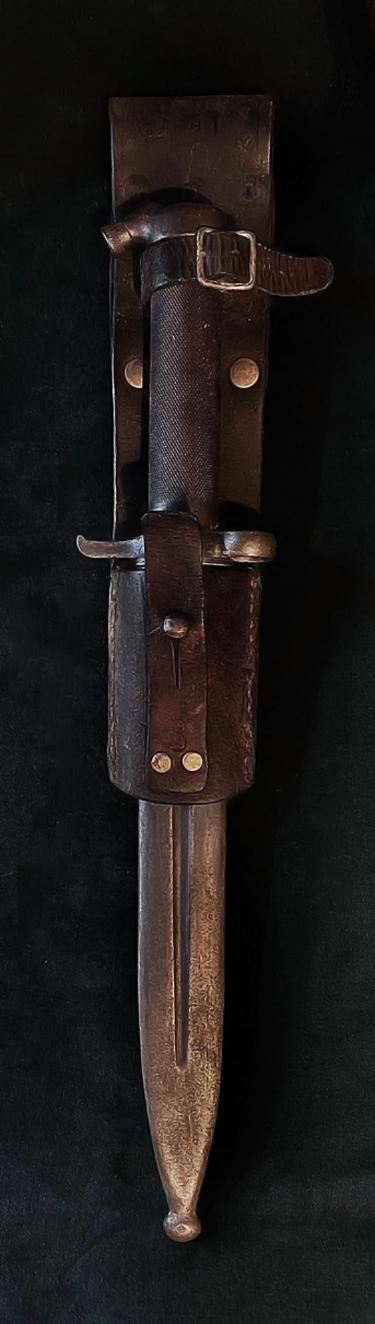
Swedish M1896 Mauser Bayonet, Knife Bayonet for Use on the 6.5 mm. m/1896 Swedish Mauser rifle. The M/1896 Bayonet Was Also Used With the M/1938 Short Rifle and AG42b Ljungmann Self-Loading Rifle During WW2
Swedish M1896 Mauser Bayonet, excellent condition plus. Blade with all original polish and crossgraining.
Complete in its original frog
****Generic photo in the gallery, this bayonet for sale is a much better example that the one in the photo
Sweden remained officially neutral in World War II, avoiding direct military involvement by making difficult concessions to both the Allies and Axis, notably allowing German troop transit and exporting vital iron ore while also providing refuge to some refugees and conducting intelligence. Surrounded by German-occupied territory after 1940, Sweden balanced its neutrality with economic ties, allowing German troop movements in exchange for non-invasion, while secretly gathering intelligence and strengthening its own defenses.
Key Aspects of Swedish Neutrality:
Official Stance: Sweden declared neutrality in September 1939, a policy rooted in its long history without war.
Geopolitical Pressure: After Germany invaded Norway and Denmark in April 1940, Sweden was isolated and forced to negotiate with Germany.
"Transit Traffic": Sweden allowed German soldiers and war materials to travel by rail through its territory to and from Norway until August 1943.
Economic Concessions: Sweden supplied Germany with crucial iron ore, ball bearings, and other goods, with Swedish naval escorts sometimes protecting Baltic shipments.
Intelligence & Diplomacy: Sweden maintained intelligence operations, intercepting German communications, and offered limited support to the Allies, including rescuing Jewish refugees later in the war.
Military Buildup: Recognizing its vulnerability, Sweden rapidly increased its military strength and defenses throughout the war, deterring potential invasion.
Challenges & Legacy:
Moral Dilemmas: Sweden's pragmatic neutrality, involving cooperation with Nazi Germany, remains a controversial topic, questioning if it did enough to help victims of the Holocaust.
Balancing Act: Sweden managed to keep its official neutrality and sovereignty but at the cost of significant moral compromises, a difficult legacy often termed "compromise neutrality".
Knife bayonet for use on the 6.5 mm. m/1896 Swedish Mauser rifle. The m/1896 bayonet was also used with the m/1938 Short Rifle and AG42b Ljungmann self-loading rifle.
According to Scandanavian bayonet collector/researcher Per Holmback, M1896 bayonets were produced by:
—Eskilstuna Jernmanufactur AB (1899–1912)
—Carl Gustaf Stad (1913–?)
—Erik Anton Berg AB (years unknown)
The earliest examples had a flat spring catch. This was replaced by a conical spring catch
This example was made by Erik Anton Berg (EAB) of Eskilstuna.
The unit marking on the crosspiece identifies the bayonet as belonging to Rifle , th company, 17th Infantry Regiment.
Complete In Scabbard. Also Fits The Ljungman AG42B S/A Rifle Mod.1942.
M1896 Mauser Knife All-Steel Bayonet,Tubular Engine Turned/Chequered Tubular Steel Grip, Cross-Guard And Muzzle Ring, 209 Mm Single Edged mint Polish Blade, Slightly Widening Towards Point, Single Narrow Fuller,
Complete In Steel Scabbard. Excellent condition overall,
Code: 26095
140.00 GBP