



A Stunning Ancient Koto Museum Grade Long Katana, Circa 1480's Around 550 Years Old, all Original Edo Fittings, Entomological Kachimushi Tsuba and Suzumebachi Menuki
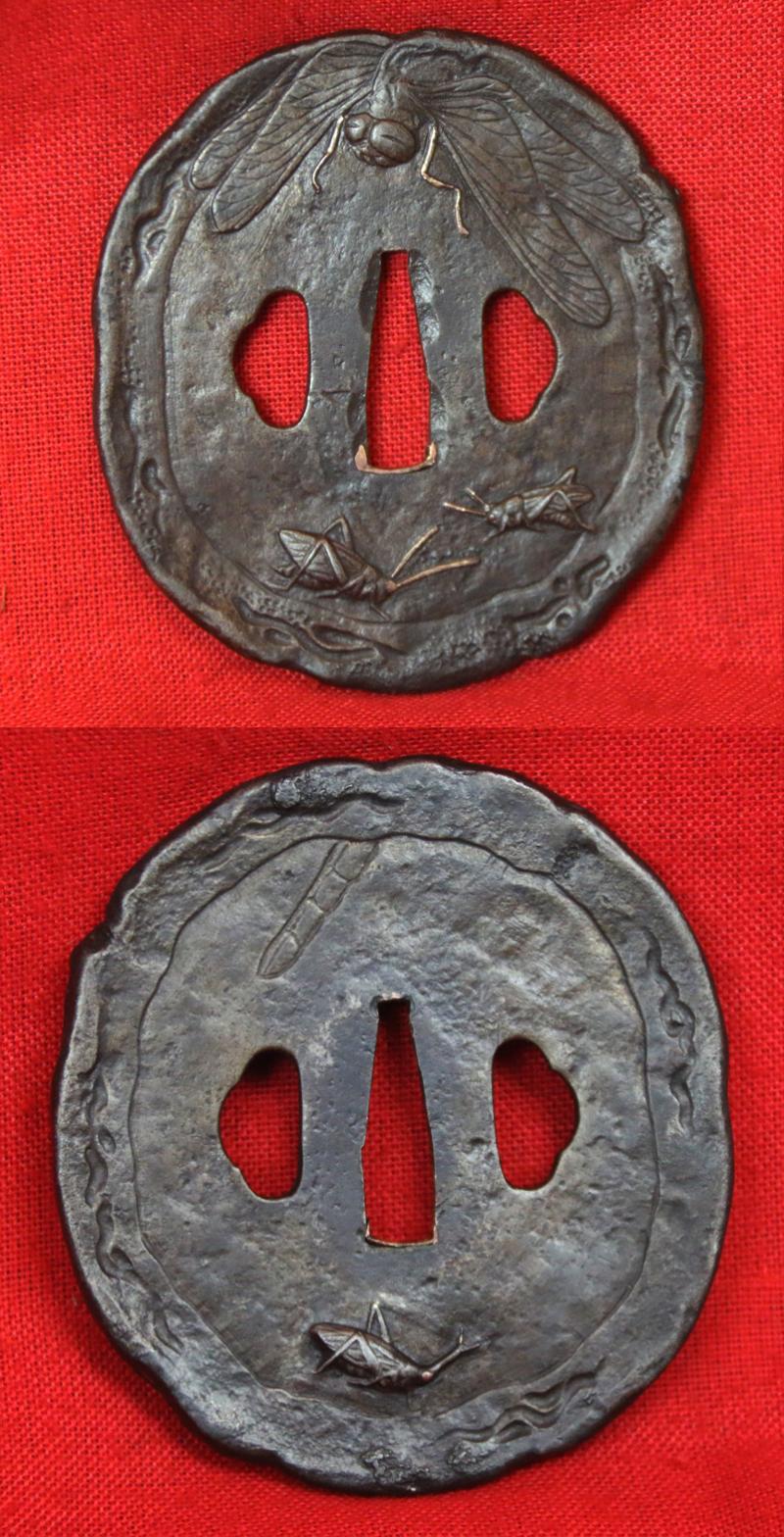
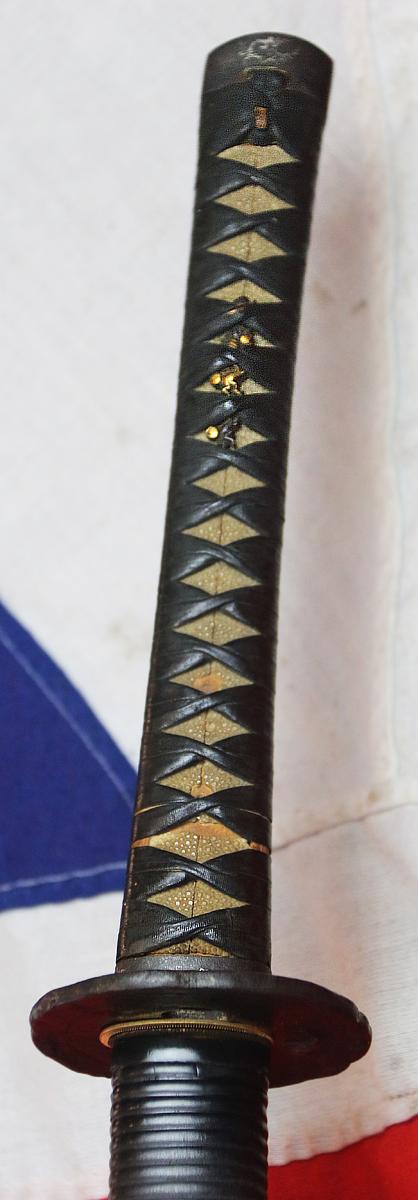
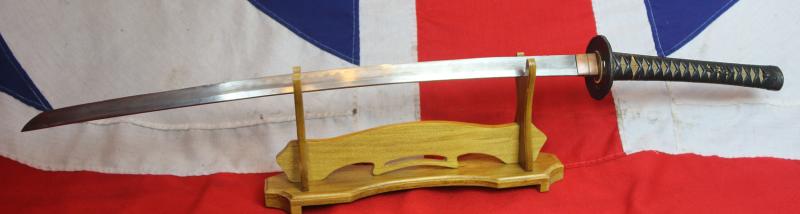
A beautifully impressive and long ancient samurai sword, worthy of a museum quality display, with a stunning Koto blade that has an amazing gunome hamon and it looks fabulous, as it last did 170 years ago, before it arrived in England from Japan, as a honorary gift from a member of the Japanese nobility. It is fitted with a very fine, large iron kachimushi decorated iron tsuba.
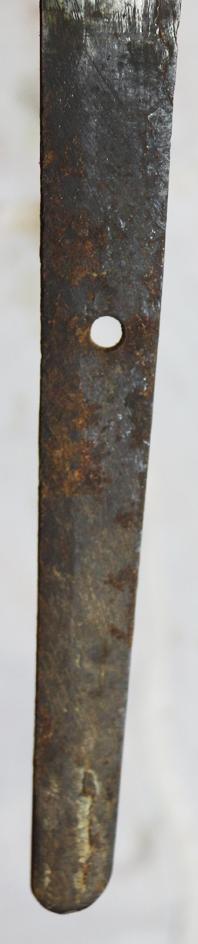
Just returned so new close-up photos of the fabulous ancient blade we now show { It looks amazing!!}
The whole sword has been untouched for over 170 years, yet still looks amazing as an incredible historical artifact of the ancient art of the samurai.
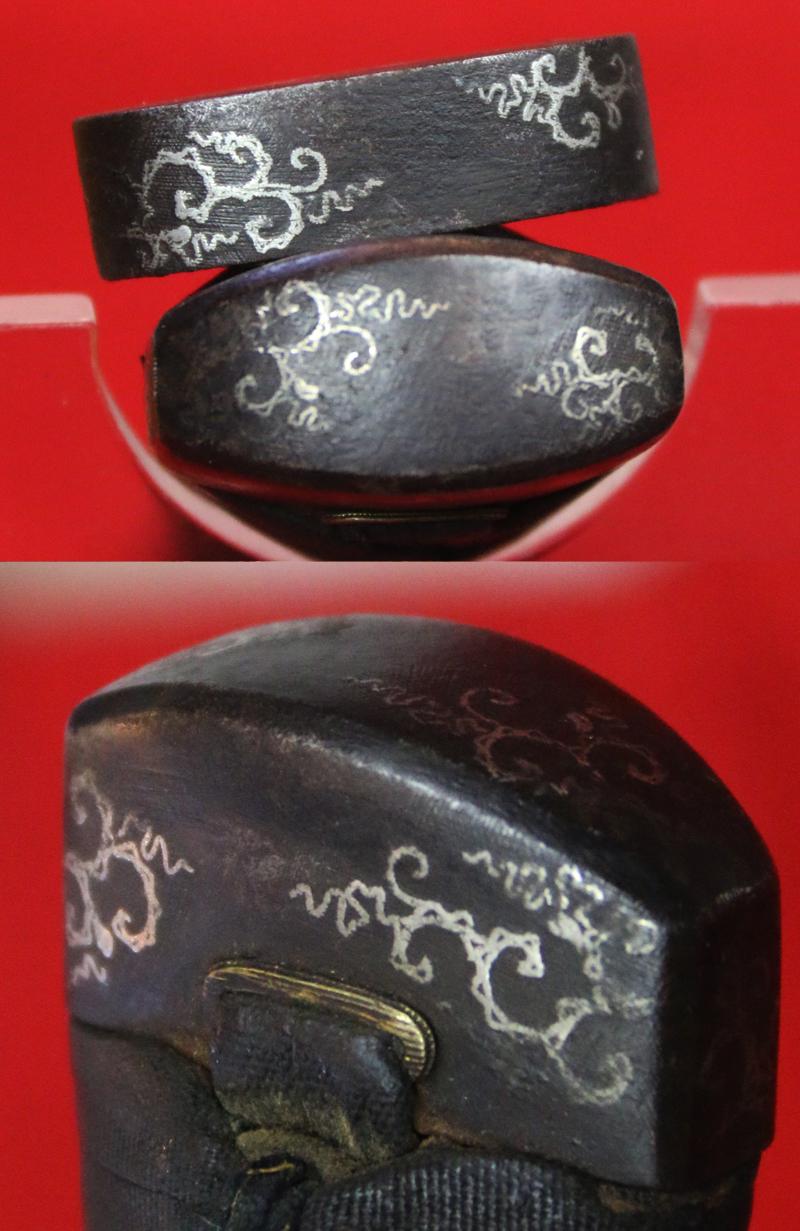
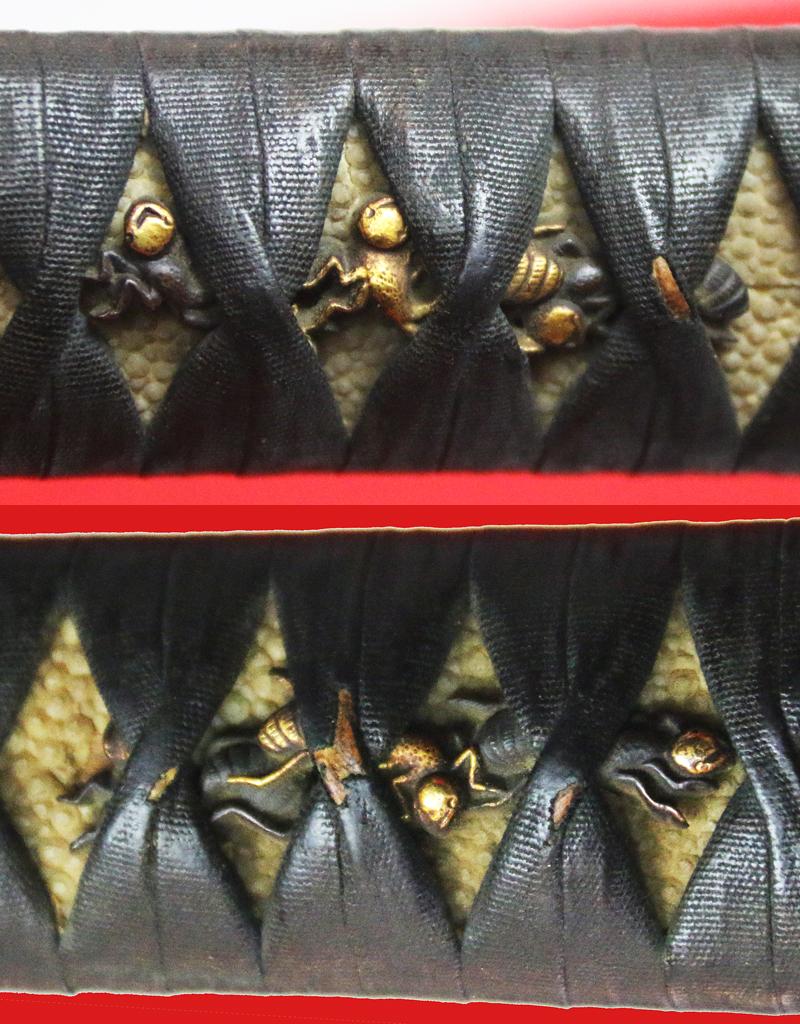
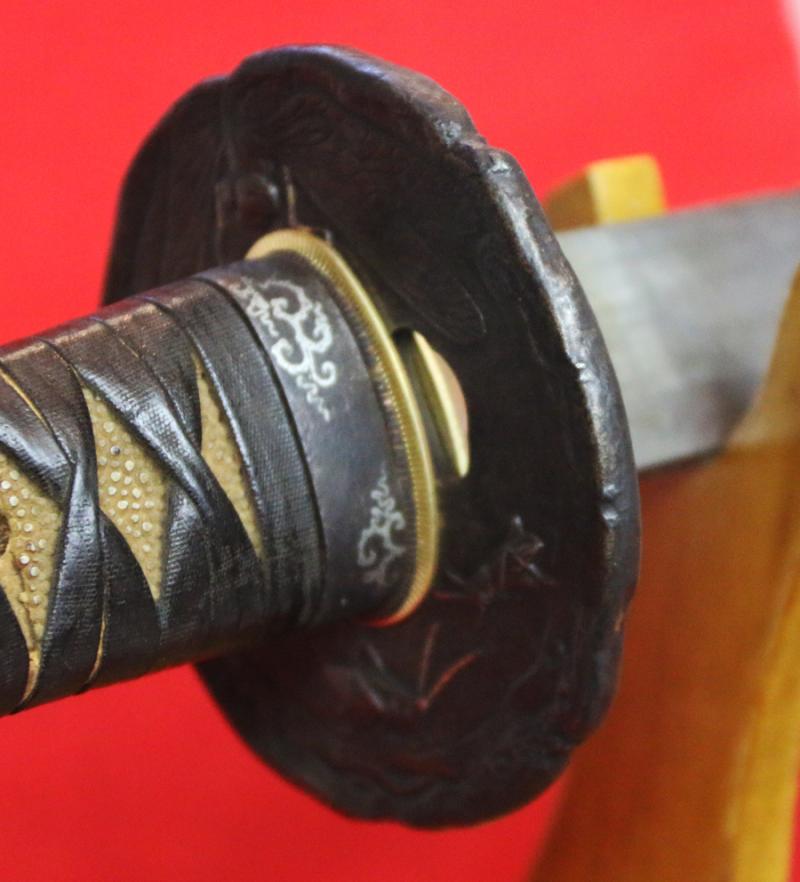
It has a very rare menuki of suzumebachi, giant hornets Vespa madarina Japonica, in pure gold overlay and shakudo, a subspecies of the world's largest hornet, with a wingspan of 2.4 inches. Giant hornets give spiritual protection for the sword. Stunning tsuba of a large tetsu ovoid plate tsuba with takebori dragonfly with gold legs, and crickets with gold antennae. Fuchi kashira in tetsu with silver inlays of vine tendrils.
Fine original Edo lacquer saya with two colour uruchi lacquer, partially ribbed and ishime, with a saya jiri iron mount inlaid with silver tendrils matching the tsuka's fuchi kashira. The seam lacquer has very fine line openings through its great age
Japan was once known as the “Land of the Dragonfly”, as the Emperor Jimmu is said to have once climbed a mountain in Nara, and looking out over the land, claimed that his country was shaped like two Akitsu, the ancient name for the winged insects, mating.
Dragonflies appeared in great numbers in 1274 and again in 1281, when Kublai Khan sent his Mongol forces to conquer Japan. Both times the samurai repelled the attackers, with the aid of huge typhoons, later titled Kamikaze (the Divine Winds), that welled up, destroying the Mongol ships, saving Japan from invasion. For that reason, dragonflies were seen as bringers of divine victory.
Dragonflies never retreat, they will stop, but will always advance, which was seen as an ideal of the samurai. Further, although the modern Japanese word for dragonfly is Tombo, the old (Pre Meiji era) word for dragonfly was Katchimushi. “Katchi” means “To win”, hence dragonflies were seen as auspicious by the samurai.
Insects in general have been celebrated in Japanese culture for centuries. The Lady Who Loved Insects is a classic story of a caterpillar-collecting lady of the 12th century court; the Tamamushi, or Jewel Beetle Shrine, is a seventh century miniature temple, once shingled with 9,000 iridescent beetle forewings. In old Japanese literature, poems upon insects are to be found by thousands, Daisaburo Okumoto is director of the Fabre Insect Museum. An avid insect collector and a scholar of French literature, he has translated many of Fabre's works. He ascribes the popularity of insects in Japan to national character. It seems like Japanese eyes are like macro lenses and Western eyes are wide-angle, he says. A garden in Versailles, it's very wide and symmetrical. But Japanese gardens are continuous from the room and also very small. We feel calm when we look at small things. The medieval Japanese monk Yoshida Kenko put it this way: “If man were never to fade away like the dews of Adashino, never to vanish like the smoke over Toribeyama, how things would lose their power to move us!
The original Edo period urushi lacquer on the saya is in simply beautiful and shows most elegant simplicity, yet a most intricate in the black and brown combination of lacquer. It reveals once more within that simplicity the finest craftsmanship and beauty worthy of a master of the art of urushi decor. Japanese lacquer, or urushi, is a transformative and highly prized material that has been refined for over 7000 years.
Cherished for its infinite versatility, urushi is a distinctive art form that has spread across all facets of Japanese culture from the tea ceremony to the saya scabbards of samurai swords
Japanese artists created their own style and perfected the art of decorated lacquerware during the 8th century. Japanese lacquer skills reached its peak as early as the twelfth century, at the end of the Heian period (794-1185). This skill was passed on from father to son and from master to apprentice.
It has been over one thousand years ago that the art of making swords appeared in Japan. The swordsmiths of the time may not have known it but they were creating a legendary sword. The Samurai sword has seen combat in many battlefields. From the early days of the Samurai warrior to the fierce battles in the South Pacific during WWII.
Each hand-made traditional Samurai sword was unique because it was forged using the finest skills known to man. A tremendous amount of work was dedicated to creating these pieces. They were an instrument of war as much as a beautiful artifact to adorn any decor.
The Samurai sword, from all eras, in all its forms, has grown to be one of the most highly desired and iconic military antiques of all time.
There are many reasons why people enjoy collecting swords. Some people are drawn to the beauty and craftsmanship of swords, while others appreciate their historical and cultural significance. Swords can also be a symbol of power and strength, and some collectors find enjoyment in the challenge of acquiring rare or valuable swords.
One of the greatest joys of sword collecting is the opportunity to learn about the history and culture of different civilisations. Swords have been used by warriors for millennia, and each culture has developed its own unique sword designs and traditions. By studying swords, collectors can gain a deeper understanding of the people who made and used them.
Another joy of sword collecting is the sheer variety of swords that are available. There are swords in our gallery from all over the world and from every period of history. Collectors can choose to specialize in a particular type of sword, such as Japanese katanas or medieval longswords, or they can collect a variety of swords from different cultures and time periods. No matter what your reasons for collecting swords, it is a hobby that can provide many years of enjoyment. Swords are beautiful, fascinating, and historically significant objects.
** Authentic, currently, modern hand-made nihonto (Japanese sword blades) from top-tier, licensed swordsmiths in Japan today, typically start around $10,000–$25,000 for a katana, with prices often exceeding $60,000 for renowned masters or customized commissions. These, forged from tamahagane steel, require 12+ months to create due to strict legal limits on production, with some high-end, custom pieces from master smiths such as Yoshindo Yoshihara exceeding $10,000 for smaller tanto blades.
A brand new, katana blade from a reputable but lower ranked smith usually starts around $7,500–$10,000.
Master Smith Pricing, by high-ranking, famous, or award-winning smiths can range from $25,000 to over $60,000. With the added restriction that if the smith created a blade that was ranked high enough to be within the $ 60,000 range, it would be forbidden for it to leave Japan by law.
Japanese law limits smiths to producing roughly 24 long swords (katana/tachi) per year, significantly driving up demand and cost.
Every item is accompanied with our unique, Certificate of Authenticity. Of course any certificate of authenticity, given by even the best specialist dealers, in any field, all around the world, is simply a piece of paper,…however, ours is backed up with the fact we are the largest dealers of our kind in the world, with over 100 years and four generation’s of professional trading experience behind us.
Something else important to consider for potential collectors. Although it is fair to say that very fine, ancient, and available Japanese samurai swords are not the most inexpensive pieces to buy, compare them to the same equally highly ranked and available collectables in literally any other medium. The best available watercolour paintings will be priced from the hundreds of thousands to millions. The best available oil paintings will be from lower millions to tens of even hundreds of millions. The same for jewels, clocks, fine art, watches and certainly some rare vintage cars.
Of course, there are Japanese swords that can rank in value within the millions of pounds, in fact one of the most valuable works of art in the world, according to Forbes list, is a samurai sword, valued at 100 million dollars, and if a Masamune samurai sword ever appeared on the open market, it would certainly be priced at the ten’s of millions range. However, they simply are never available, but maybe, in theory, one 'might' appear on the open market but only every 50 to 100 years or so. However, the next level down within the world of collectable samurai swords, below the ‘very rarest’ of national treasure masterpieces, are available {and we have dozens of them} yet, they are still within the upper thousands to tens of thousand of pounds, which, by comparison, is utterly remarkable.
A wonderful Renoir, Cezanne, or any of best French Impressionist oil paintings are readily available though, in fact they appear for sale every month or so, in either London, Paris, New York or Tokyo, but, selling for tens or even the hundreds of millions of pounds range,and rare, early 1960's Ferraris can be also within that incredible range of value. So, where else can one find, within the collectable world of fine art, the finest ‘available’ collectable samurai sword, that can be less than one percent the cost of its equivalent competition. However, view a fabulous 500 year old samurai sword beautifully displayed and decorating a billionaire's home, and the uninformed will assume it will likely have cost millions of pounds, and it could certainly look as if it would have. But no, it will likely have been purchased for under £20,000.
The sword is 43.25 inches long overall, blade 28.25 inches long
Code: 26111
8995.00 GBP