
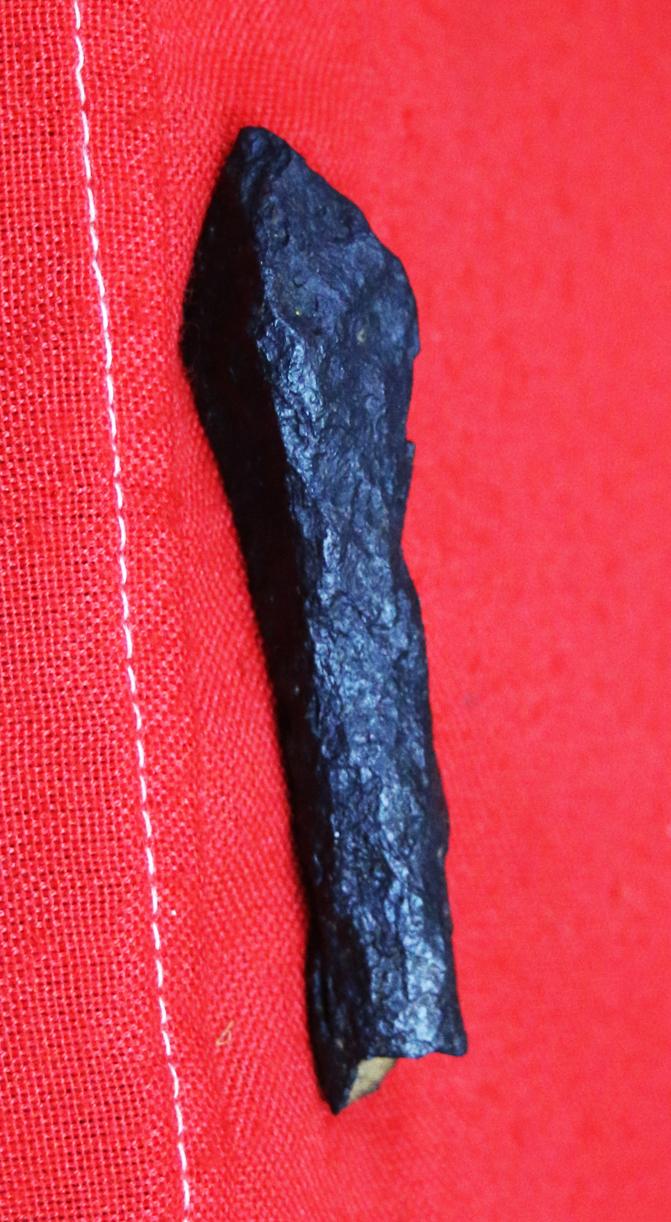
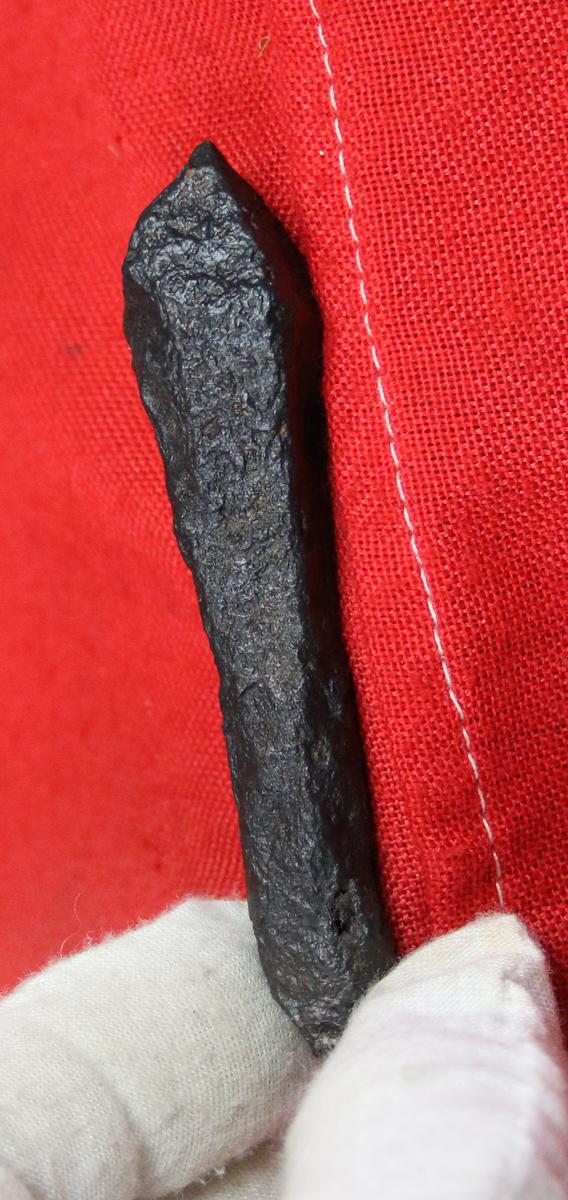
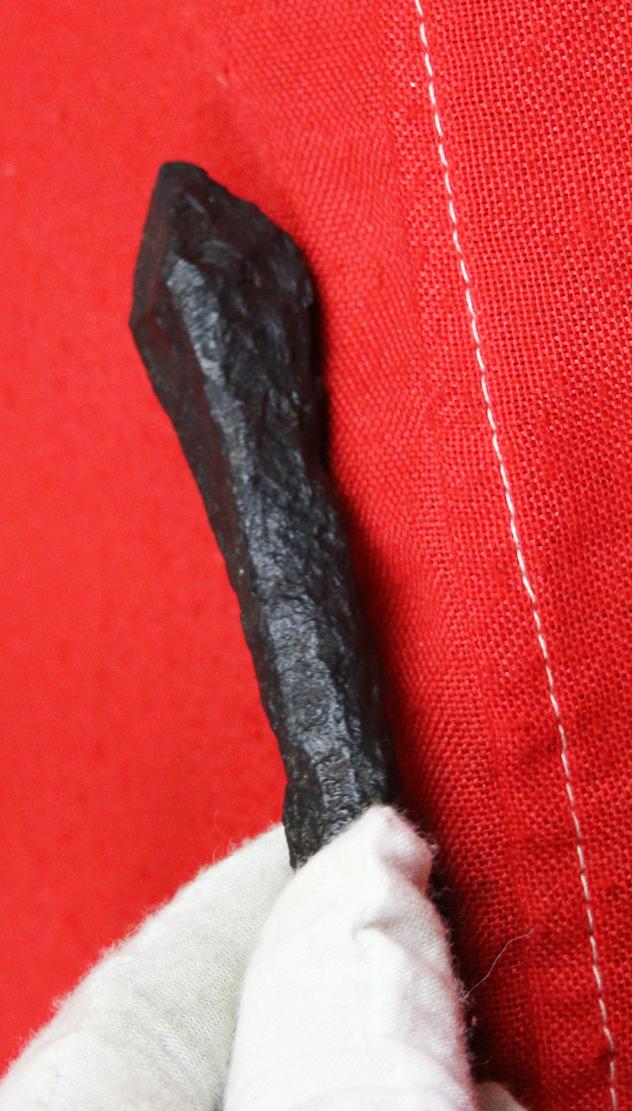
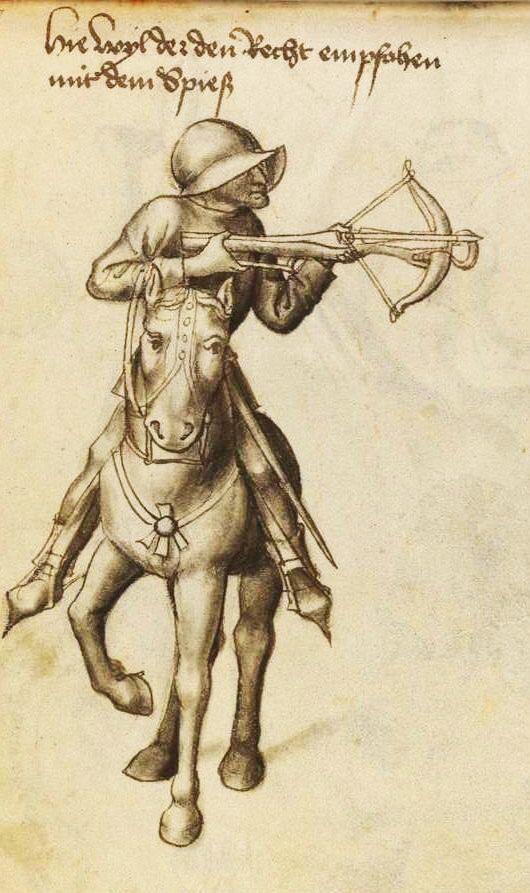
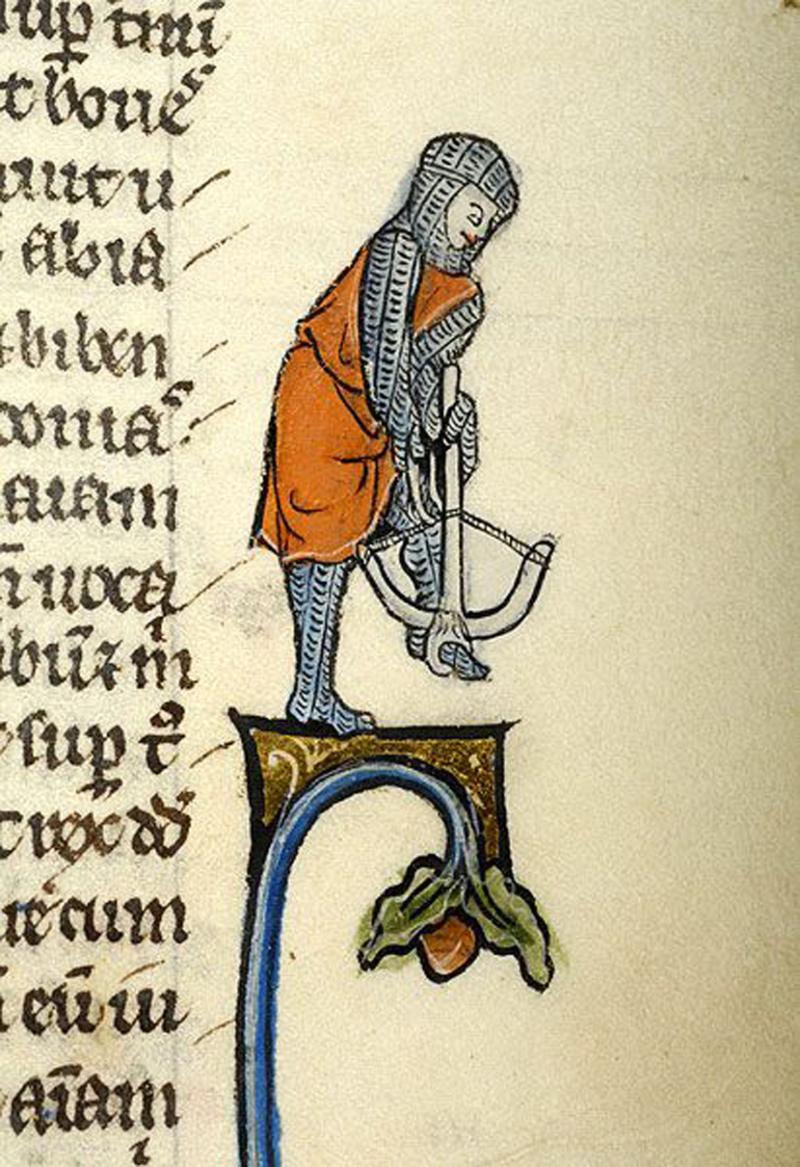
French Crossbowman’s Quarell Head, From a Crossbow Bolt, Fired At The English Longbowmen. From The Site of The Battle of Crecy. Recovered During a 'Grand Tour' Of the Area Of The Battle Site in the Early 1800's
Recovered During a 'Grand Tour' Of the Area Of The Battle Site in the Early 1800's In superbly conserved condition, an iconic antiquity and souvenir from one of the greatest engagement between the French and English in the 100 Years War. A battle where the famed Edward, the Black Prince gained his spurs. We recently acquired some other beautiful pieces, from the descendant family of the 10th Duke of Hamilton, that their ancestors had purchased in the 1820's during a Grand Tour, from just north of the Mave River at Crecy.
The Battle of Crécy took place on 26 August 1346 in northern France between a French army commanded by King Philip VI and an English army led by King Edward III. The French attacked the English while they were traversing northern France during the Hundred Years' War, resulting in an English victory and heavy loss of life among the French. The English army had landed in the Cotentin Peninsula on 12 July. It had burnt a path of destruction through some of the richest lands in France to within 2 miles (3 km) of Paris, sacking many towns on the way. The English then marched north, hoping to link up with an allied Flemish army which had invaded from Flanders. Hearing that the Flemish had turned back, and having temporarily outdistanced the pursuing French, Edward had his army prepare a defensive position on a hillside near Crécy-en-Ponthieu. Late on 26 August the French army, which greatly outnumbered the English, attacked. During a brief archery duel a large force of French mercenary crossbowmen was routed by Welsh and English longbowmen. The French then launched a series of cavalry charges by their mounted knights. These were disordered by their impromptu nature, by having to force their way through the fleeing crossbowmen, by the muddy ground, by having to charge uphill, and by the pits dug by the English. The attacks were further broken up by the effective fire from the English archers, which caused heavy casualties. By the time the French charges reached the English men-at-arms, who had dismounted for the battle, they had lost much of their impetus. The ensuing hand-to-hand combat was described as "murderous, without pity, cruel, and very horrible." The French charges continued late into the night, all with the same result: fierce fighting followed by a French retreat. The English then laid siege to the port of Calais. The battle crippled the French army's ability to relieve the siege; the town fell to the English the following year and remained under English rule for more than two centuries, until 1558. Crécy established the effectiveness of the longbow as a dominant weapon on the Western European battlefield. Edward the Black Princes role at Crecy; Early on 26 August 1346, before the start of the Battle of Crécy, Edward received the sacrament with his father at Crécy, and took the command of the right, or van, of the army with the earls of Warwick and Oxford (Sirs Geoffroy d'Harcourt and John Chandos) and other leaders.
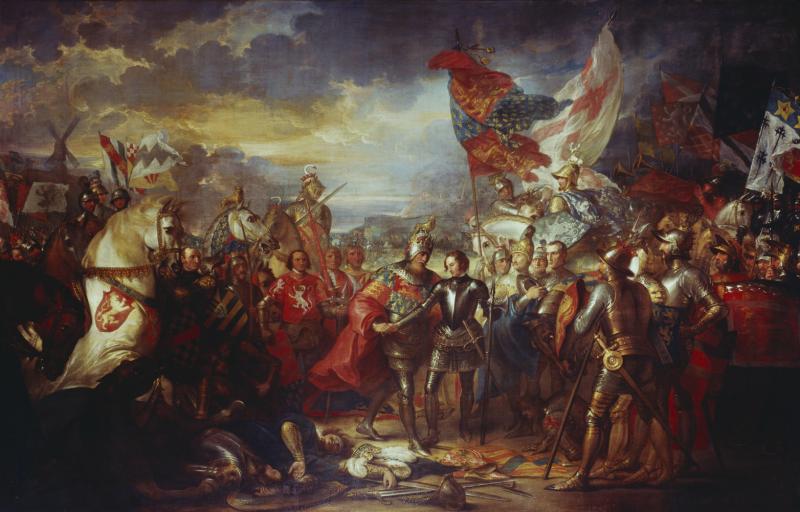
An unconfirmed source says that they commanded 800 men-at-arms, 2,000 archers, and 1,000 Welsh foot soldiers. When the Genoese bowmen and the front line of the French became disordered, Edward apparently left his position to attack their second line. However, the Count of Alençon then charged his division, putting Edward in great danger, and the leaders who commanded with him sent a messenger to tell Edward III to beg for assistance. When Edward III learned that his son was not wounded, he responded that he would send no help, for he wished to give Edward the opportunity to "win his spurs" (despite already being knighted), and to allow the English army the honour of the victory. In the battle, Edward was thrown to the ground, then was rescued by Sir Richard Fitz-Simon, his standard-bearer, who protected Edwards as he regained his feet. Probably by this time, the French advanced to the elevated ground of the English position. Earl of Arundel, having been sent for help by Harcourt, forced back the French.13 Edward III with the Black Prince after the Battle of Crécy by Benjamin West, 1788 A flank attack on the side of Wadicourt was then attempted by the Counts of Alençon and Ponthieu, but the English were strongly entrenched there, and the French were unable to penetrate the defences. The French lost the Duke of Lorraine and the Counts of Alençon and Blois. The two front lines of their army were broken, and King Philip's division then engaged. Edward III perhaps advanced at the head of the reserve, and the rout was soon completed. When the battle was over, Edward III met his son and declared that he had acquitted himself loyally. The next day, the two paid funeral honours to King John of Bohemia. The legend states that Edward, the Black Prince, adopted the ostrich feather crest and "Ich Dien" motto of the blind King John of Bohemia after defeating him at the Battle of Crécy in 1346. While this story is popular, evidence suggests it may be a romanticized myth, as John actually used vulture wings, and the badge's origins are not fully verified. Following the Battle of Crécy, the Black Prince allegedly found the body of the blind King John of Bohemia and took his crest (ostrich feathers) and motto ("Ich dien" - I serve) to honour his bravery.
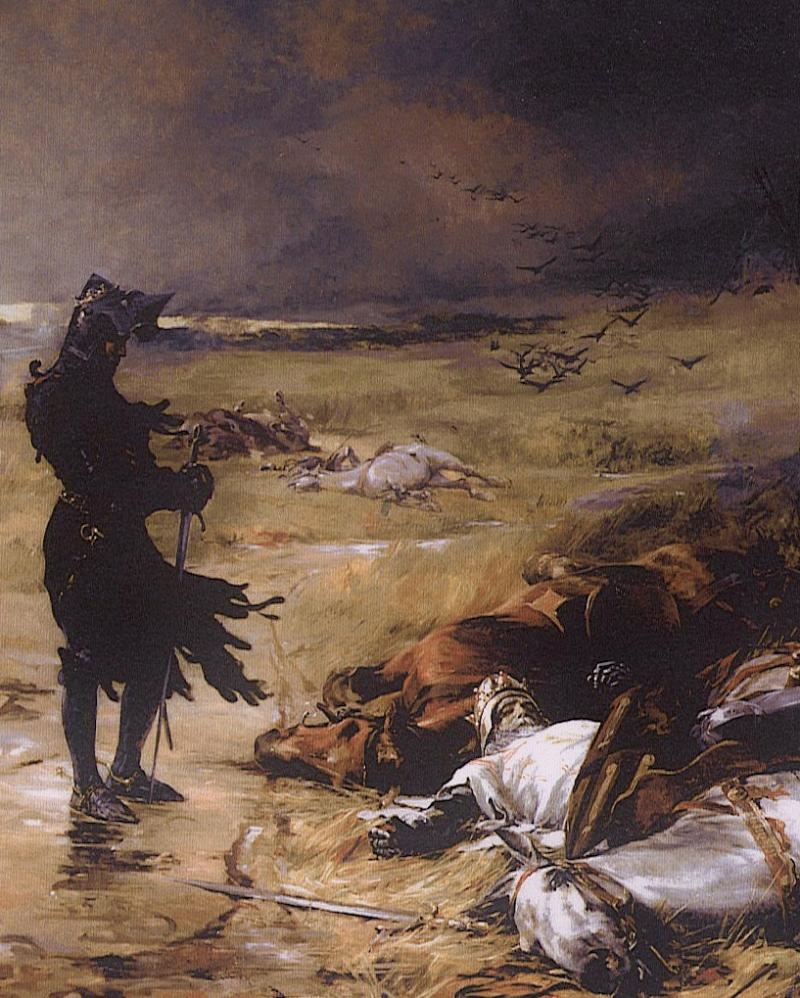
There is no solid historical evidence supporting this claim. King John's actual crest was vultures' wings. The story of the feathers first appeared in writing in 1376, the year the Black Prince died. The badge, which is not connected to native Welsh princes, consists of three white feathers in a gold coronet with the motto, and has been associated with the Prince of Wales since at least 1901. Some theories suggest the feathers were a nod to the Welsh archers who were crucial to the victory, with "Ich Dien" potentially being a corruption of the Welsh phrase "Eich Dyn" ("Your Man" Painting of Edward The Black Prince pays his respects to King John of Bohemia (John the Blind) in the aftermath of the Battle of Crécy 1346
Code: 26129