
A Most Intruiging Allach Artwork. An Original Third Reich SS-Julleuchter. An Award & Trophy of the German Schutzstaffel Presented By Himmler to Officers Then Members of the SS From1936 -1944. A Pagan Runic Winter Solstice Lamp, An SS Service Decoration
NOW SOLD!
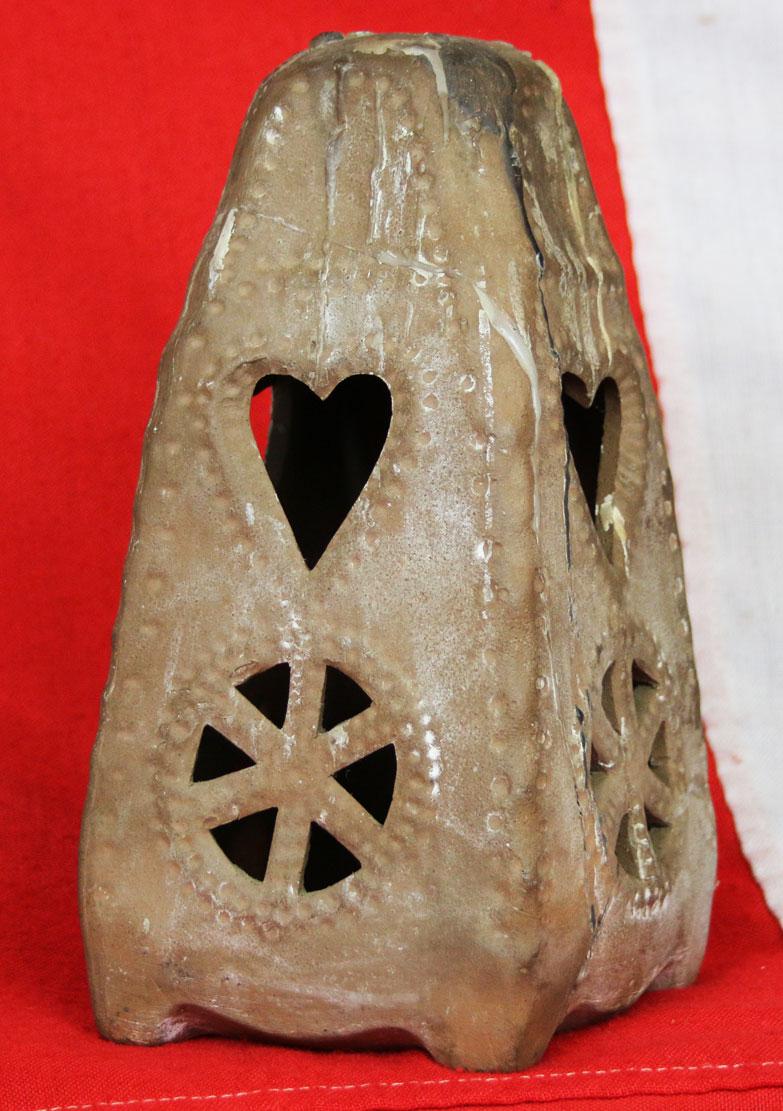
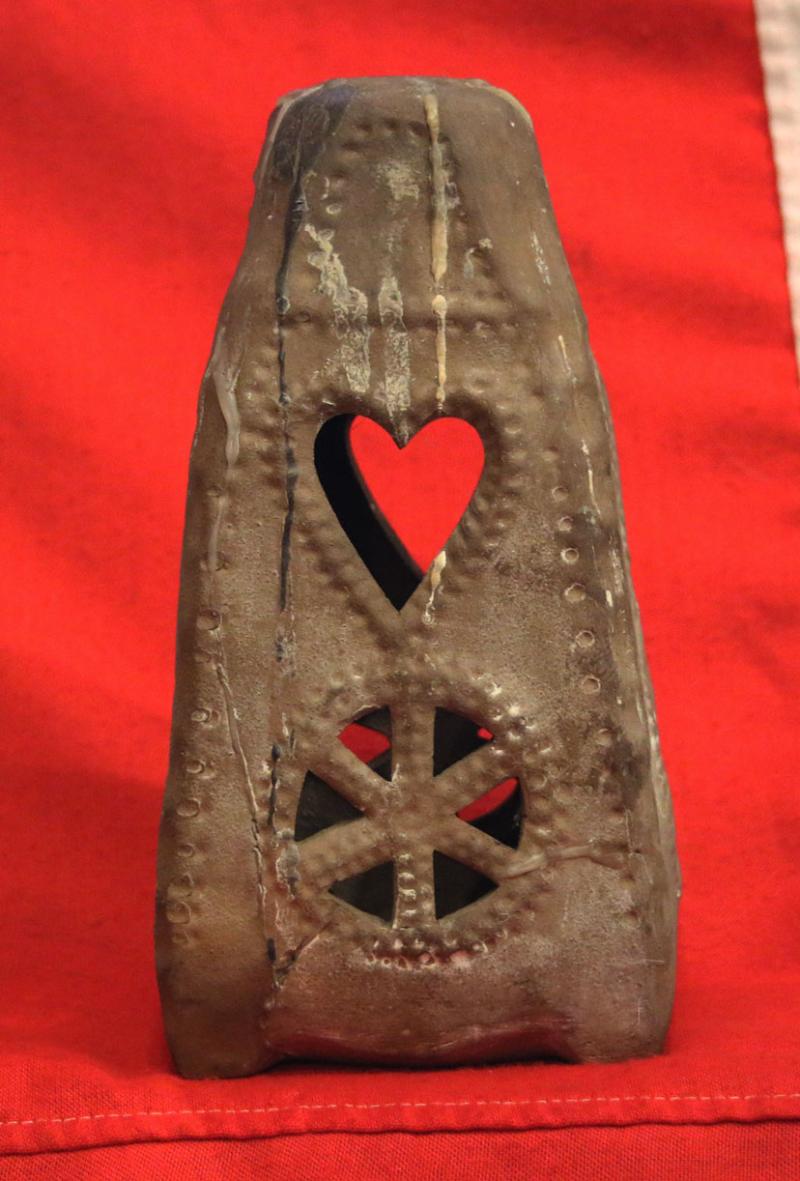
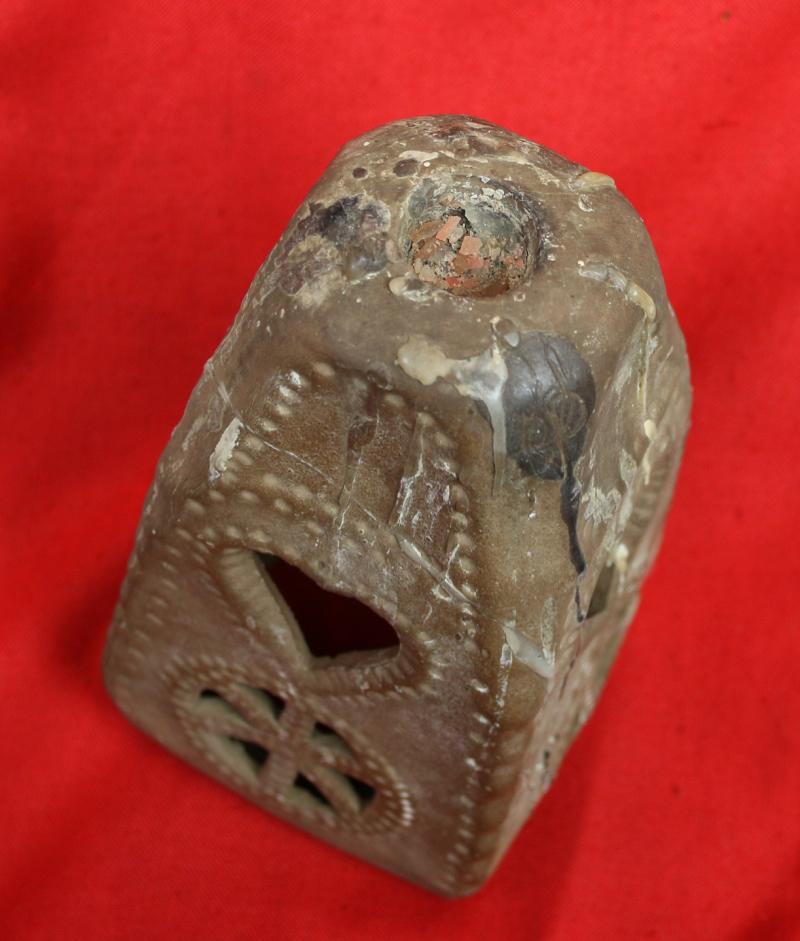
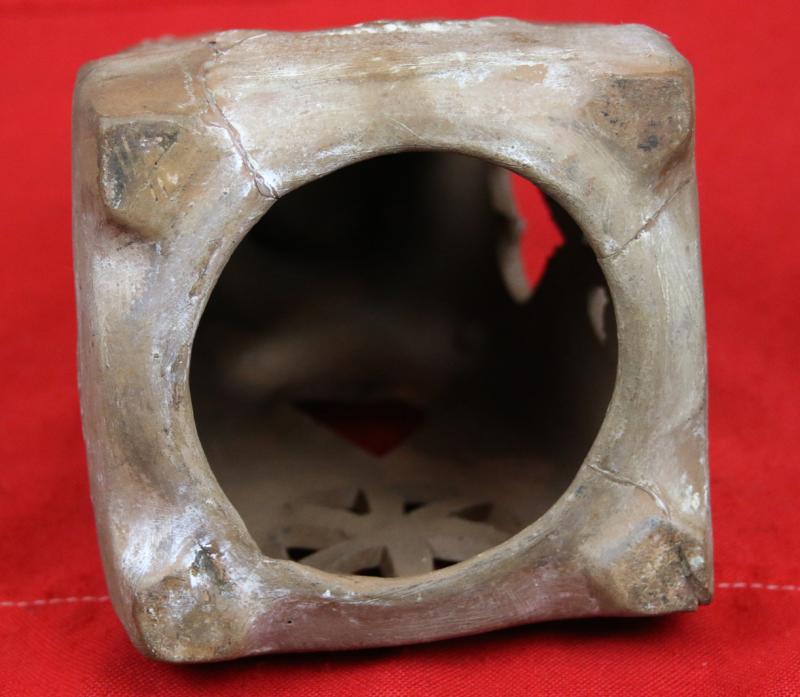
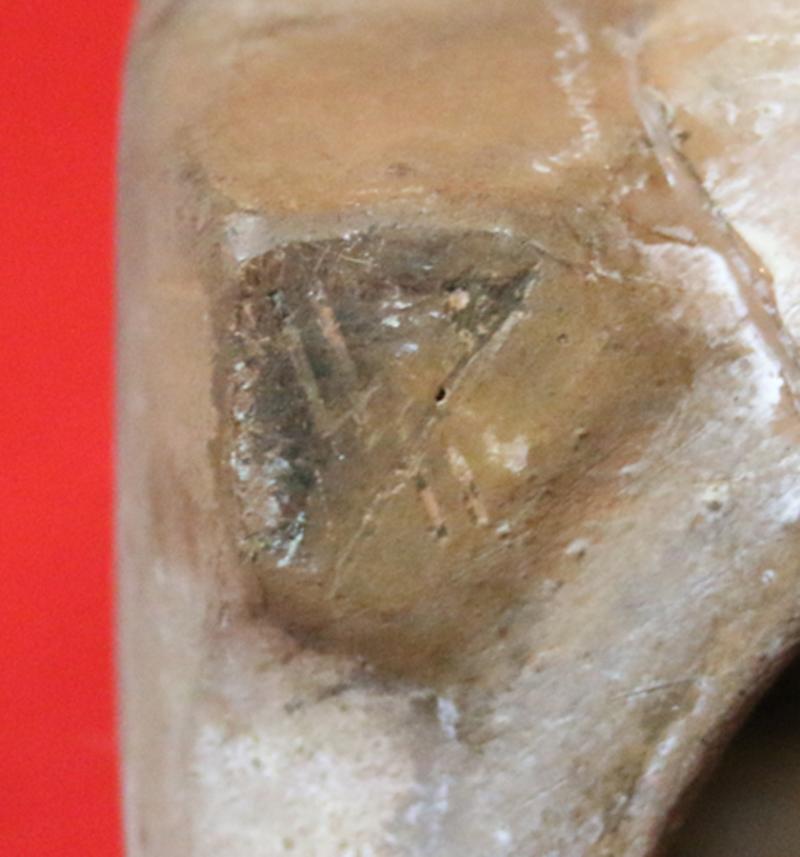
In brown ceramic with incised decoration of runic symbols, designed to hold the Winter Solstice candle, and it bears the large SS Allach factory stamp into one of its four feet. Their are numerous wax traces of original use, in several shades of white and dark brown
The Nordic history of the Third Reich Julleuchter, originated from a swedish artifact, a candle holder " The 16th century Julleuchter" was housed in the Nordic Museum and had a height of 15 cm and a base of 8.2 cm squared. It was a candle-holder that has an incised heart shape and a six-spoked opening.
The artefact was described in 1888 in the magazine of the Swedish literary club Runa (founded by Johan August Strindberg), which compared the six-spoked window in its base with the shape of the medieval h-rune; the 1888 article attributed a 16th-century date to the object (the earliest date of the introduction of candles to Scandinavian households)
The Runa article came to the attention of Herman Wirth because of its supposed "Hagal rune" (the six-spoked window at its base) who mentioned it in his Ura Linda Chronik, whence it passed into Nazi-era Germanic mysticism.
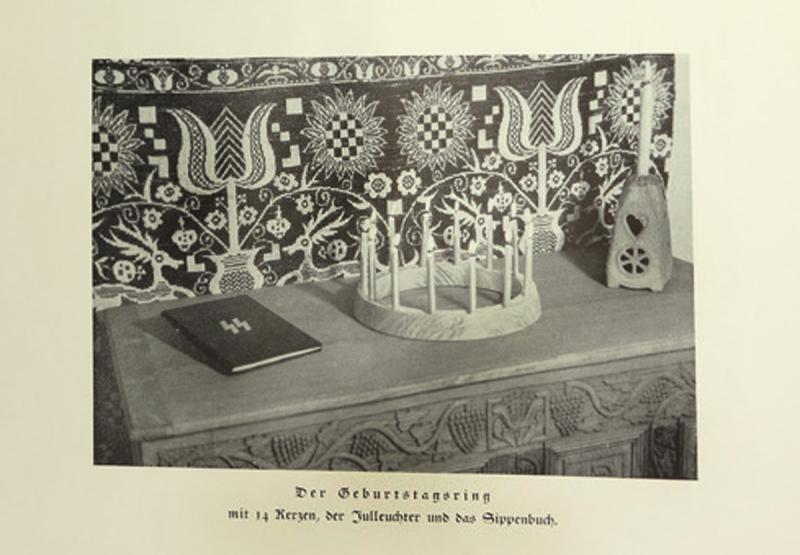
In a 1936 memorandum, Heinrich Himmler set forth a list of approved holidays, in part supposedly based on "pagan" traditions, including a "Julfest" intended to replace Christian rites. The Julleuchter and other symbols were also meant to serve as a consolation to women who, by having married into the SS, had to renounce the spiritual shelter and service of their church. The SS officer was instructed to set up a shrine that included, an awarded by Himmler, ceramic Julleuchter in the corner of one room of his household.
In January 1936, the SS Porzellan Manufaktur Allach was created under the control of Heinrich Himmler. Well known artists were forced to participate. in October 1937 production was shifted to the SS-operated Allach sub camp of the Dachau concentration camp.
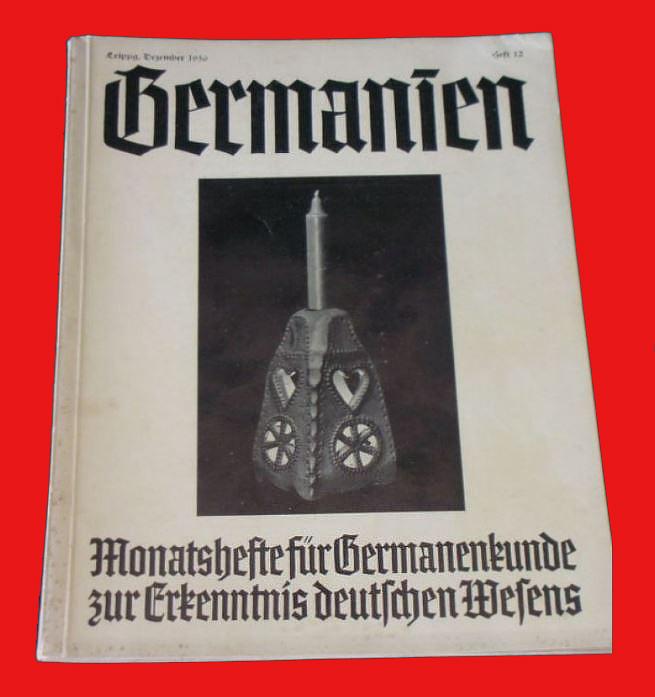
An article about the Julleuchter was published in the German magazine "Germanien" in December 1936. The author argued that this "millennia old" lantern was to be used as "a memento of the "Year of the Great Migrations of the people of the north"". Another article was published in the SS periodical SS-Leitheft Jahrgang 7 Folge 8a. In 1939 the Julleuchter was also mentioned in "Die Gestaltung der Feste im Jahres und Lebenslauf in der SS-Familie"(Celebrations of the SS Family) by Fritz Weitzel.
The information about the 1936 issue of Germanien magazine about the Julleuchter is actually from the later magazine "Der Freiwillige." The article in "Der Freiwillige" reports Germanien magazine being, ..."the official organ of the German ancestor inheritance registered association, Berlin." The information given in that latter article is from Germanien magazine.
A 1936 issue of Germanien magazine claimed that the "millennium old" lantern had been used as a memento of the "Year of the Great Migrations" of the people of the north and as the small light of humanity under the stars of the night sky. When used during the 2 Solstice periods of the year, this is a symbol of the victory of Light over the Darkness, and also as a token of Eternal Circulation. The Julleuchter stands for an inseparable community, its conscience and attitude, and that it was used as a symbol of never ending sunlight. Further, the magazine stated that when the Julleuchter was used during the holiday of Yule (what is now known as The 12 Days of Christmas), twelve candles are used. One is used each night symbolizing the twelve months, until the 31 of December when the "July Moon shines." On that night a thirteenth candle is used for the new coming month of January. The candles always burn below but on the last night, the candle is again transferred upward – this is the sun, which is spilled in order to return to the earth from the gloom of another peace.
This very rarely surviving SS-Julleuchter was considered both an award and trophy of the German Schutzstaffel that was presented to officer's then later to members of the SS, from approximately 1936 until 1944 as a service decoration
Heinrich Himmler originally had the intention to make the Julleuchter a standard gift to all SS members and there were no criteria attached to its presentation. For reasons which are not entirely clear, by the start of World War II, the Julleuchter had begun to be viewed as an SS decoration, and was entered as such in SS service records once the Julleuchter had been presented. However, as the SS-Julleuchter was considered "non-portable" (much like the Luftwaffe Honor Goblet), there was no outward display on an SS uniform indicating its presentation.
Apparently even as the Red Army was advancing and the fall of Berlin was in the foreseeable future, The Julleuchter was used during the decoration French volunteers in the Waffen-SS. One surviving soldier said, "In the light of a candle burning on a Julleuchter, a Jule Candlestick, symbolizing the never dying sunlight, Fenet decorated a number of comrades with the Iron Cross. Although simple, the ceremony that evening seemed all the more extraordinary."
'Christmas in Nazi Germany'
Not only the presents but the whole celebration should be full of surprises for all members of the family. The father lights the candle in the Jul-Leuchter, or 'Jul Earthenware Candlestick', from which the tree candles in turn get their light. ... The Jul-Leuchter, presented by Reichsführer-SS Himmler to the SS Man, is the most important symbol used throughout the year to mark celebrations and commemorations. Its cut-out Heart represents hearth and home, and the Hagal Rune peace through victory. At midnight, when the candles on the Yuletide Tree are burnt down, the SS Man will put the Jul-Leuchter on the table. The Candlestick with its year-long candle has been lit at every family celebration the past year. Its candle has burned down, and it should receive a new one tonight. Just as our ancestors never let the sacred hearth cooking fire extinguish, so our Jul-Leuchter must always have a light. Thus it becomes a symbol of the never dying sunlight. Everyone becomes very thoughtful when the old candle finally burns down and the new one is put in its place. (From "Celebrations of the SS Family" by Fritz Weitzel, 1939).
The Allach factory deposited the Julleuchter design with the Imperial Patent Office in Berlin on 16 January 1936. The Allach Julleuchter was unique in that it was made as presentation piece for SS officers to celebrate the winter solstice. It was later given to all SS members on the same occasion, 21 December. Made of unglazed stoneware, the Julleuchter was decorated with early pagan Germanic symbols.
The lamp has had some old contemporary repairs to cracks in the body. It was originally found in Scandinavia where it has been since during the war.
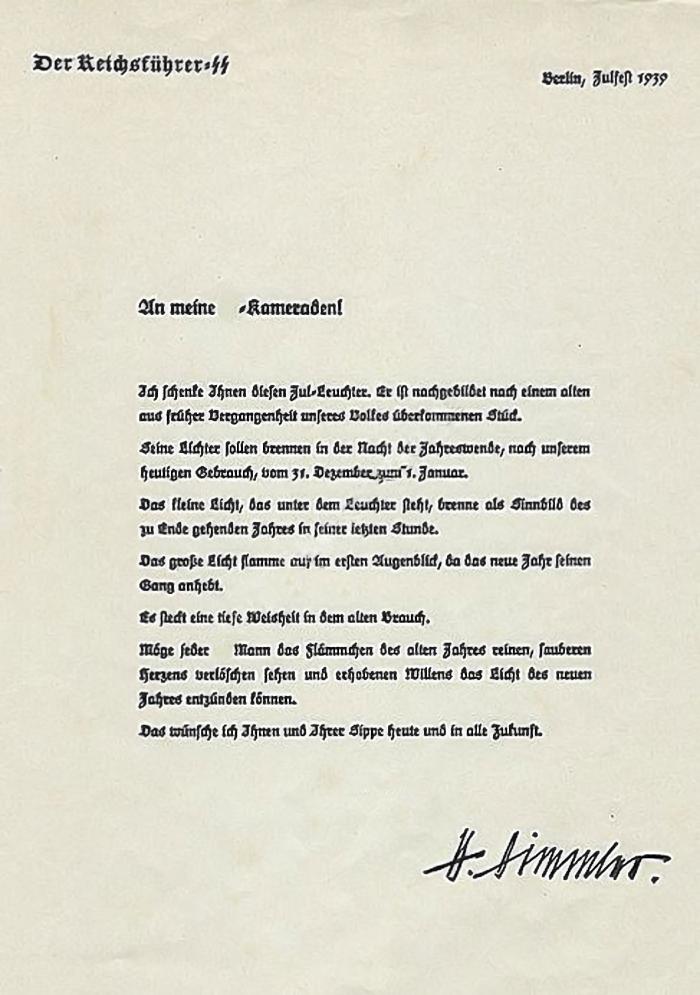
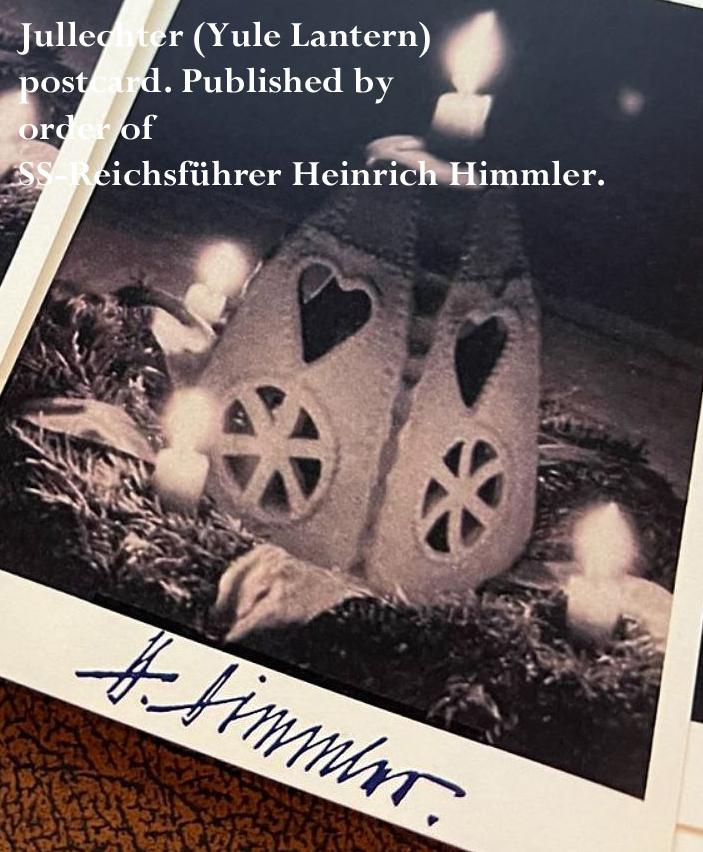
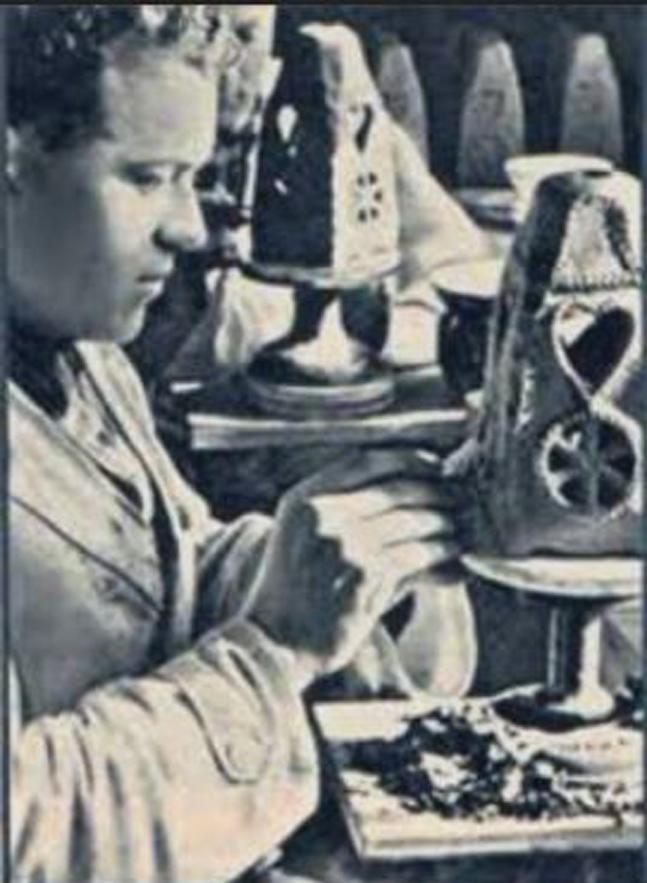
Photos in the gallery include the letter that accompanied each lamp, a worker in the Allach factory at Dachau working upon a lantern, officially published Christmas postcards from Himmler, and a front cover of Germanien. For information only and not included.
Code: 26163