


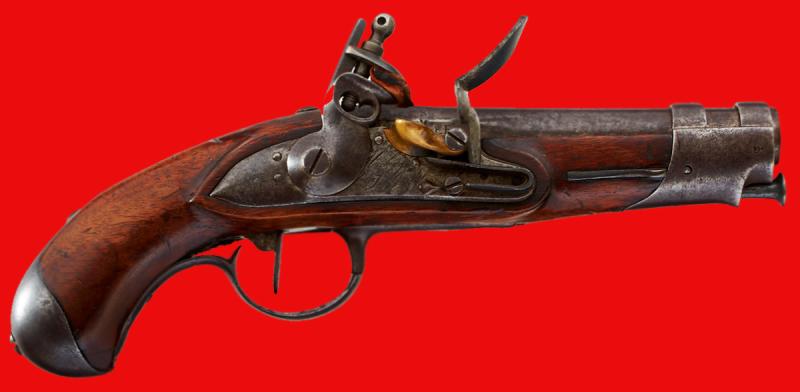
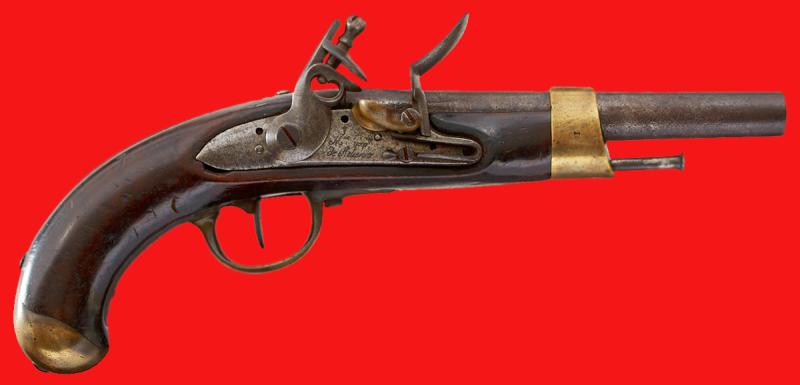



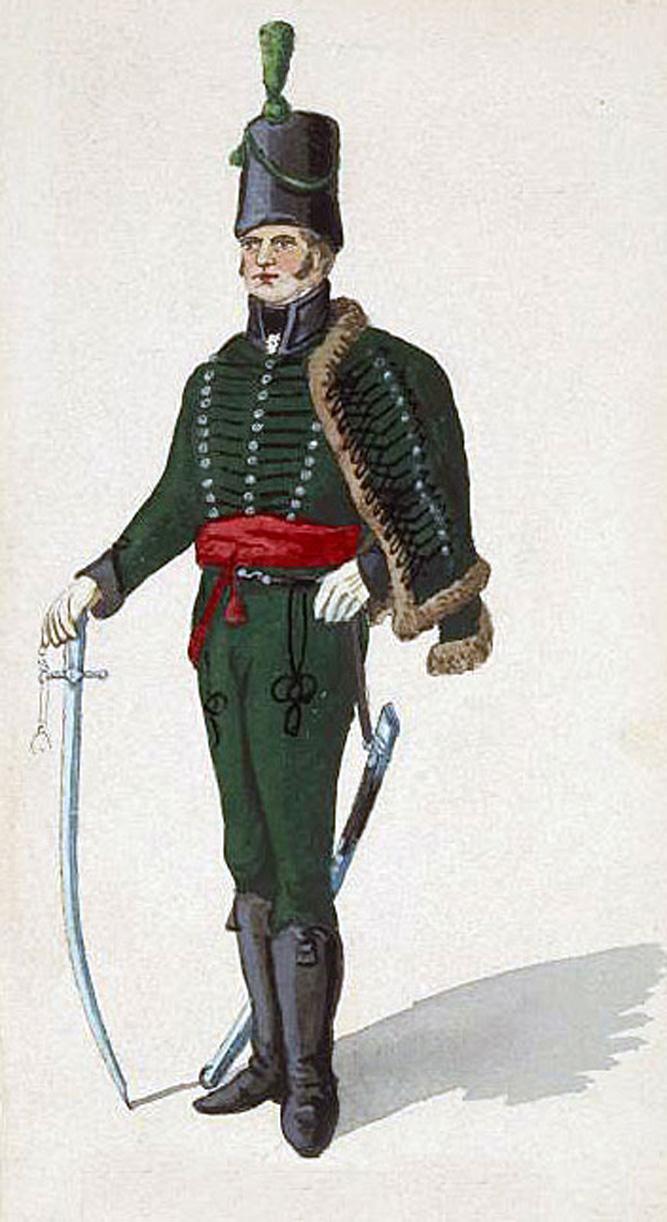
A Wonderful Collection of Napoleonic War 'Grande Armee' Cuirassier & Officer's Pistols, & Cuirassier Dragoon Musket, Crimean War General's Sword, Waterloo Hussar's Sword. Antique 17th Lancers Helmet {Death} ‘Or Glory’ Arriving This Week
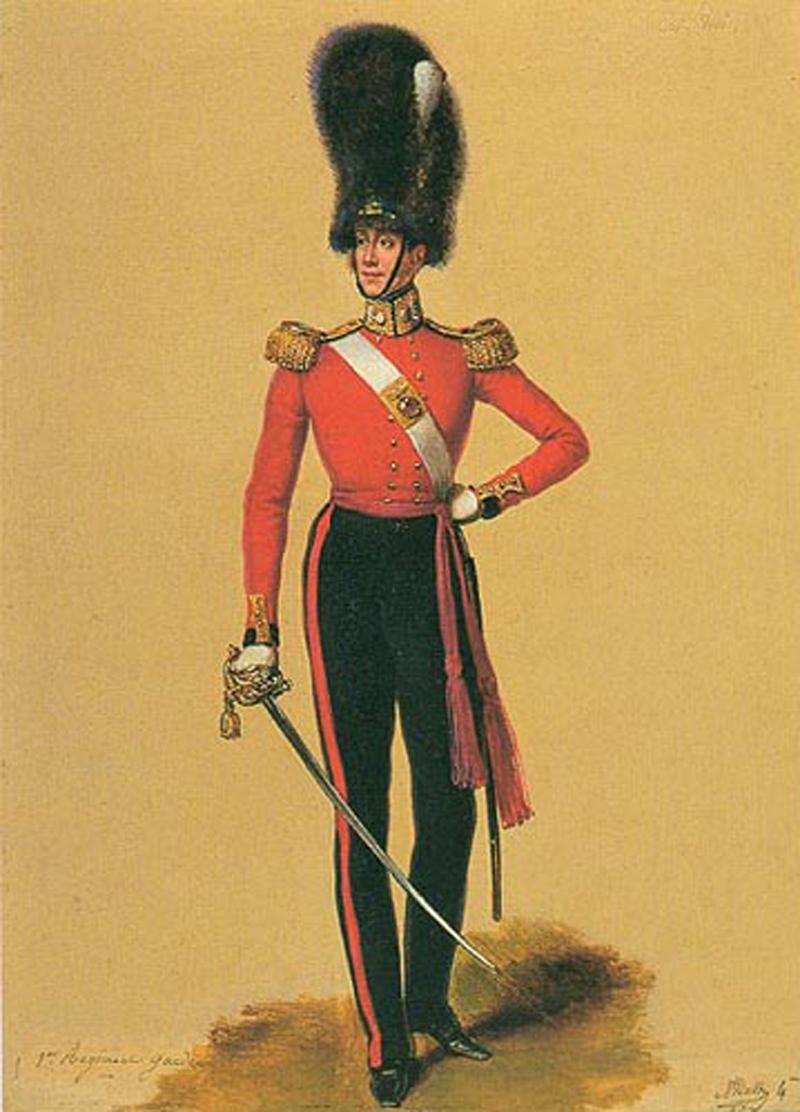
Plus, a Napoleonic Wars officers sword of a British Light Dragoon regiment, plus 19th century British swords, helmets and Japanese swords. Including, the sword of the Colonel of the 3rd Battalion Grenadier Guards in the Crimean War, {see pictures 8 and 9} later Major General, {see portrait picture 6}.
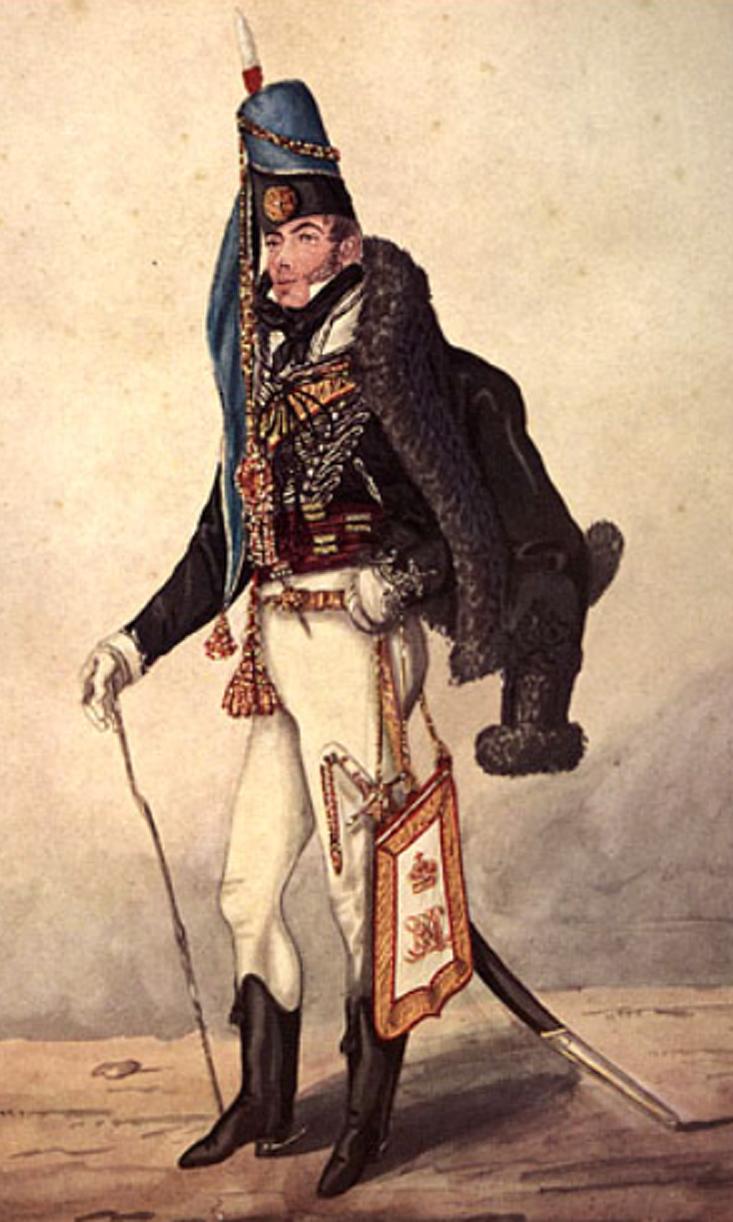
We show a Portrait of Major Hodge of the 7th Light Dragoons with his same mameluke sword {see portrait picture 7} Before 1815, during the Napoleonic Wars and the Battle of Waterloo, the Mameluke-hilted sword was a fashionable, often personal, choice for British light cavalry officers (such as Hussars) and high-ranking staff officers, rather than a standard infantry rifle officer's weapon.
The style was adopted following campaigns in Egypt and India, influenced by Napoleon's Mameluke units and the personal preference of the Duke of Wellington
Also due in, a good and rare Victorian 17th Lancers Helmet { a tchapka lance cap } One of the great British cavalry regiments that took part in the Charge of the Light Brigade in the Crimean War.
“When can their glory fade?
O the wild charge they made!”
These words were made famous by Alfred Lord Tennyson in his poem, ‘The Charge of the Light Brigade’, and refer to that fateful day on 25th October 1854 when around six hundred men led by Lord Cardigan rode into the unknown.
The charge against Russian forces was part of the Battle of Balaclava, a conflict making up a much larger series of events known as the Crimean War. The order for the cavalry charge proved catastrophic for the British cavalrymen: a disastrous mistake riddled with misinformation and miscommunication. The calamitous charge was to be remembered for both its bravery and tragedy.
The Grande Armée was formed in 1804 from the L'Armée des côtes de l'Océan (Army of the Ocean Coasts), a force of over 100,000 men that Napoleon had assembled for the proposed invasion of Britain. Napoleon later deployed the army in Central Europe to eliminate the combined threat of Austria and Russia, which were part of the Third Coalition formed against France. Thereafter, the Grande Armée was the principal military force deployed in the campaigns of 1806/7, the French invasion of Spain, and 1809, where it earned its prestige, and in the conflicts of 1812, 1813–14, and 1815. In practice, however, the term Grande Armée is used in English to refer to all the multinational forces gathered by Napoleon in his campaigns.
Upon its formation, the Grande Armée consisted of six corps under the command of Napoleon's marshals and senior generals. When the Austrian and Russian armies began preparations to invade France in late 1805, the Grande Armée was quickly ordered across the Rhine into southern Germany, leading to Napoleon's victories at Ulm and Austerlitz. The French Army grew as Napoleon seized power across Europe, recruiting troops from occupied and allied nations; it reached its peak of one million men at the start of the Russian campaign in 1812,3 with the Grande Armée reaching its height of 413,000 French soldiers and over 600,000 men overall when including foreign recruits.4
In summer of 1812, the Grande Armée marched slowly east, and the Russians fell back with its approach. After the capture of Smolensk and victory at Borodino, the French reached Moscow on 14 September 1812. However, the army was already drastically reduced by skirmishes with the Russians, disease (principally typhus), desertion, heat, exhaustion, and long communication lines. The army spent a month in Moscow but was ultimately forced to march back westward. Cold, starvation, and disease, as well as constant harassment by Cossacks and Russian partisans, resulted in the Grande Armée's utter destruction as a fighting force. Only 120,000 men survived to leave Russia (excluding early deserters); of these, 50,000 were Austrians, Prussians, and other Germans, 20,000 were Poles, and just 35,000 were French. As many as 380,000 died in the campaign.
Did you know, we now have five times as many traffic wardens in the UK than combat ready soldiers { 82000 traffic wardens compared to 18000 ‘combat ready’ soldiers.} When Hitler invaded, and occupied Norway, it was achieved with just 10,000 troops and barely 1,500 falshirmjager took Oslo, the capitol city. But it is very comforting to know London is a ‘perfectly safe’ city, as quoted by the mayor, who, interestingly has 15 permanent, fully armed 24/7 bodyguards. Goodness knows how many he would need if it wasn’t safe ?
Before WW1 the British Army stood at 700,000 men in 1914, which increased in total in the armed forces to 8.7 Million, and alongside the French, The Canadians, Australians, and The Indians, {another 11 million } thus, with an allied armed forces total of around 20 million, it still took 4 years of bloody conflict to beat the Germans. This was when Britain’s population was around half what is is today.
Code: 26183
Price
on
Request