

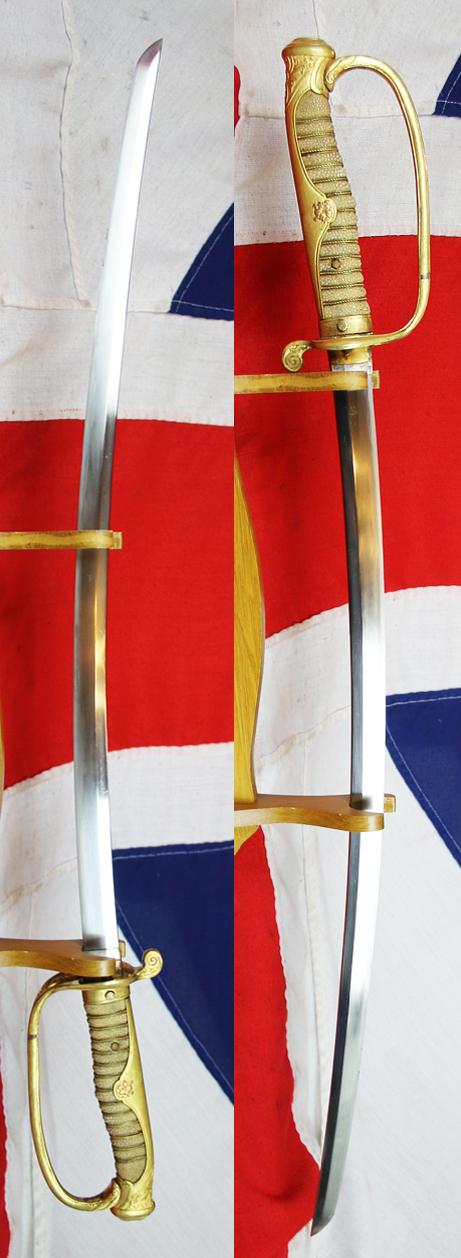
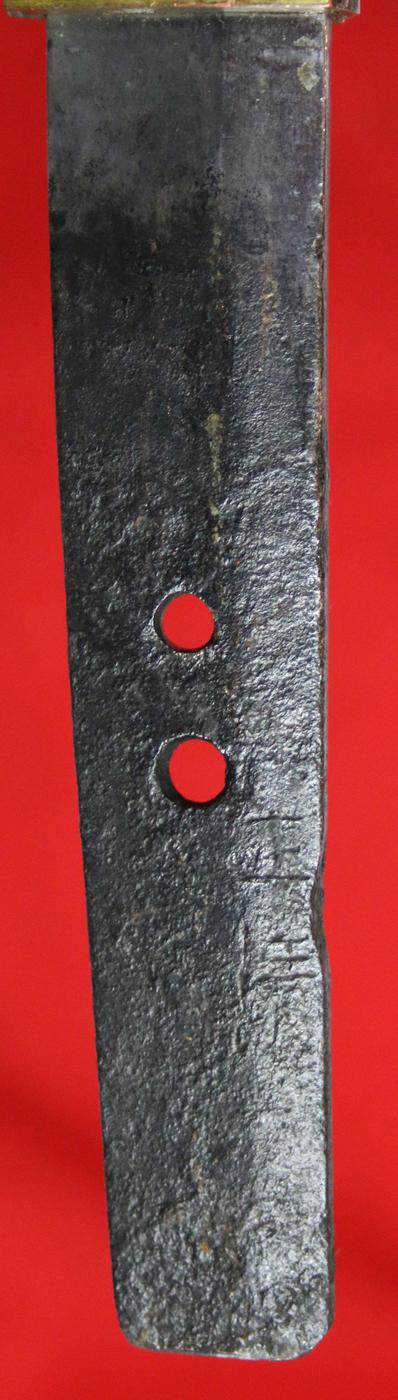
A Superb, Ancestral, 600 Year Old Signed Blade, Kyu Gunto Mounted Sword For An Officer In Sino Japanese War, The Boxer Rebellion, In China, The Russo-Japanese War & Further Used In WW1 and WW2 Usually By Very Senior Ranking Samurai Family Officer
If one needs an exceptional example, this must be the one, of this very scarce form of very early samurai family Japanese sword {signed Masa kiyo, possibly Mihara school} with Meiji era koshirae mounts.
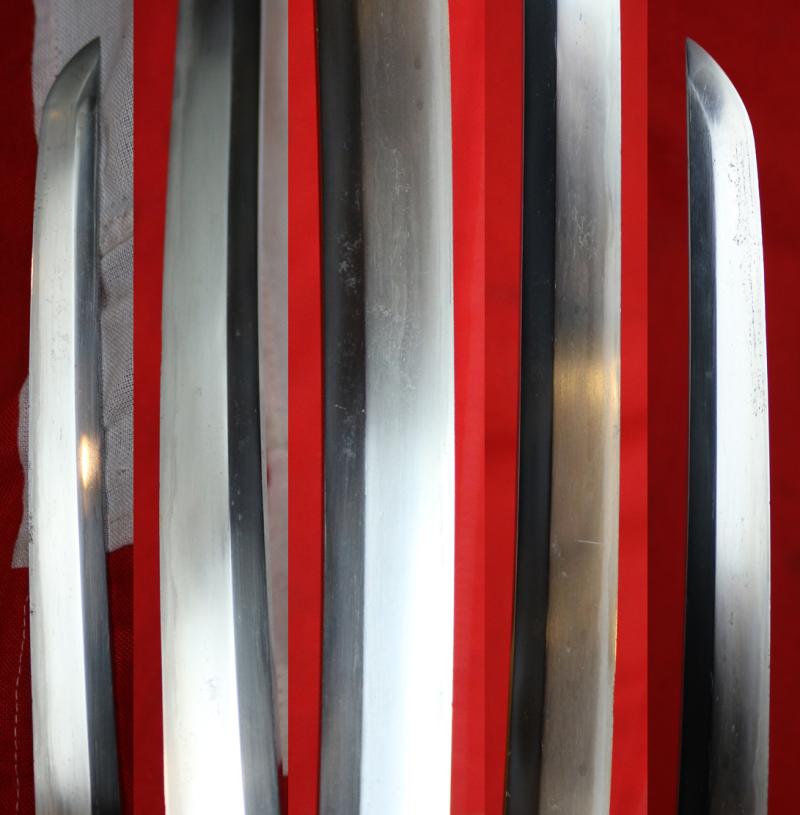
It has a super blade, with suguha midare hamon, that was first initially used by its first samurai owner before the Sengoku and Onin wars in 15th century Japan, continually right through the next 500 years by dozens of family samurai, until after the Tokugawa shogunate was deposed, and into the last samurai war, of the Meiji emperor, known as the Satsuma Rebellion.
That was the last war and battles of the ancient caste of samurai. And then, this sword was used by a samurai family, in the Meiji period of the 19th century, by a young officer {mounted in finest quality military fittings} permitted to use his ancestral early samurai blade.
Used in the First Sino-Japanese War (1894–1895): Fought primarily over control of Korea, this war demonstrated the effectiveness of Japan's modernization. Japan decisively defeated China, resulting in the Treaty of Shimonoseki, which gave Japan control over Taiwan, the Pescadores Islands, and the Liaodong Peninsula (though Russia later forced them to return the latter).
Japanese Invasion of Taiwan (1895): Following the Sino-Japanese war, Japan officially occupied and colonized Taiwan, facing significant armed resistance from the local population.
The Boxer Rebellion (1899–1901) where Japan joined the Eight-Nation Alliance (including Britain, Russia, and the US) to suppress an anti-foreign uprising in China. Japan provided the largest contingent of troops, earning international respect for its military organization.
Then, after a few years in the Russo Japanese War {1904-1905}, and it was further permitted to be used, often by veteran samurai born family officers, in the later WW1 and WW2.
A great and rare form of Japanese sword. However, it also has an ancient 600 year old ancestral, pre Sengoku period blade, so this is a great rarity, amongst rarities. One would be hard pressed to ever find another better example of such beauty, age and condition.
Dating from 1467-1603, the Sengoku or ‘Warring States’ period is known as the bloodiest in Japan’s history; an era of continuous social upheaval and civil war which transformed the country. Shogun-led authority was shattered and 150 years of murder and betrayal followed as fearsome warlords ruled local territories with unflinching ruthlessness.
Bear in mind this swords blade was hand made around the time that Henry Vth was fighting Agincourt in France
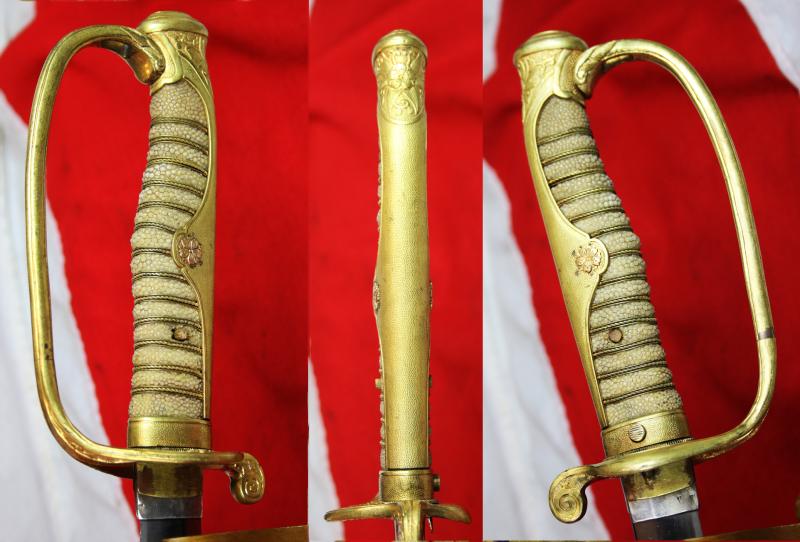
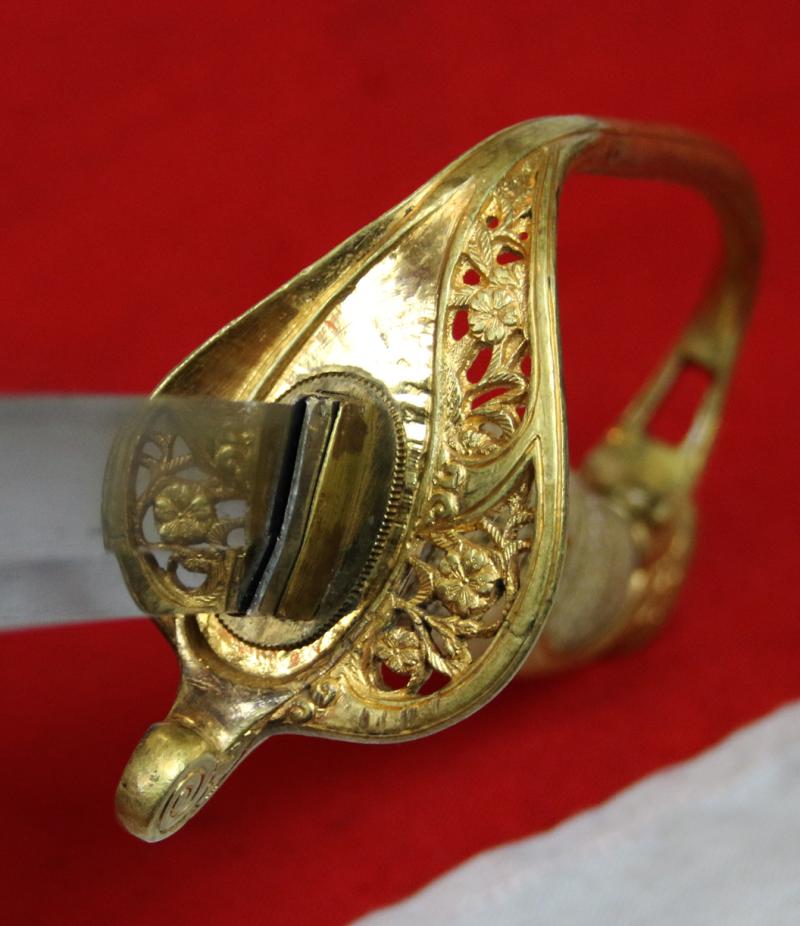
Almost all the original gilding is present to the hilt, the ancient blade is in original polish, and the habaki has deluxe cat scratch décor in gold and silver. Wooden saya from WW2, with sayagaki, bearing the signature {kanji} of the blade appraiser, and an elegant elongated hilt tsuka with knucklebow and original wire bound pristine samegawa {giant rayskin}.
The first standard sword of the Japanese military was known as the kyū guntō. The kyū guntō was used from 1875 until 1934, it closely resembled European and American swords of the time, with a wraparound hand guard (also known as a D-Guard) and chrome plated scabbard (saya), the steel scabbard is said to have been introduced around 1900
The Kyu gunto was a sword that began to cross the divide between the traditional Samurai sword, that was banned in the era of the Meiji Emperor, and the modern Western style sabre, but occasionally permitted to be fitted with a family ancestral samurai sword blade. The Kyu gunto style was adopted by the Imperial Japanese Army in the 1870's. By the early 1900's the Japanese officer class began more and more to see themselves as the reincarnated embodiment of the old Samurai warrior class, and the desire for the return to the traditional Bushido warrior code was becoming a powerful force. Modern Western styles had been faithfully adopted and the Imperial Japanese military had joined the rest of the civilised world in all it's advancements and technology in weaponry and uniforms that it had to offer. However, the officer class saw a threat to their long felt superiority over all others as their dress made them all but indistinguishable from soldiers of other inferior nations. A resurgence in the Samurai ethic needed a connection to the modern uniform, so a return to the Samurai sword was achieved in combat, but still with the visible connection to more modern Western dress form.
This sword, that bridged the gap between modern and ancient sword styles, was popular and adopted with great keeness. In fact Japanese military sword styles progressed even further in the subsequent decades, so that by the 1930's the standard officer's sword was a near identical copy of the ancient Samurai Tachi, with very little deference to modern sword patterns. The mounts are very good indeed, and the blade is also superb.
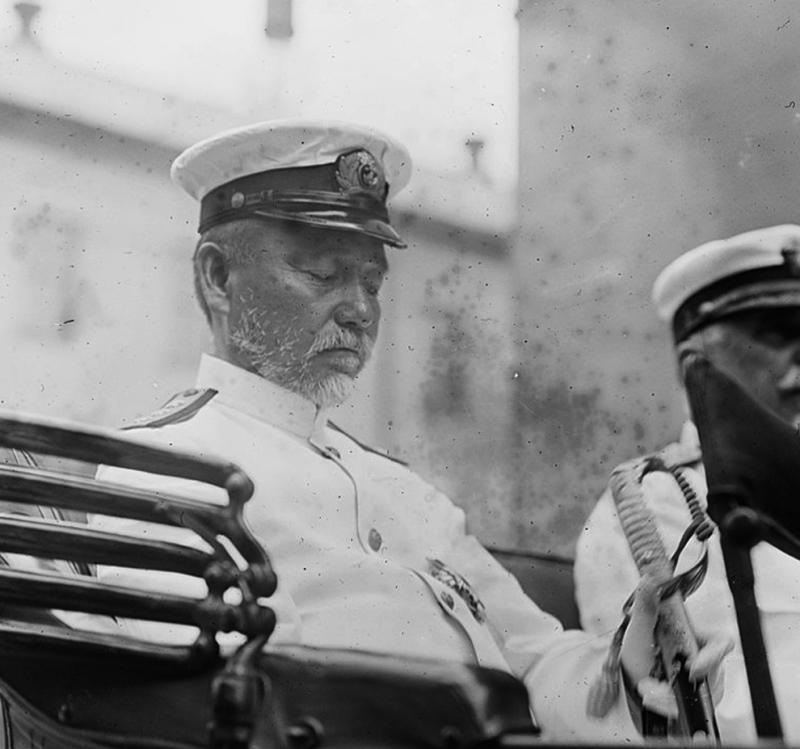
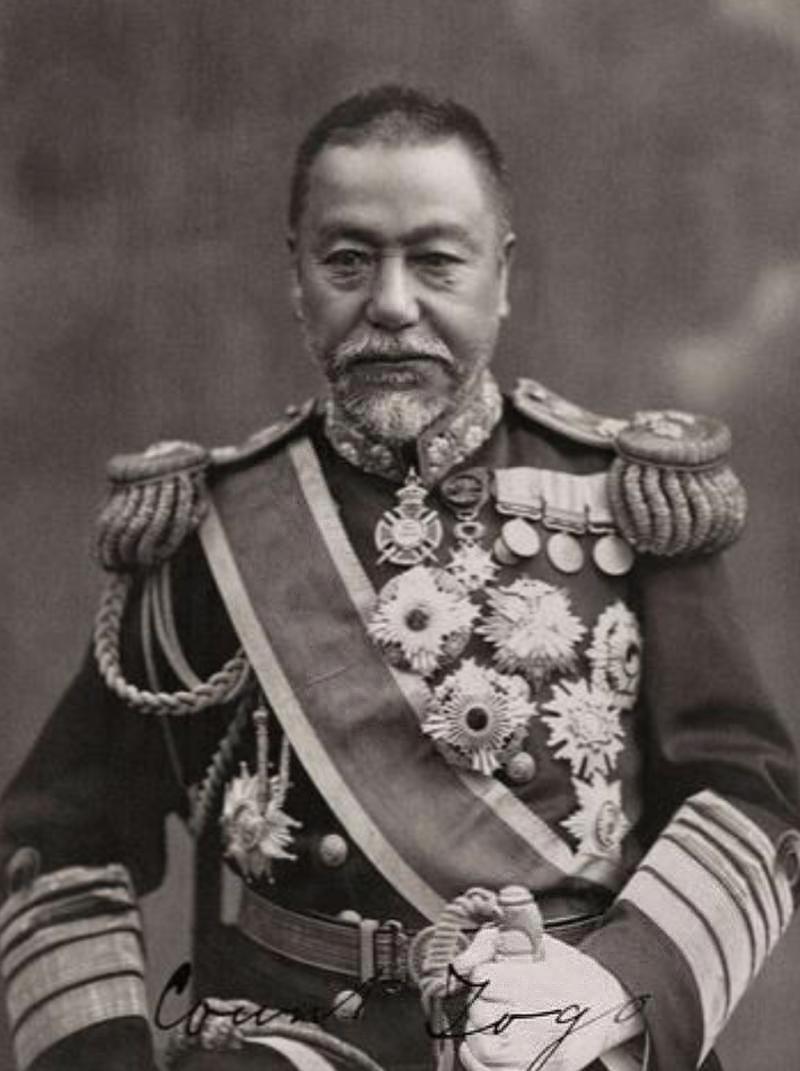
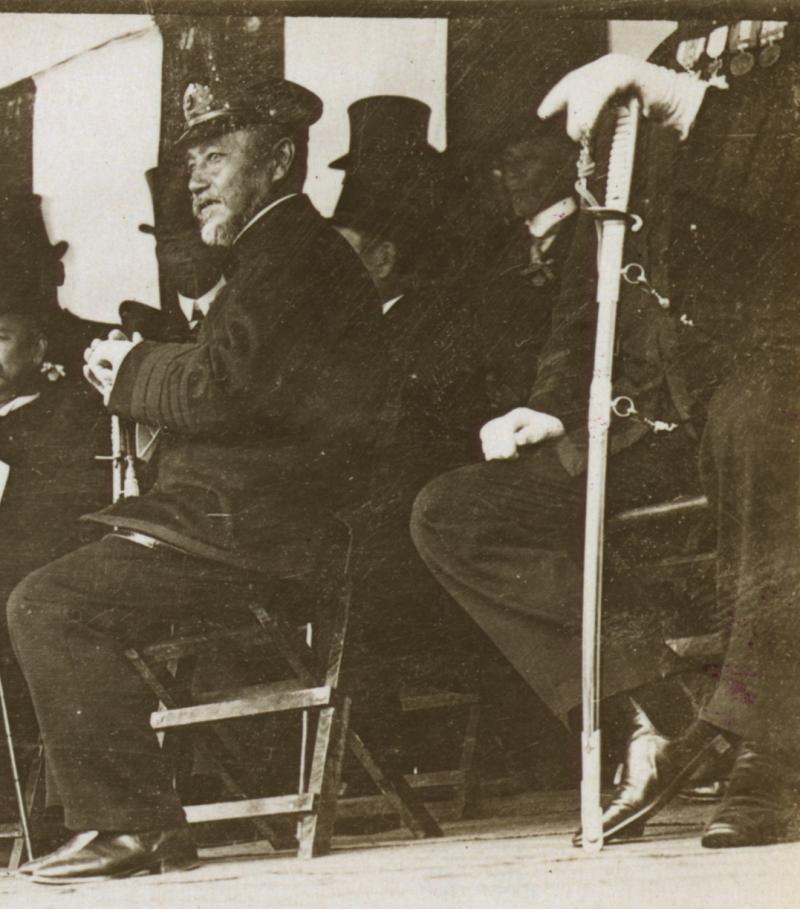
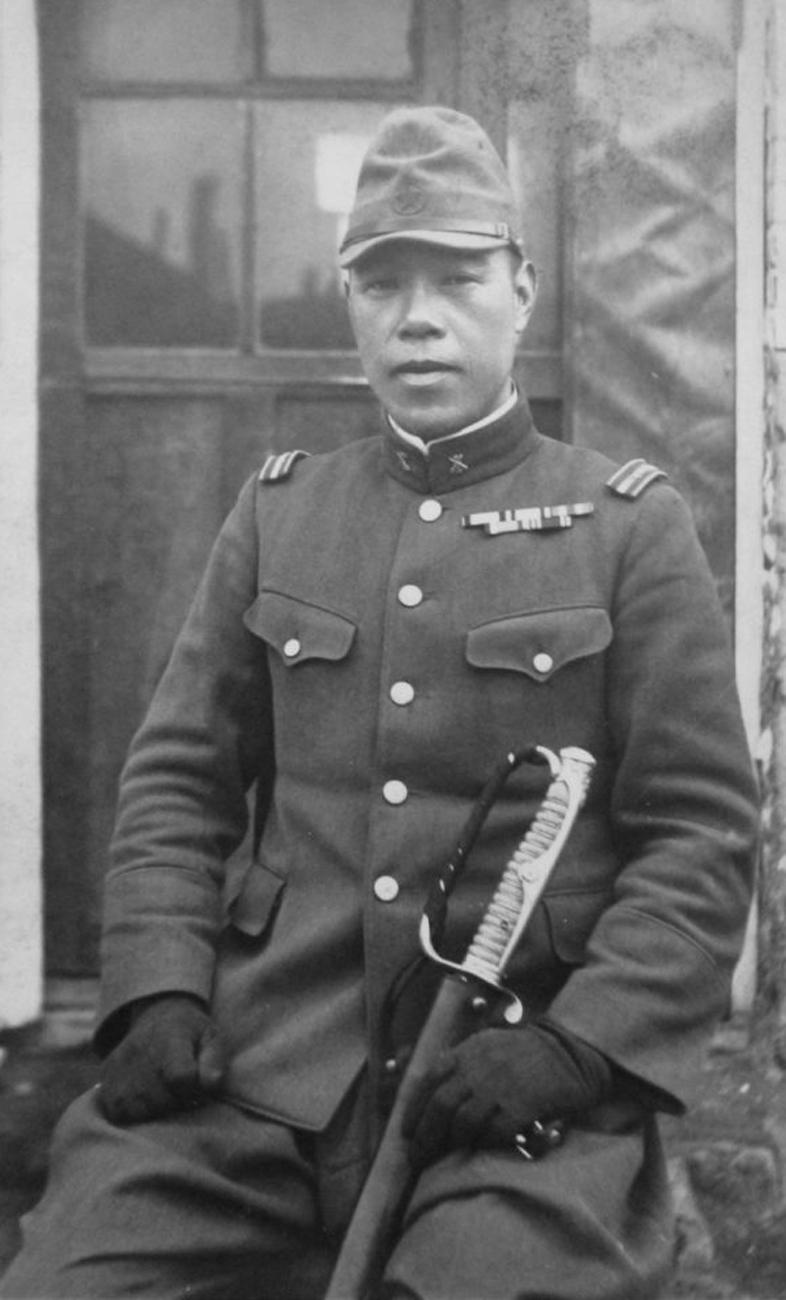
Three photos in the gallery {numbers 7,8,9,} of Admiral Togo with his Kyu-gunto mounted ancestral sword, with the Russo Japanese war service scabbard, and photo number 10 with a WW2 Japanese officer with his Kyu-gunto sword but its WW2 service saya {scabbard} like this one.
Tōgō Heihachirō (東郷 平八郎; 27 January 1848 – 30 May 1934), served as a gensui or admiral of the fleet in the Imperial Japanese Navy and became one of Japan's greatest naval heroes. As Commander-in-Chief of the Combined Fleet during the Russo-Japanese War of 1904–1905, he successfully confined the Russian Pacific naval forces to Port Arthur before winning a decisive victory over a relieving fleet at Tsushima in May 1905. Western journalists called Tōgō "the Nelson of the East". He remains deeply revered as a national hero in Japan, with shrines and streets named in his honour.
Overall in saya 34.25 inches long, katana blade 25.25 inches long, hilt 7.5 inches long
Code: 26191
5950.00 GBP