
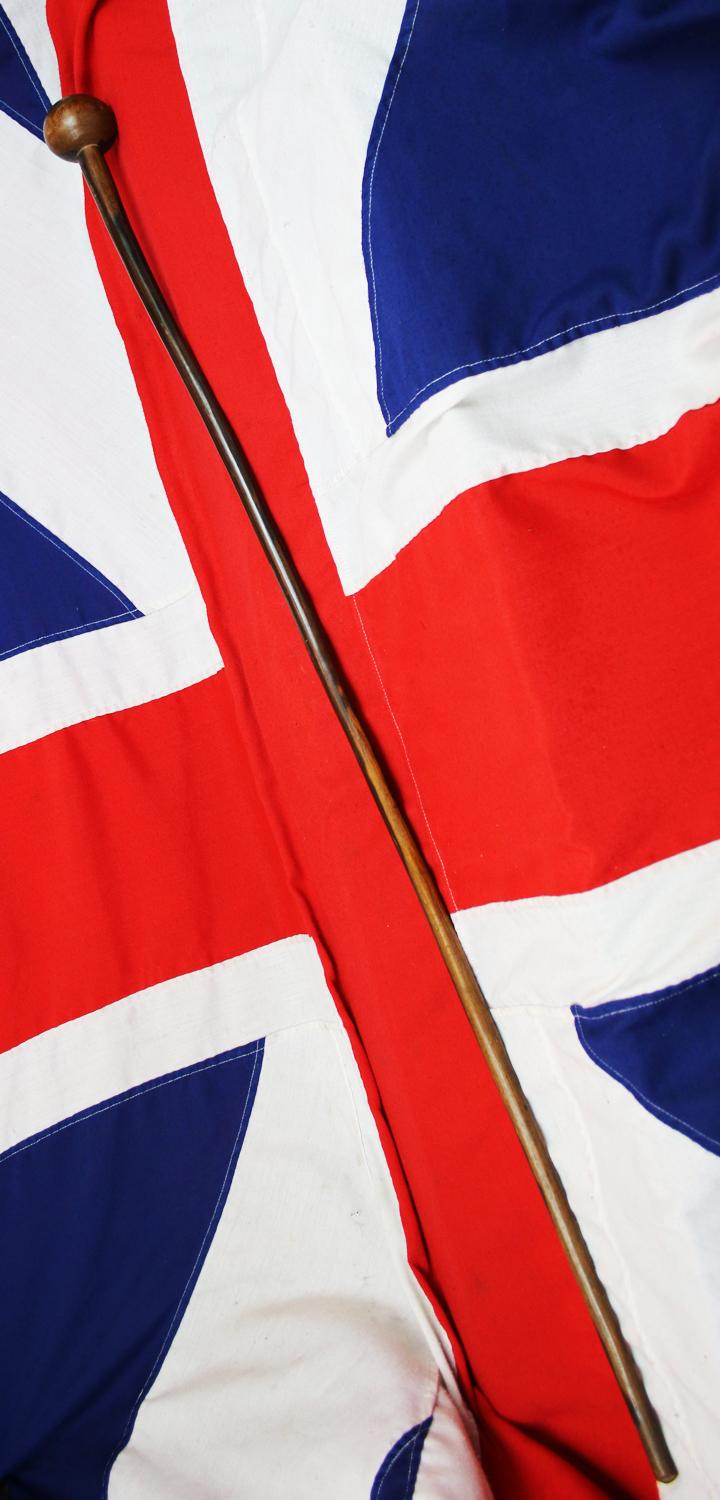
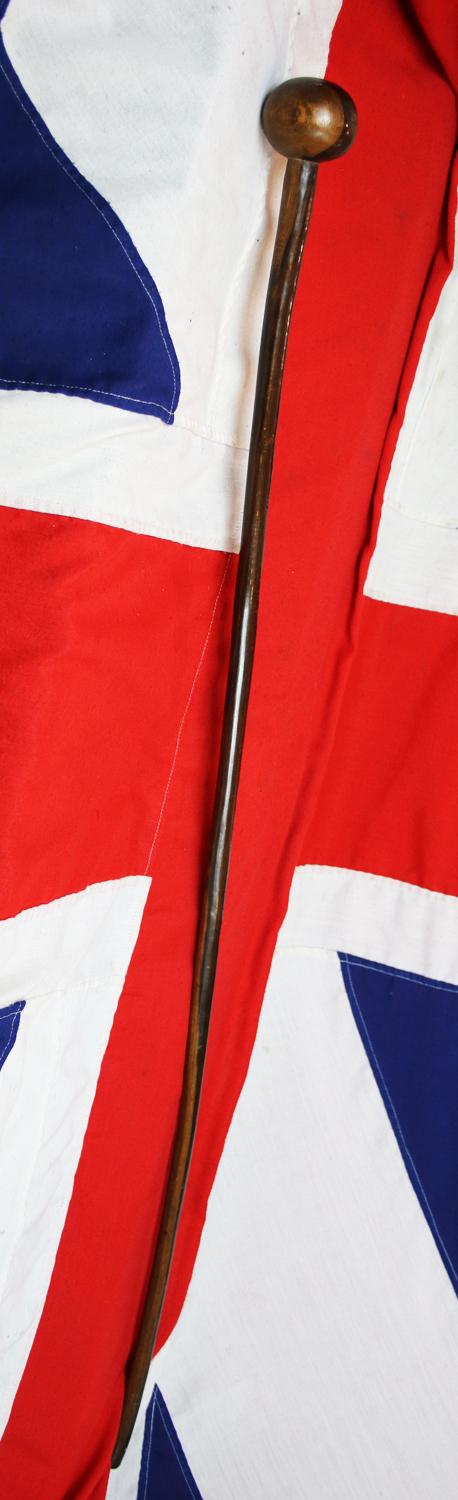
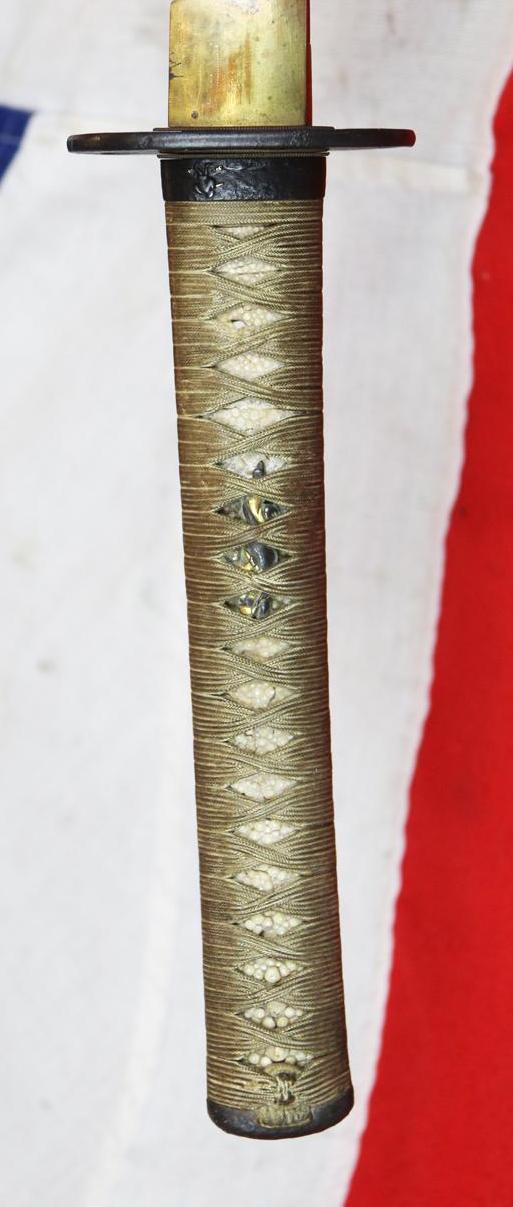
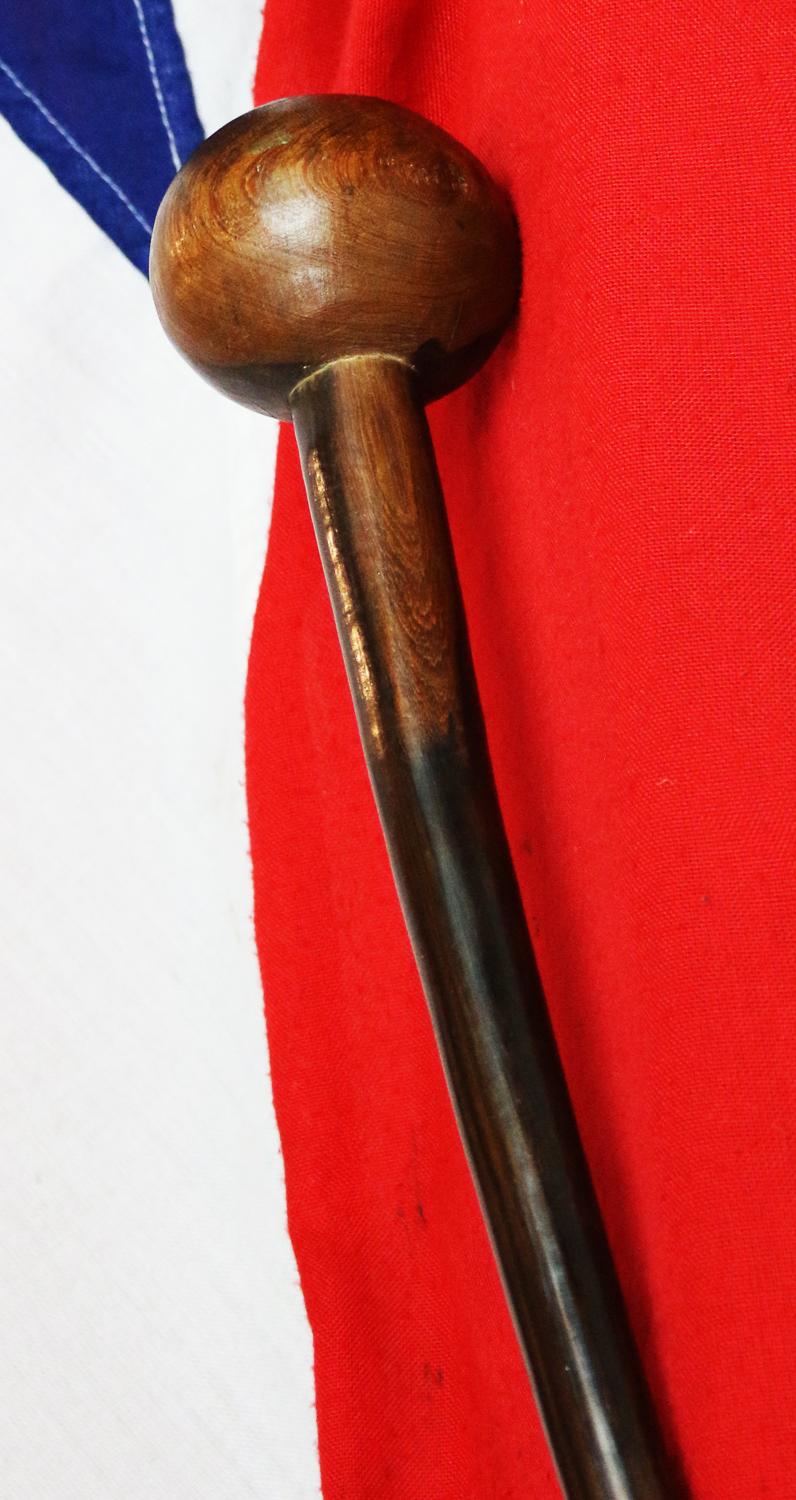
A Superb Original Zulu War Souvenir of a Knopkerrie Staff of an Induna High Ranking Zulu. His Symbol of Authority, Prestige, and Status. Another Induna's Example Was Taken By Lt Bromhead At Rorke's Drift, Now In The Regimental Museum
In 1879, during the Anglo-Zulu War, a Zulu chief or high-ranking induna carried a long knobkerrie (iwisa) not merely as a weapon, but as a symbol of authority, prestige, and status.
While ordinary warriors used knobkerries for close-quarters combat—designed to crush skulls, often proving more effective than spears in tight fighting—a chief's knobkerrie was frequently a highly refined, ornate staff. Or the large Knop {head} type
Carved from extremely dense, heavy, indigenous hardwood root to create a beautiful, dark, polished patina over years of use.
Often features a perfectly spherical or slightly flattened knob at the end of a long, thin handle, occasionally adorned with complex geometric or zig-zag carvings at the grip.
High-ranking examples were sometimes adorned with intricate, fine copper or iron wire binding, indicating the status of the owner.
It was a "prestige object" handled daily, representing the bearer’s power to command.
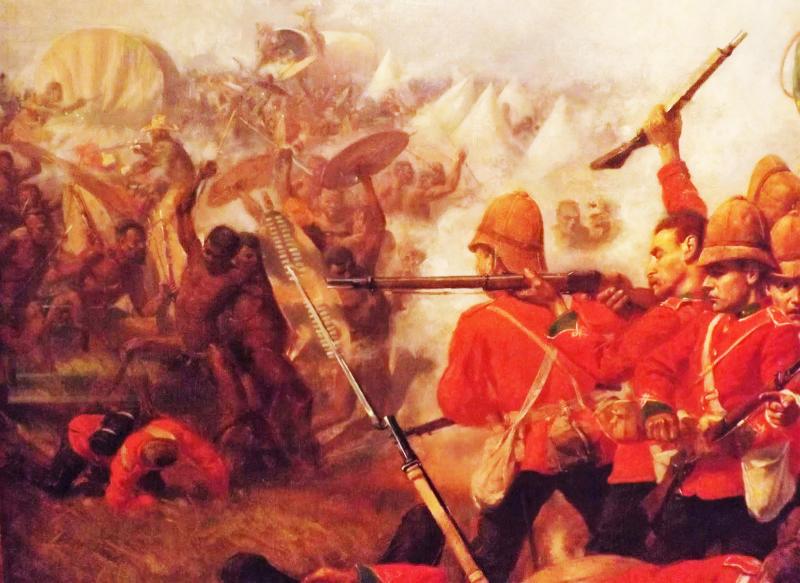
Another induna's wooden staff of Zulu War origin, in the regimental museum, is described as being ‘taken’ by Major Gonville Bromhead, 24th Regiment, at the Battle of Rorke's Drift during the Anglo-Zulu War, 1879, South Africa.
Later presented to Henry Germain Mainwaring, 24th Regiment
Physical description Staff carved from dark brown wood with two polished heads at the top
and a hand-grip featuring a raised decorative pattern (amasumpa).
Above and beneath the hand-grip the staff is inscribed:
'From Major G. Bromhead / XXIV / To / H.G. Mainwaring / XXIV / Taken at the / Attack /
on / Rorke's Drift / 22nd Jan / 1879'. Regimental Museum of the Royal Welsh, Brecon
51 inches long
Code: 26215