
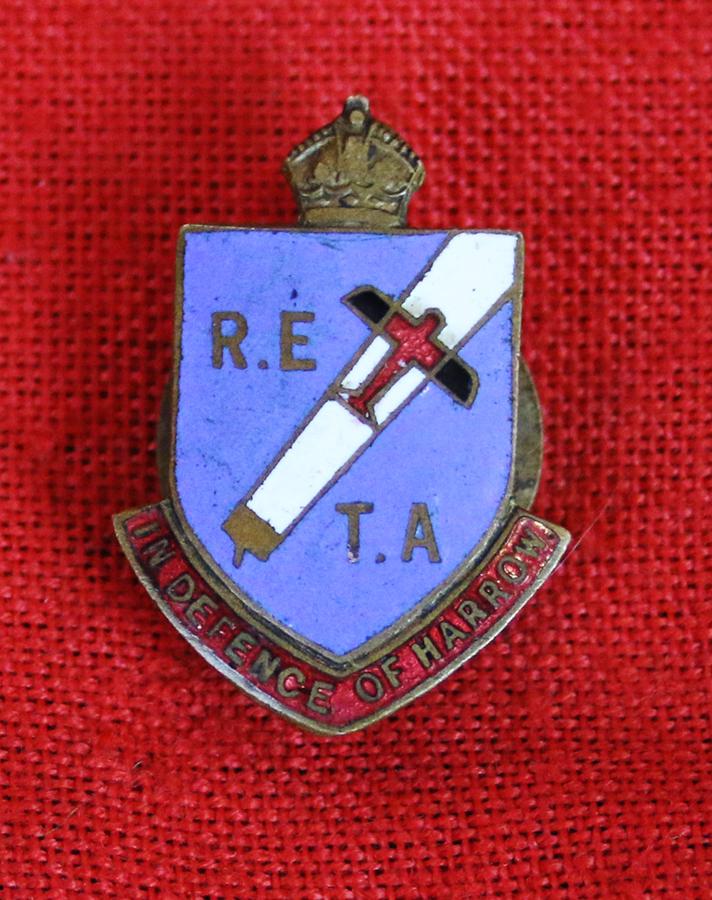

Rare Pre 1940, 36th Anti-Aircraft Battalion, Badge, Royal Engineers, based on 344 AA Company at Harrow, To Become 58th (Middlesex) Searchlight Regiment, With Service In The Battle of Britain, The Blitz, & Operation Diver to Combat Against V1 Rockets
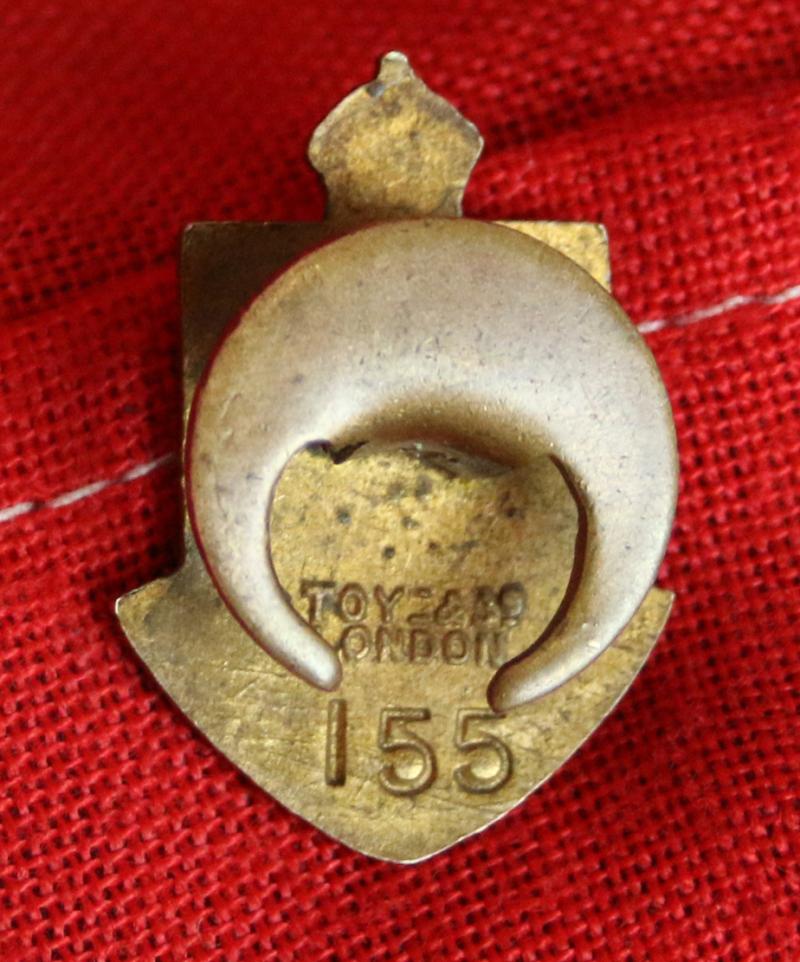
Individually serial number stamped to the searchlight operator or officer. Early three figure number 155. Multi colour enamel of a searchlight beam, in white, with a Junkers bomber, in red, in its beam, surmounted with king's crown, R. E. T. A. and motto In Defence Of Harrow within a scroll, in red enamel.
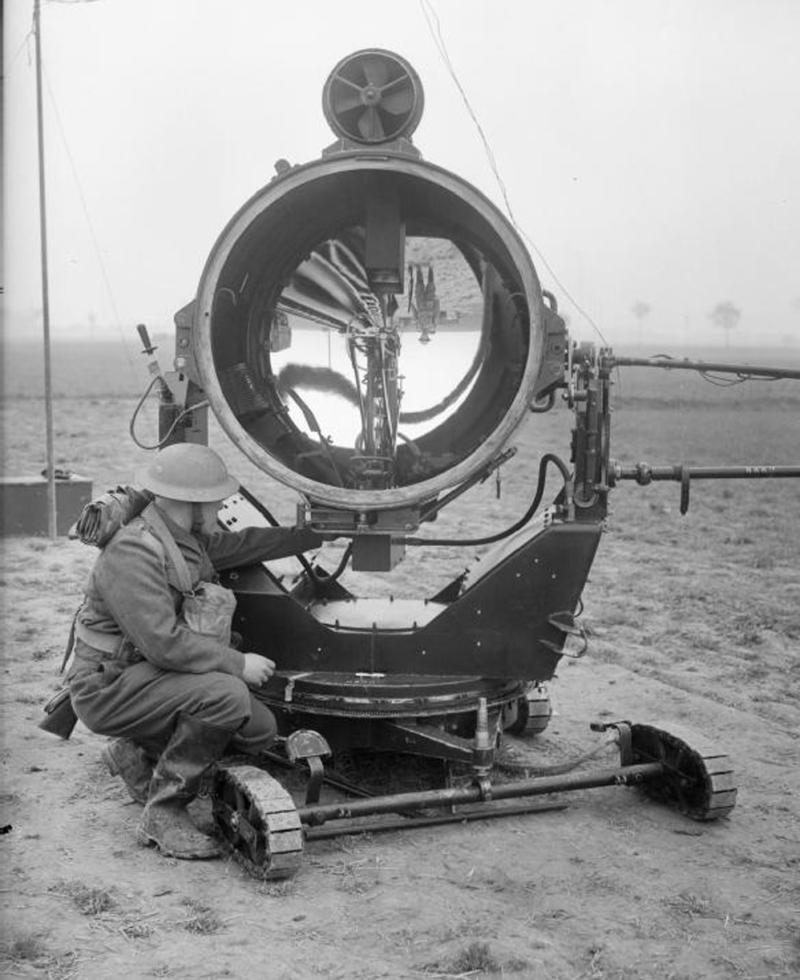
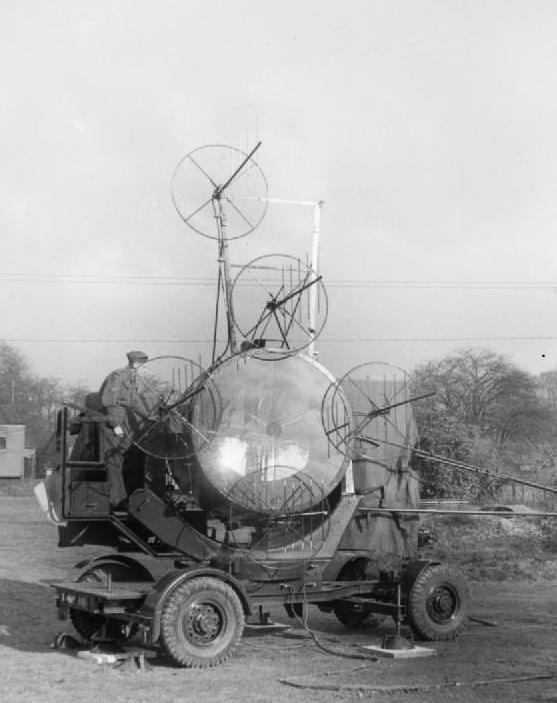
Searchlight crews were vital for illuminating enemy bombers at night so that anti-aircraft gunners and night fighters could intercept them. Because of this, they were frequently targeted directly by the Luftwaffe via bombing or strafing runs to blind the air defenses.
The Fall of France (1940): Many searchlight crews were overrun by the German advance. The 3rd (Ulster) Searchlight Regiment suffered 28 killed, 41 wounded, and three captured during their defense of the retreat. The 21st Searchlight Militia lost half their unit during the evacuation, and personnel from the 2nd Searchlight Regiment were forced into close-quarter infantry combat during the defense of Calais.Singapore (1942): The 5th Searchlight Regiment lost over 50 men killed and approximately half the regiment captured when the fortress fell
58th (Middlesex) Searchlight Regiment, Royal Artillery was an air defence unit of Britain's Territorial Army (TA) raised just before World War II. It defended the East Midlands of England during The Blitz, and later served as infantry in North West Europe at the end of the war, converting to the anti-aircraft (AA) artillery role postwar.
This searchlight unit was formed as part of the doubling in size of the TA at the time of the Munich Crisis in late 1938. Formally, it was a duplicate of 36th (Middlesex) Anti-Aircraft Battalion, Royal Engineers, based on 344 AA Company at Harrow, which was transferred from 36th AA Battalion to provide a cadre of trained men. Two new companies were then formed to give the unit the following organisation
58th (Middlesex) Anti-Aircraft Battalion, Royal Engineers
In February 1939 the existing AA defences came under the control of a new Anti-Aircraft Command. In June a partial mobilisation of TA units was begun in a process known as 'couverture', whereby each AA unit did a month's tour of duty in rotation to man selected AA and searchlight positions. On 24 August, ahead of the declaration of war, AA Command was fully mobilised at its war stations. The outbreak of World War II saw 58 AA Battalion forming part of 40th Anti-Aircraft Brigade in 2nd AA Division. Based at RAF Duxford, the brigade was responsible for providing AA defence for RAF airfields in East Anglia. In April 1940, 58th moved to come under the command of 39 AA Bde.
Battle of Britain and Blitz
On 1 August 1940 the Royal Engineers' AA battalions were transferred to the Royal Artillery (RA), being redesignated searchlight regiments, and the companies became batteries. By this time 58th (Middlesex) had been moved to 32nd (Midland) Anti-Aircraft Brigade, still in 2 AA Division, but now responsible for AA defence of the East Midlands during the forthcoming Blitz.
On 19 April 1943, 344th Bty received orders to train for a mobile role, and after this training it joined 100 AA Bde on 30 June. 100 AA Bde was one of the formations slated to participate in Operation Overlord (the Allied invasion of Normandy planned for 1944) and shortly afterwards the battery became formally independent of 58 S/L regiment. 344th Independent S/L Bty proceeded to Normandy in July 1944 where it pioneered the use of searchlights to create artificial moonlight, otherwise known as movement light or 'Monty's Moonlight', to aid movement in night operations by 21st Army Group. In February 1945 it changed its title to 344th Independent Moonlight Bty and split off a separate 581st Independent Moonlight Battery.
Operation Diver
Meanwhile, the rest of 58th S/L Regt (425 and 426 Btys) had remained with AA Command. In May 1944 it was joined by 314 (Kent) S/L Bty from 29th (Kent) S/L Rgt. Then on 1 June E Troop of 372 S/L Bty of 43rd (5th Duke of Wellington's Regiment) S/L Rgt joined and became E Trp of 425 S/L Bty. Soon after D Day in June 1944 the bombardment of London by German V-1 flying bombs began, and AA Command was engaged in the efforts to combat them (Operation Diver). Much of AA Command's strength was repositioned on the South Coast of England to engage the V-1s as they came in over the sea. In the centre of the line at Dungeness were four Z Batteries, each of 64 twin 3-inch rocket-launchers. Z Batteries defending towns were by 1944 largely manned by shifts of part-time members of the Home Guard, but for these frontline batteries the detachments were provided by 58th S/L Regiment, which had been hastily trained in the new role.
Once the Government had decided that women could be attached to Mixed Batteries of Anti Aircraft Command of the Royal Artillery it was agreed that this could well include searchlight duties. A secret experiment was carried out in April 1941 to see if women were capable of carrying out the tasks that were required of Searchlight Regiments. On 23 April 1941 54 A.T.S. members were sent for training at Newark. They were aged between 19 and 35 "the Army Intelligence tests showed the general intelligence to be rather higher than that of the men: the members were fairly representative of A.T.S. personnel."
This was a WW2 song for the Searchlight Girls:
"When the barrage opens out to meet the invading hun
Everybody's thoughts go out to the Girls Behind the Guns
But they are not the only girls in the frontline every night
For suddenly from out of nowhere comes a blinding light
A long accusing finger pointing upwards to the sky
To tell the guns and fighters "there the raiders lie"
They're the Girls that do a job - A far from easy one
But equally important in keeping off the hun
Unloved, unwanted - fact few people know
That when the beams are out at night the girls are down below
But if they help in some small way to keep the hun at bay
They're satisfied
And don't give two hoots what people say"
Code: 26231
90.00 GBP