

A Superb Japanese Samurai Kozuka in Shakudo and Gold by One Of The Great Master Edo Period Koshirae Makers, Yasuchika 安親. Examples of His Work Are In The Metropolitan Museum of Art, The British Museum & The Victoria and Albert Museum
Tsuchiya Yasuchika (ca. 1670–1744) 安親 was one of the legendary "Three Masters of Nara" and a pinnacle craftsman of koshirae (the mountings and metal fittings of Japanese swords). Renowned for his unparalleled technical versatility, he elevated sword furniture into masterful works of art
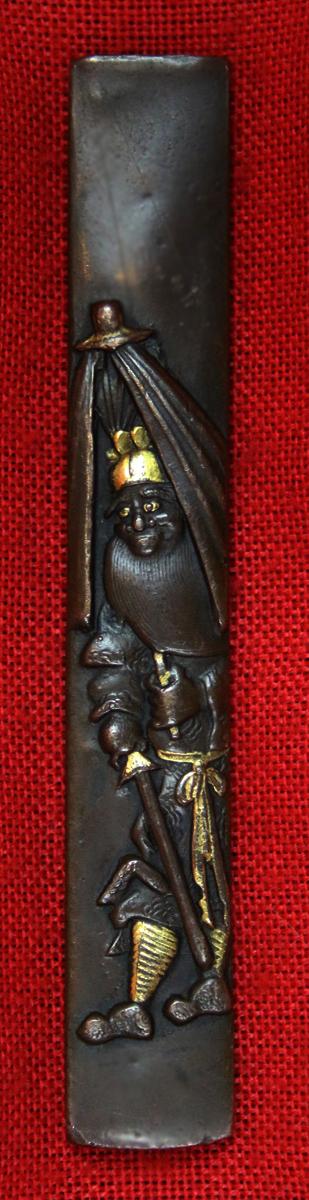
This kozuka {a handle of a samurai sword's optional utility blade, stored in a saya pocket} is carved with a representation one of the Buddhist Four Heavenly Kings (known as Tian Wang in China or Shitenno in Japan), specifically Virūḍhaka, the Guardian of the South. He is a celestial Buddhist protector who is frequently depicted in East Asian art wearing fierce, heavy armour, brandishing a sword (ken), and carrying or standing near a parasol (or umbrella).
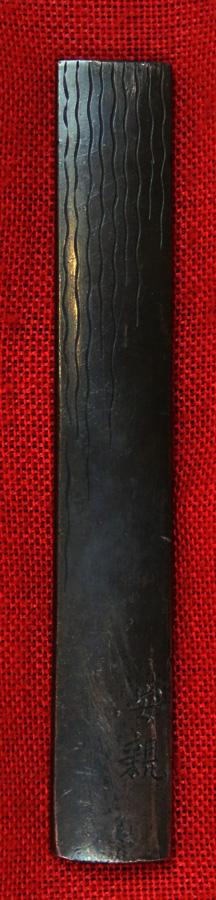
Signed on the reverse side, Yasuchika 安親.
In this rendition he is covered in his parasol, chatra, and holding his Azure Cloud Sword ken sword, with a long flowing beard.
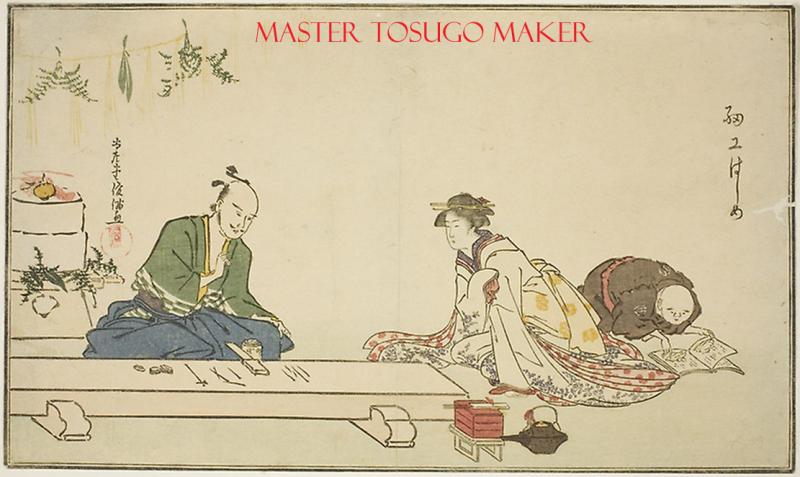
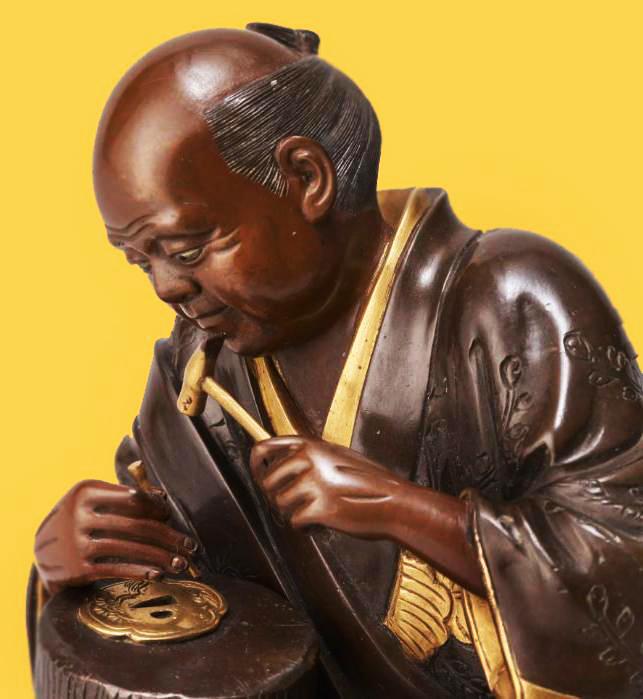
The Master Edo Period Koshirae Maker Yasuchika
The visual elements of this specific figure trace back to Chinese and Tibetan tantric traditions and hold significant spiritual meanings:The Sword: Known as the "Azure Cloud Sword," it represents the wisdom required to cut through ignorance, ego, and worldly delusions.
In Buddhism, the ceremonial parasol or umbrella (chatra) symbolizes royalty, dignity, and protection against harmful forces, delusions, and the "heat" of mental agitation.
While historical depictions of Gautama Buddha rarely feature facial hair, Buddhist temple guardians, patriarchs (like Bodhidharma), and ancient deities are commonly illustrated with beards, flowing mustaches, and fierce expressions
Tsuchiya Yasuchika (ca. 1670–1744) is celebrated as one of the "Three Great Edo Metalworkers" and the founder of the Nara School's Yasuchika branch. Known by his art name Tō'u (東雨), he revolutionized sword fittings (koshirae) by moving away from traditional dense, pictorial figure-work.
He adapted the impressionistic, painting-like styles of renowned lacquerers like Ogata Kōrin into metalwork.Material Mastery: Yasuchika worked seamlessly across a variety of metals, including iron, shakudō (gold-copper alloy), shibuichi (silver-copper alloy), and refined copper. He elevated hammered and stone-grain (ishime-ji) finishes, which highlighted the natural beauty of the metals. Because koshirae pieces—such as the tsuba {handguard} kozuka {utility knife} and fuchikashira {hilt collar and pommel}—were so highly valued, his signature was continued by several subsequent generations.
Yasuchika I (1670–1744): The primary master.
Yasuchika II (d. 1747) & Yasuchika III (d. 1778): Carried the lineage, with subsequent generations working notably in katakiri-bori (sloping single-cut engraving).
Yasuchika VI: Honoured with the prestigious Buddhist rank of Hōgen.
Original Yasuchika sword fittings and complete mounts are highly prized and reside in the world's most prestigious museums:
The Metropolitan Museum of Art holds notable examples of Yasuchika's works, recognized by the NBTHK as Special Important Fittings. The Victoria and Albert Museum features an iconic iron tsuba with varied relief representing Chinese characters, created around 1714. The British Museum houses a broad collection of his signed tōsōgu (sword-furniture)
Shakudo Was historically used in Japan to construct or decorate katana fittings such as tsuba, menuki, and kozuka; as well as other small ornaments. When it was introduced to the West in the mid-19th century, it was thought to be previously unknown outside Asia, but recent studies have suggested close similarities to certain decorative alloys used in ancient Egypt, Greece, and Rome
Overall it is in jolly nice condition, with just a few light marks on the reverse side by the signature, very commonly caused by rubbing against the tsuba when the knife is withdrawn from its retaining pocket within the saya.
When in use, and not mounted within the saya of a sword, its seperate, inserted blade, is removed. The blade is the often replaced and disposable part of the kozukatana once assembled
In a traditional kiri wood lidded box for storage and display
Code: 26240
1295.00 GBP