
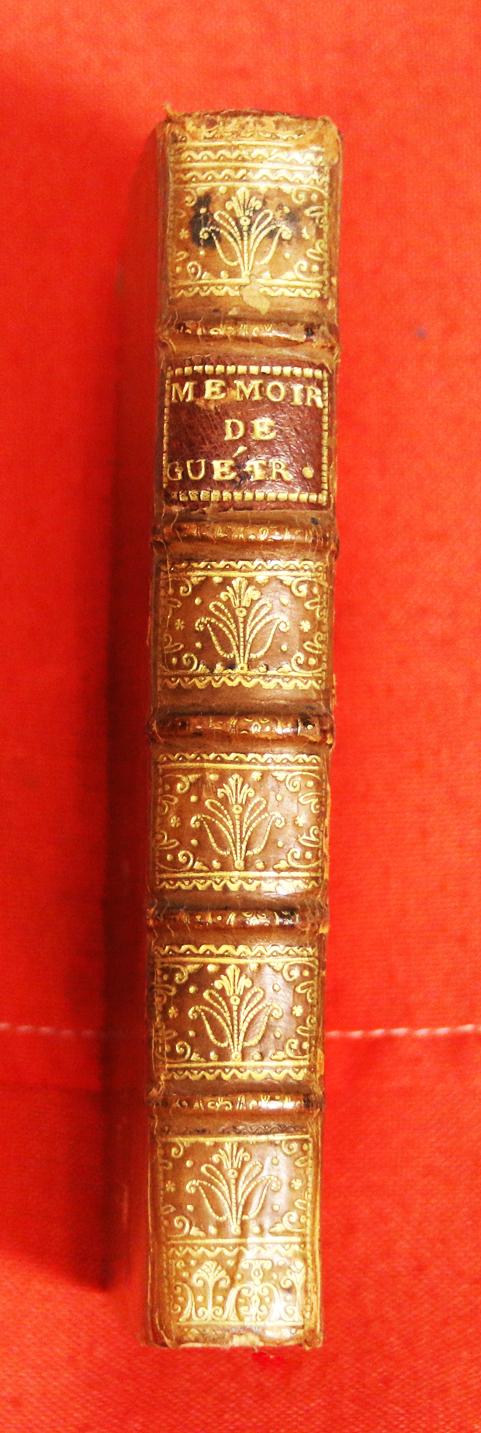
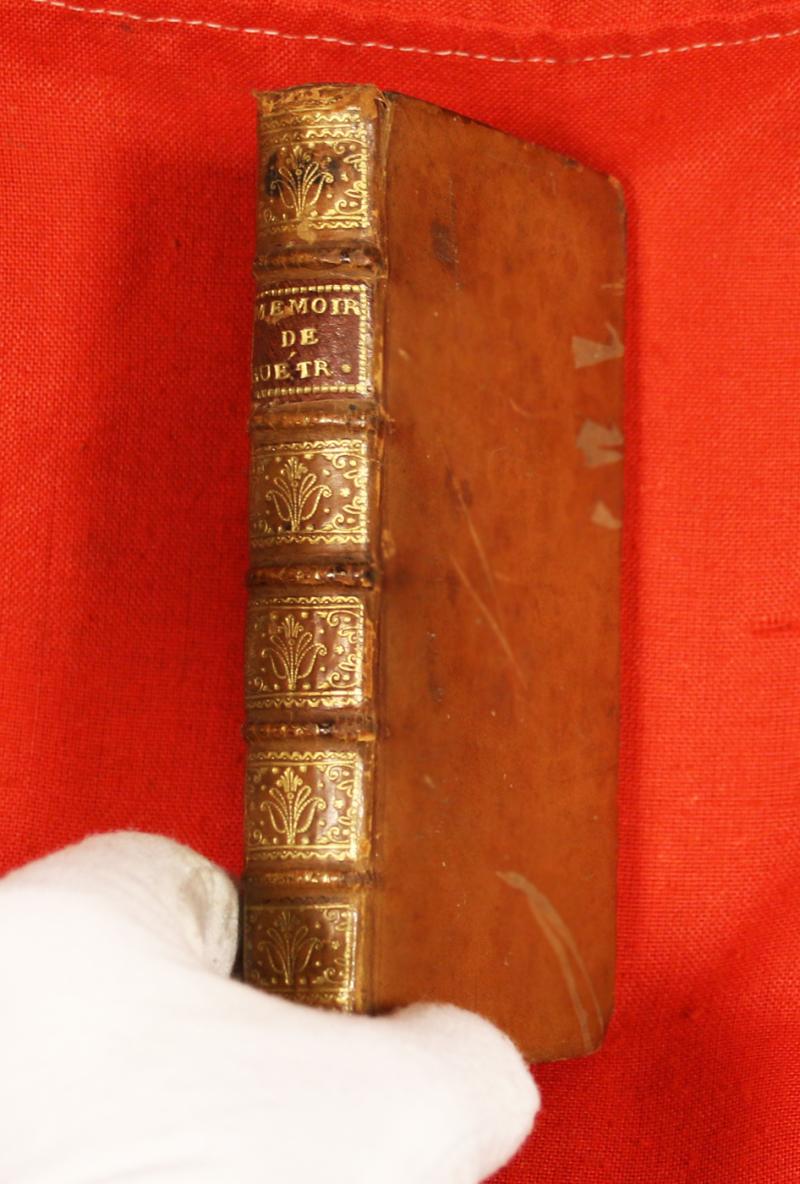
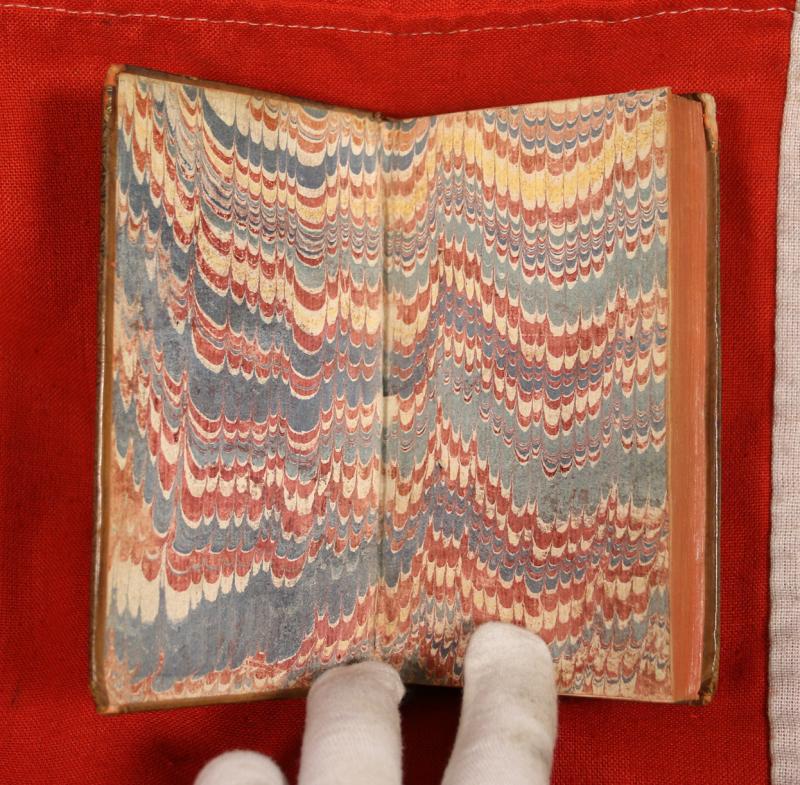
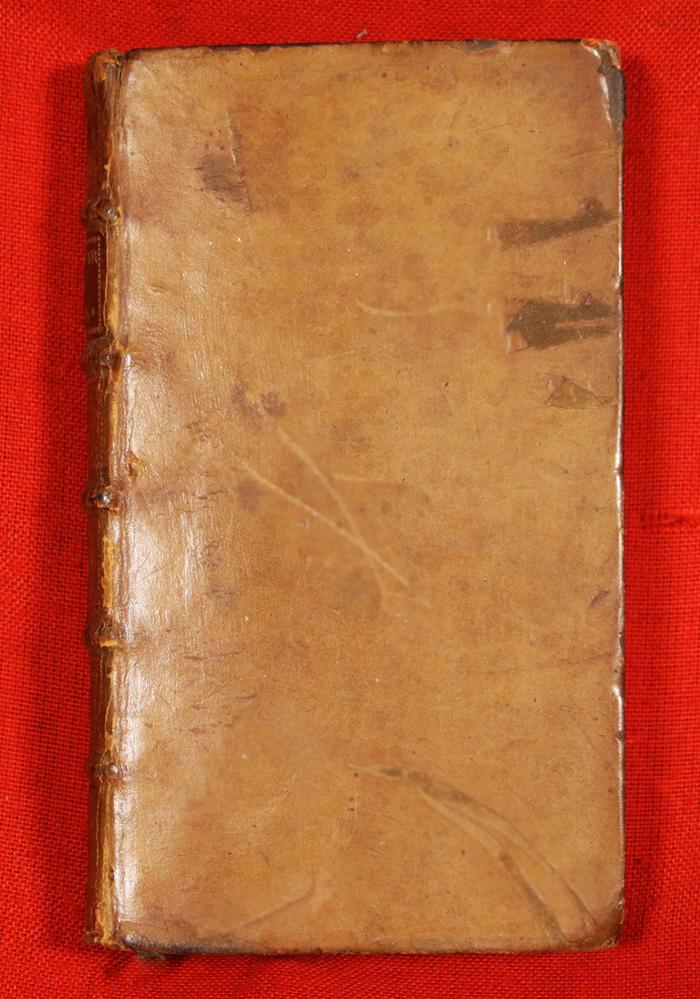
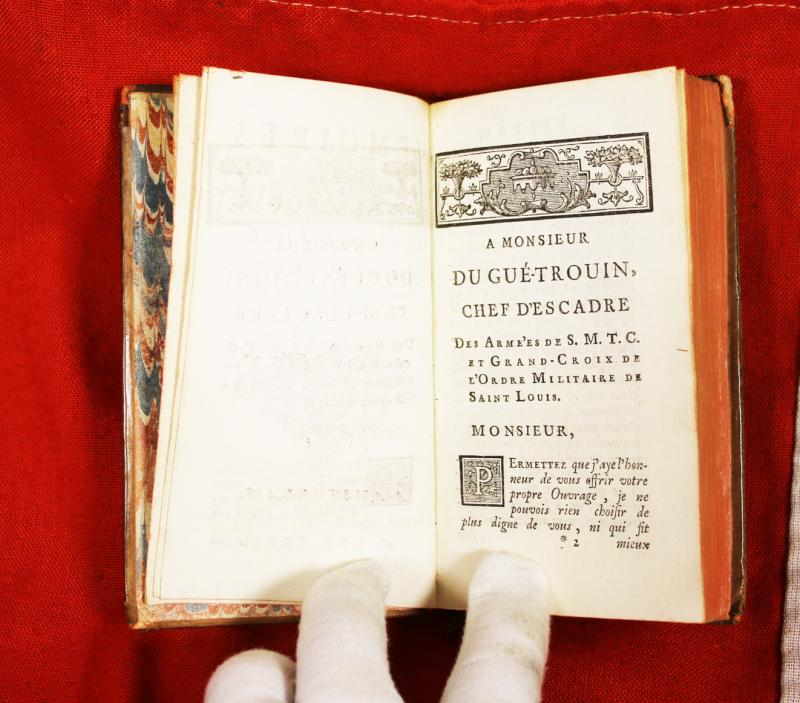
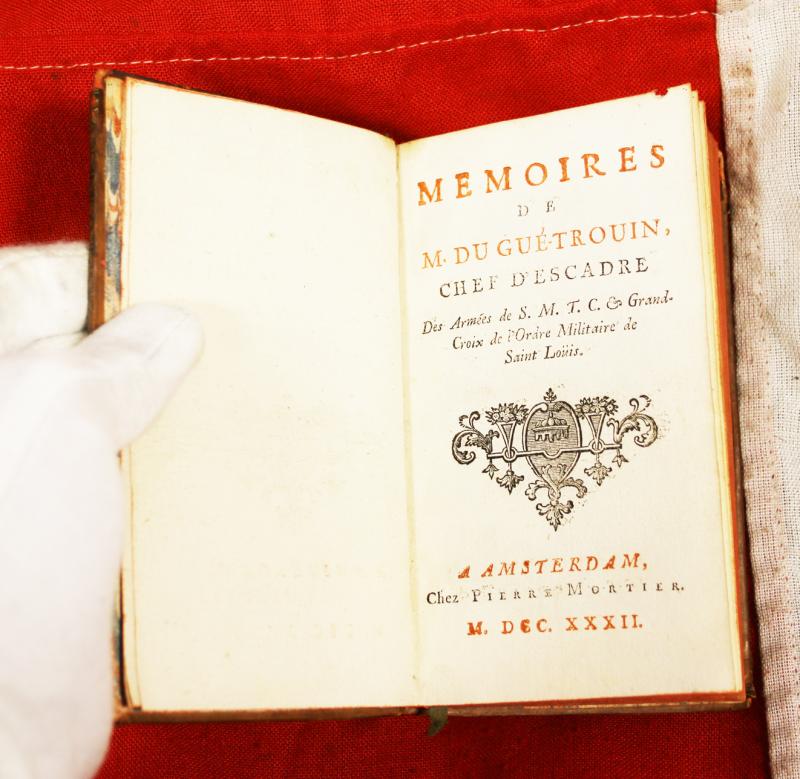
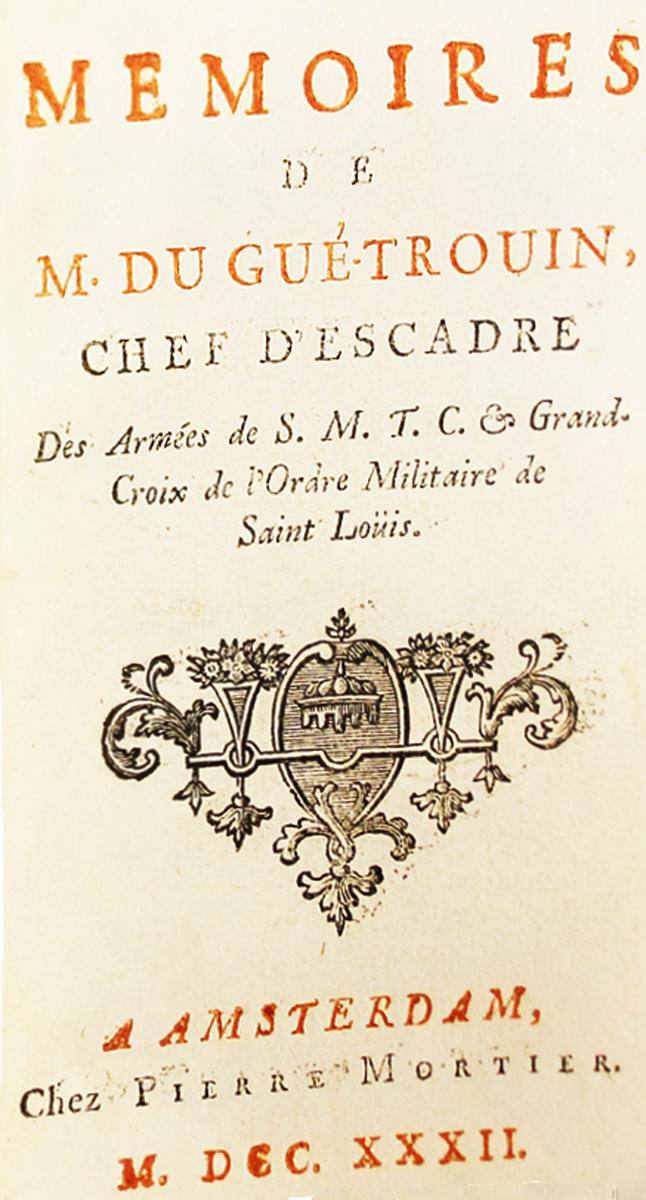
Original Publication Of the Memoires of a Famous I7th-18th Century French Pirate, Admiral Duguay-Trouin, René (1673-1736) Pirates Memoires de Monsieur Du Guay-Trouin, Lieutenant General Des Armées Navales Published by Amsterdam, Pierre Mortier, 1732.
Ironically this is a 1732 printed 'pirated edition', printed without the permission of the author in Amsterdam, of the memoirs of a famous French pirate due to be 'officially' published in 1740. These pirated copies are very much sought after, the ealiest the date of printing, the better.
First published in Amsterdam, in 1730, in a pirated edition extracted from an unfinished manuscript. This volume was one of the earliest published 'pirated' editions from Amsterdam, without plates.
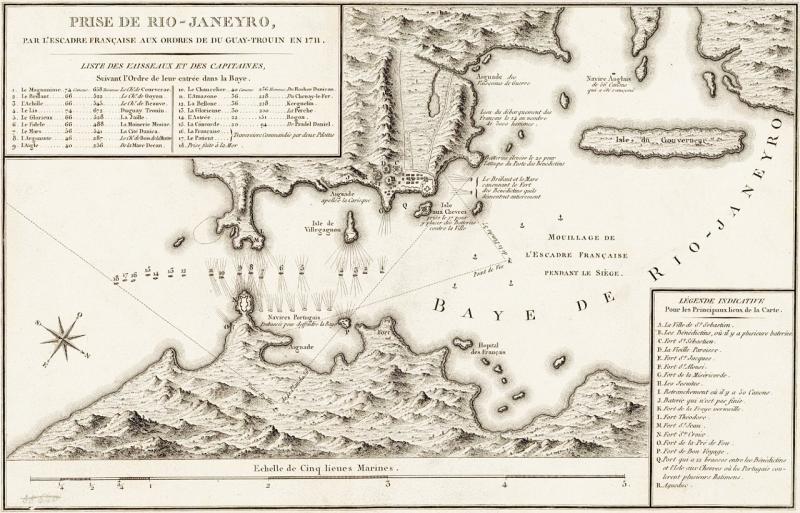
The first official (and complete) edition was published posthumously in Paris, in 1740. Admiral Du Guay-Trouin, noted for his exploits during the War of the Spanish Succession, from 1699 to 1712, sailed American and Caribbean waters as a privateer. In 1711, he led a French expedition against Rio de Janeiro, then considered impregnable, and after an eleven day siege he occupied the city for some two months, holding the governor for ransom and ransacking the churches and plundering their treasures
DUGUAY-TROUIN, René (1673-1736). Memoires de Monsieur Dugué-Trouin. Amsterdam: Pierre Mortier, 1732. (148 x 87 mm). Early unauthorised edition.
This volume, the memoirs of one of France's most illustrious seamen and corsairs, was not intended to be published until after the author's death. The authorized edition of 1740 is lacking in many of the details found here, which the author suppressed at the request of Cardinal Fleury. Duguay-Trouin spent his active years engaged in attacks against Rio de Janeiro, attacking the port and city and ransacking the city's treasures. Borba de Moraes I, 272-273;
At the age of 16, Duguay-Trouin first went to sea as a sailor on board the French privateer Trinité under the command of a Captain Legoux. The privateer subsequently captured two enemy merchant ships, the François Samuel and Seven Stars of Scotland. Just two years later in 1691, his family provided him with command of his own ship, the 14-gun lugger Danycarn. In the next year, King Louis XIV appointed Duguay-Trouin to command the thirty-gun ship of the line Hercule on 6 June.
Ennoblement and naval career
In 1694, Louis XIV awarded Duguay-Trouin with a sword of honour for his naval service. In the same year, Duguay-Trouin, commanding the frigate Diligente, was attacked by a Royal Navy squadron commanded by Admiral David Mitchell while convoying a group of French merchant ships on 12 April. Duguay-Trouin successfully enabled the convoy to escape capture but was forced by Mitchell's squadron to strike his colours after a brief naval engagement which saw most of the crew of Diligente either killed or wounded. Duguay-Truin was taken as a prisoner of war to Plymouth, England.
The Admiralty, upon learning that Duguay-Trouin had fired upon Prince of Orange, an English merchant ship, while flying the Red Ensign, imprisoned him. On 19 June, Duguay-Trouin successfully escaped from England by boarding a small ship that he purchased from a friendly Swedish sea captain whose vessel was lying at anchor nearby. During his escape attempt, he was accompanied by four crewmembers: Lieutenant Nicolas Thomas, naval surgeon L'Hermite, Pierre Legendre and the quartermaster of Diligente. After conducting a series of raids on coastal settlements in Ireland, Duguay-Truin returned to Saint-Malo.
In 1697, the Treaty of Ryswick concluded the Nine Years' War, bringing a halt to the activities of naval officers such as Duguay-Trouin; he temporarily settled down in Saint-Malo. During this period, he was involved in a duel with another gentleman, Charles Cognetz, who Duguay-Trouin alleged had cheated in a game of cards. Both men were subsequently detained and taken to a local police official, Monsieur de Vauborel, who explicitly forbade the two to engage in any further violence.
War of the Spanish Succession
In 1702, as the War of the Spanish Succession was ongoing, he commanded two frigates, the Bellone and Railleuse. During this period, he formally became an officer in the French Navy. From 1704 to 1705, Duguay-Trouin commanded the warship Jason and captured the Royal Navy ships of the line HMS Elizabeth and HMS Coventry. On 21 October 1707, together with Claude de Forbin, he defeated a Royal Navy squadron commanded by Richard Edwards at the Battle at The Lizard.
In 1709, he captured the Royal Navy ship of the line HMS Bristol. In the same year he was ennobled by Louis XIV, choosing the motto Dedit haec insignia virtus ("Bravery awarded these honours"). By this point, he had captured 16 warships and over 300 merchant ships of varying sizes from the English and Dutch.
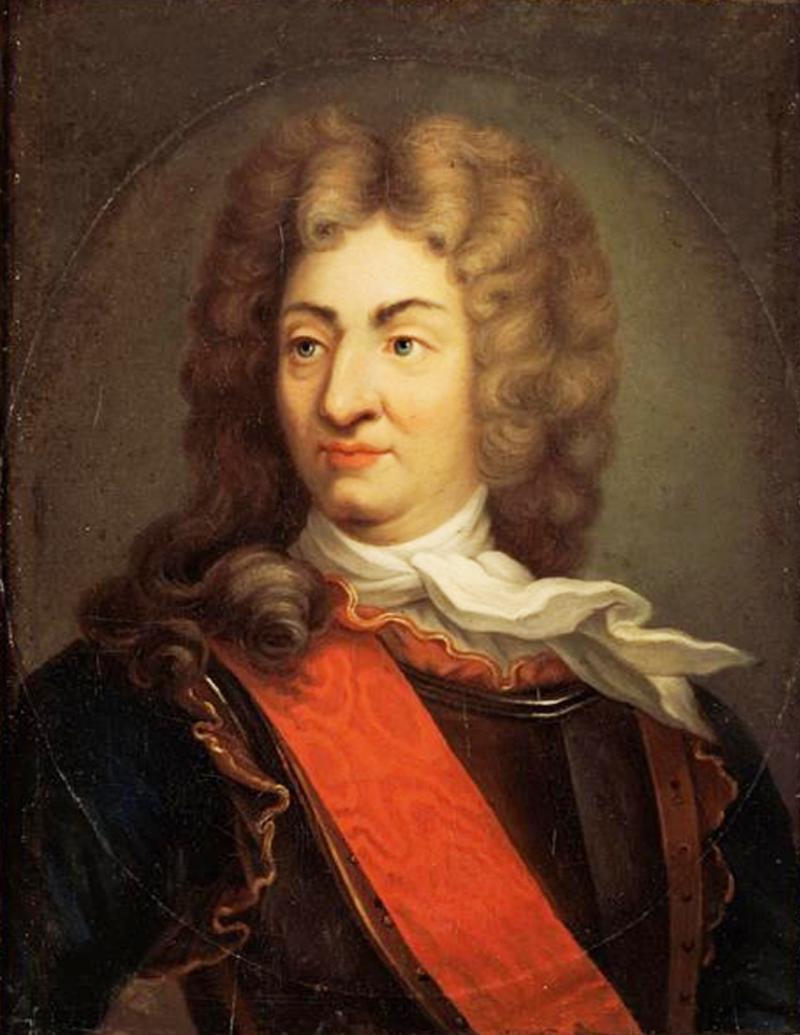
On 21 September 1711, in an 11-day battle, he captured Rio de Janeiro, then believed impregnable, with twelve ships and 6,000 men, in spite of the defence consisting of seven ships of the line, five forts, and 14 000-15 000 men; he held the governor for ransom. Duguay-Trouin captured large quantities of loot from Rio de Janeiro, including numerous Black slaves; he later sold these slaves at Cayenne, French Guiana. Investors in this venture doubled their money, and Duguay-Trouin earned a promotion to Lieutenant général de la Marine. Picture 7 in the gallery is the pirate admirals portrait, and picture 8 in the gallery is a popular early 18th century print of the admiral pirates campaign in Rio de Janiero {for information only not included}
Code: 26308
945.00 GBP