
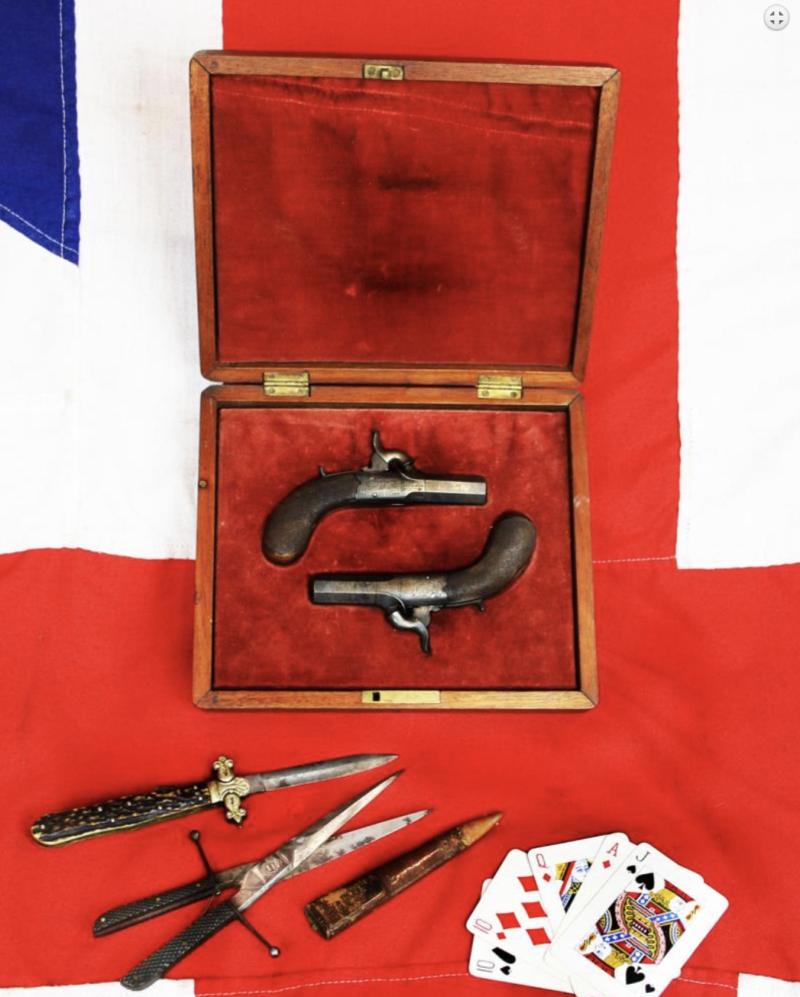
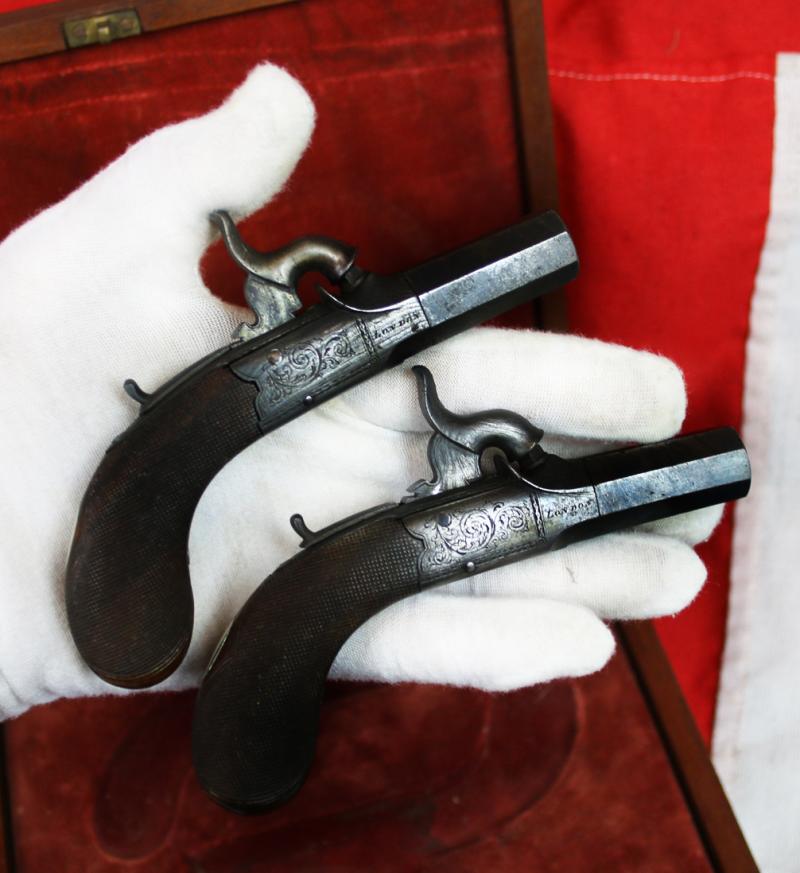
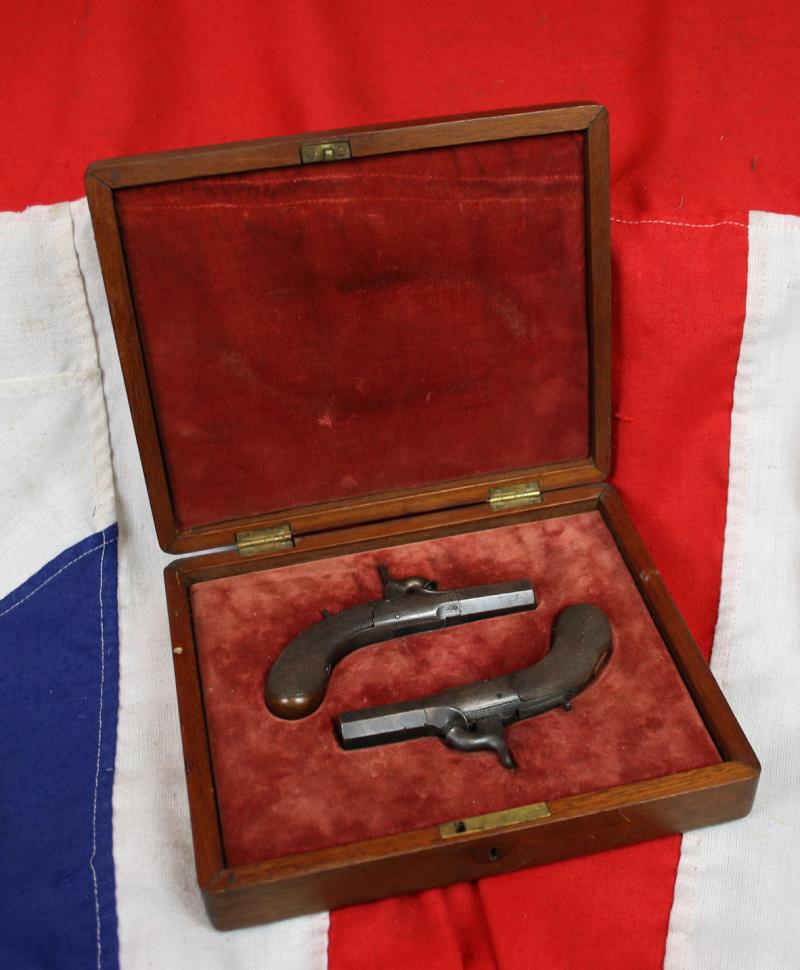
A Superb “American” Cased Pair of 1850 Derringers, Gambler’s Waistcoat or Boot Pistols By Wilson, of Superb Quality. A Very Neat Little Pair Of Large Calibre Small Pistols The Type of Earliest ‘Derringer’ Pistols Ideal For Concealment. Damascus Barrels.
Used by the lady and gentlemen gamblers of the frontier towns, especially all the famous lady gamblers were known to have owned and used the very same form of such personal protectors.
One such cased set including her pistol belonged to the famous 'Poker' Alice Duffield {nee Ivers}.
The story of 'Poker' Alice's pistol and gambling set;
The pistol Jesse James assassin Bob Ford gave to Poker Alice, inscribed “To Alice Duffield / From Bob Ford,” with her original traveling gambling set, won from her in a faro game in her final days
Born Alice Ivers, an English-born American gambler, brothel owner, and rancher (1851-1930) who became known for playing poker and faro in the Wild West. Historical Wild West artifacts from the personal collection of Alice Ivers, more famously known as Poker Alice, a legendary cigar-smoking, gun-toting gambler and brothel owner in the American West, which includes her Hopkins & Allen pistol, a present from her then-employer, Jesse James assassin Robert Ford, and her original traveling gambling set, a gift from her second husband, Warren G. Tubbs, both of which were won from Alice in a game of faro by John Logan, a postal inspector from Sturgis, South Dakota, who frequented Alice’s gambling parlour as a youth.
Our cased Derringers;
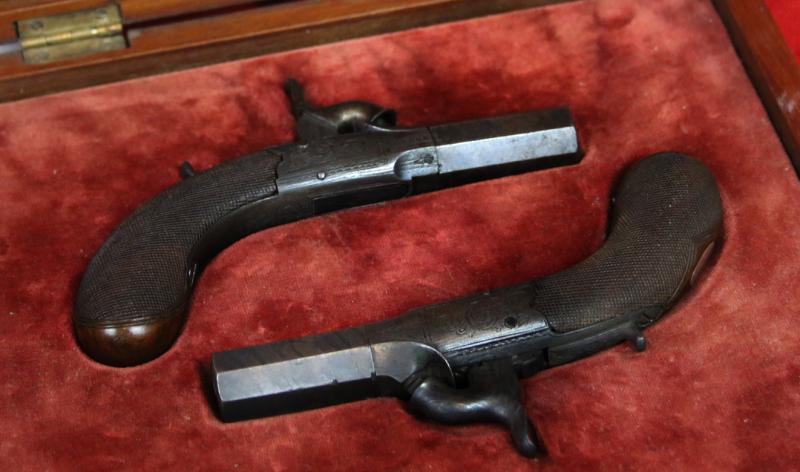
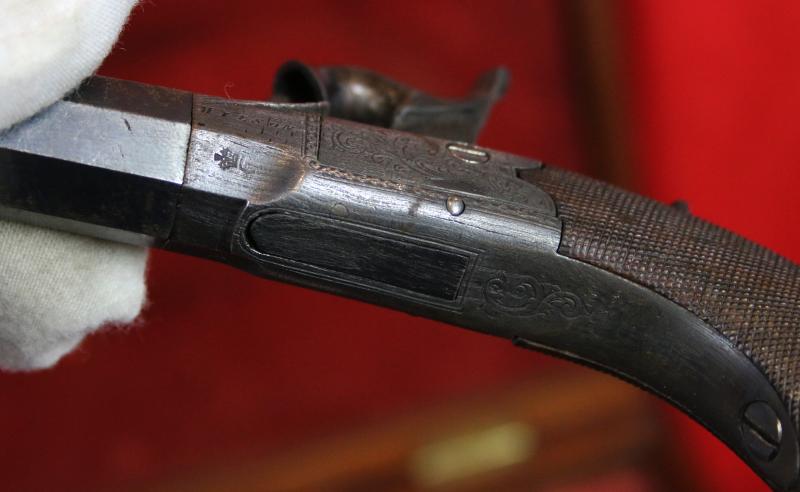
Signed by gunmaker Wilson, London, {John Wilson of 16 Kings Road, St Pancras, London} Micro checkering bag shaped carved walnut grips, sliding safety box lock actions of grained watered steel, octagonal, turn off, Damascus breech loading barrels, {with some old blueing remaining} approx .45 calibre. Silver cartouches inlaid at the grips, fold-down concealed triggers that appear when the action is cocked, and the steel frame of watered steel, is intricately and finely hand engraved. Made by a fine English maker, Wilson of London, especially for export for the emerging American Wild West frontier gambling market.
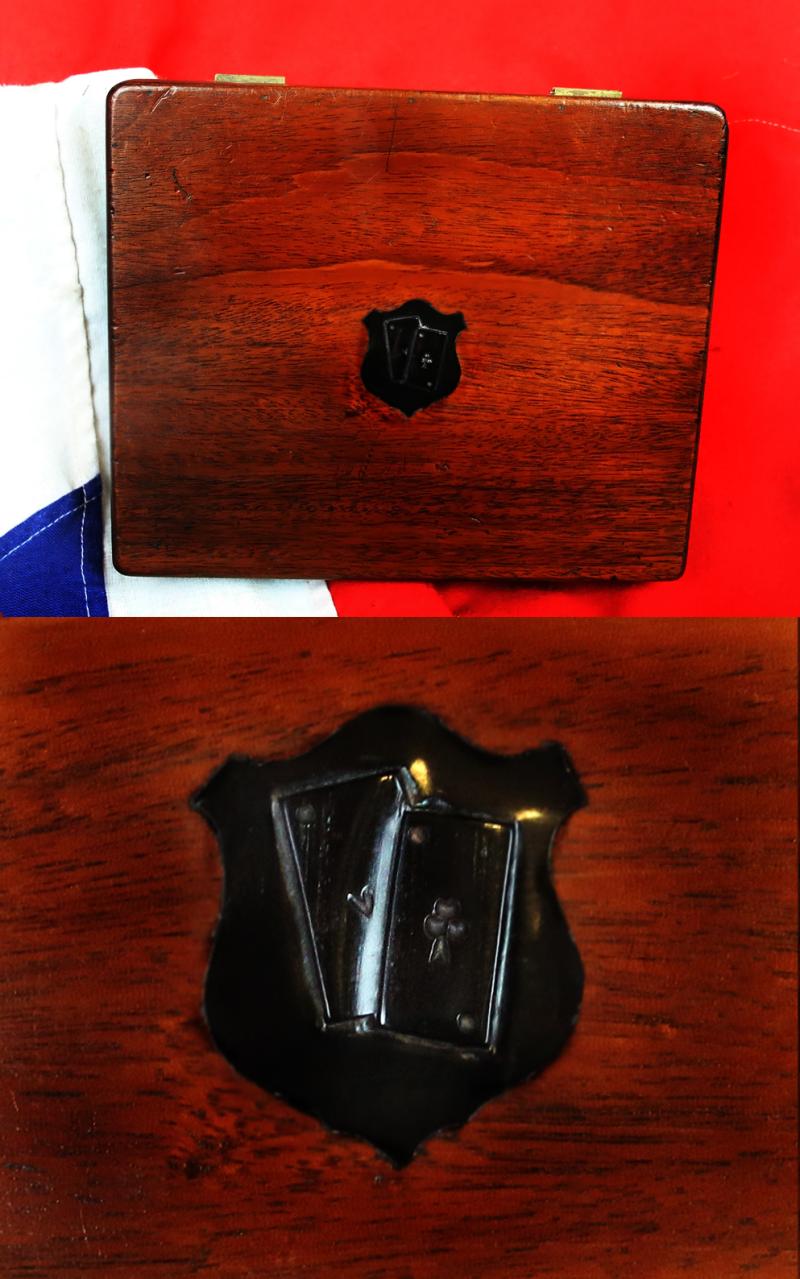
Traditional American style casing with pistol shaped snug-fit recesses in a fine red velvet within its walnut case. The lid has a polished horn shield shape cartouche, superbly hand carved with a ‘pair of aces’ playing cards.
Photographed with its collection of gambler's Bowie knives {folding, sheathed and rate scissor type } . Now all just sold as a set to a private knife collector.
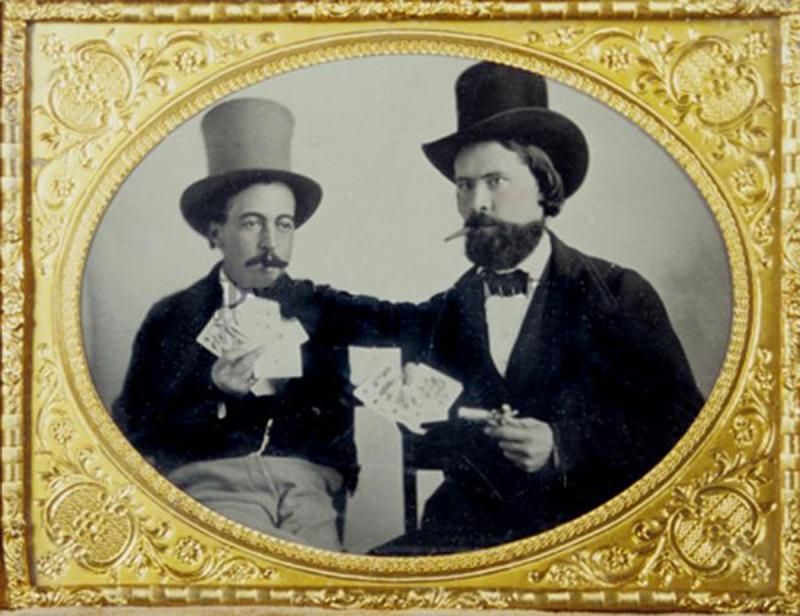
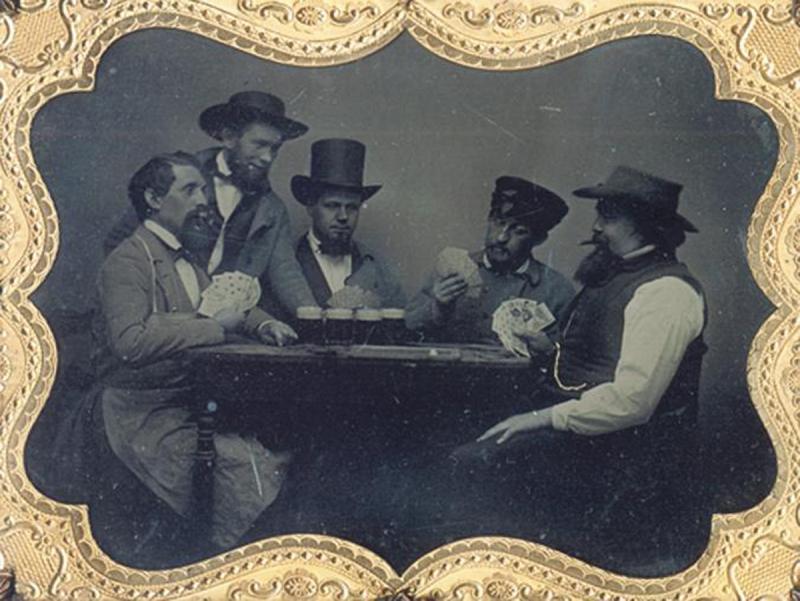
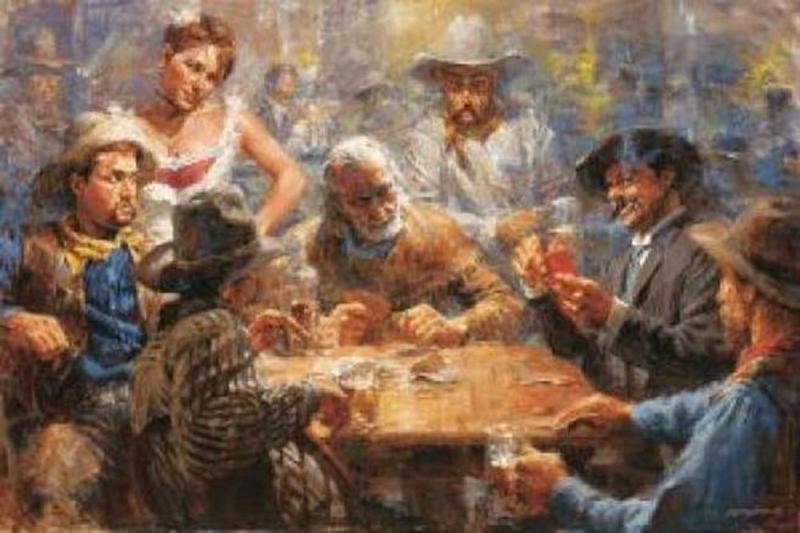
The heyday of gambling in the west lasted from 1850-1910. Gambling was the number one form of entertainment in the west, and nearly everyone living there engaged in it at one time or another. Cowboys, miners, lumberjacks, businessmen, and lawmen all played games of chance for pleasure and profit. Whenever a new settlement or camp started, one of the first buildings or tents erected would be a gambling hall. As the settlement grew, these halls would become larger and more elaborate in proportion. Gaming halls were typically the largest and most ornately decorated buildings in any town and often housed a bar, stage for entertainment, and hotel rooms for guests. These establishments were a driving force behind the local economy, and many towns measured their prosperity by the number of gambling halls and professional gamblers they had. Towns that were friendly to gaming were typically known to sports as “wide-awake” or “wide-open” for their acceptance of gambling.
Men were not the only ones who played at games of chance, women placed their bets, and the sight of petticoats at the table was regular. Many women played, dealt, or ran their own houses; this choice of profession offered them the opportunity to attain monetary independence and social stature. One of the most famous was Eleanore Dumont, known more crudely in her later years as “Madame Mustache.” Miss Dumont ran several different houses in Nevada, Idaho, Montana, and South Dakota. Another, Alice Ives, started gambling after the death of her husband. Known more popularly as Poker Alice, she was a readily recognized figure in the west for her nearly 40-year-long career. Kitty LeRoy made use of her sex appeal and flamboyant personality as well as excellent gambling ability to become a force of nature in Deadwood. She had multiple husbands and did not hesitate to get rid of men once she was tired of them. Perhaps they were lucky because Kitty also had a reputation for shooting men.
Cattle towns in Texas, Oklahoma, Kansas, and Nebraska, became gambling centers. Thanks to the railroad and cattle industries, a great number of people worked in and around these towns and had plenty of money to wager. Abilene, Dodge City, Wichita, Omaha, and Kansas City all had an atmosphere that was convivial to gaming. Not surprisingly, such an atmosphere also invited trouble, and such towns also developed reputations as lawless and dangerous places.
Most western citizens considered gambling a respectable profession, and those who chose to make a living doing it were respected members of society. “Gambling was not only the principal and best-paying industry of the town at the time, but it was also reckoned among its most respectable,” wrote Bat Masterson in 1907.
With the lack of any form of police or marshal protection within the Wild West frontier, personal protection was not only a desire, but absolutely essential. This form of superb concealed cased pistols for protection, against the murderous folk out to steal and plunder their hard earned gold.
Gambling, and indeed living, in the American frontier towns in the nineteenth century was just as dangerous then as wearing a valuable gold watch is in London today. Where, expecting assistance from a non-existing police protection force, was as vain an expectation then, as it is today.
As usual most of the American historical gamblers accessories, both pistols and knives, were mostly made in England and exported to America for the burgeoning Wild West market. All of this collection, apart from the Colt no3 Derringer were British made and returned to England many decades ago. The pair of small waistcoat pocket size Derringers are cased in the American style.
The significance of the ‘Pair of Aces’ to 19th century gamblers, is the start of an excellent gamblers hand, but a version of it is still as infamous today.
The pair of black aces, but combined with a pair of black eights, was known as the Wild Bill Hickok’s ‘Dead Man’s Hand’, and dates back to the Old West saloons two decades or so after this pair were made.
Born in Illinois in 1837, Hickok was a lawman, gambler, gunslinger, folklore hero, and actor. He spent much of his life shooting it out with criminals and arresting outlaws. Buthe also spent a large amount of his time subsidising his income with poker winnings.
Later in life, Hickok moved to Deadwood, located in the Black Hills of the Dakota territory. The region wasn’t a state yet, and the lawman was suffering from glaucoma and other ailments. He planned on settling in the mining town to play poker and earn his living.
On Aug. 2, 1876, Hickok was in a Five Card Stud game at Nuttal and Mann’s Saloon. Card rooms at that were what one might expect from the Old West. There was probably plenty of cigar smoke in the air and plenty of whiskey being drunk. As the cards made their way around the table and chips tossed into the pot, a gambler named Jack McCall slipped into the saloon. McCall made his way to the bar and moved behind Bill where he couldn’t be seen. McCall raised his pistol, steadied his aim out of sight of the game.
He fired right in the back of Bill’s head.
The lawman was killed instantly at only age 39. He was allegedly holding two black Aces and two black 8s – an excellent poker hand in this antiquated form of the game. While Hickok usually sat with his back to the wall to keep an eye on others in the room. But only a seat with his back to the room had been available.
Whether Hickok held that hand has been debated for years, but the tale remains as does the hand’s name.
One pistol has a superb tight and crisply operating action, one has a broken mainspring, but the two separated spring parts, of the original spring, are still within the grip, potentially ideal for repair, for the new owner to decide, or left , as is , as part of their service history. The previous collector owner clearly decided, as there would never be a reason for their future use as pistols, then they could be simply left as they are.
Code: 26312
3200.00 GBP