
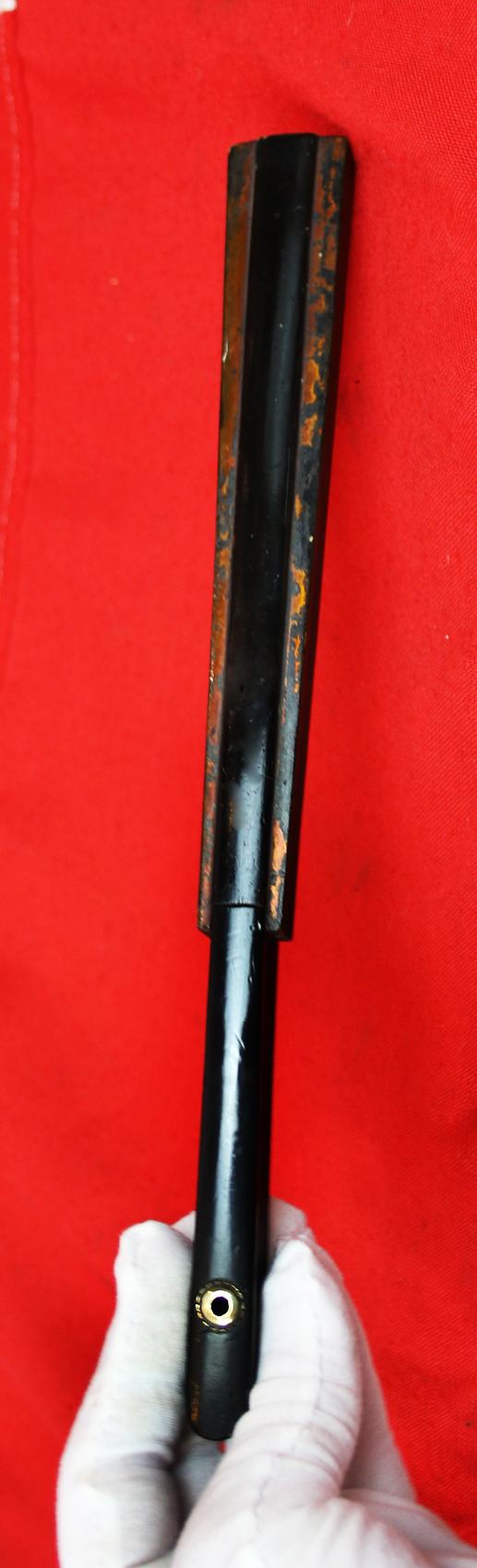
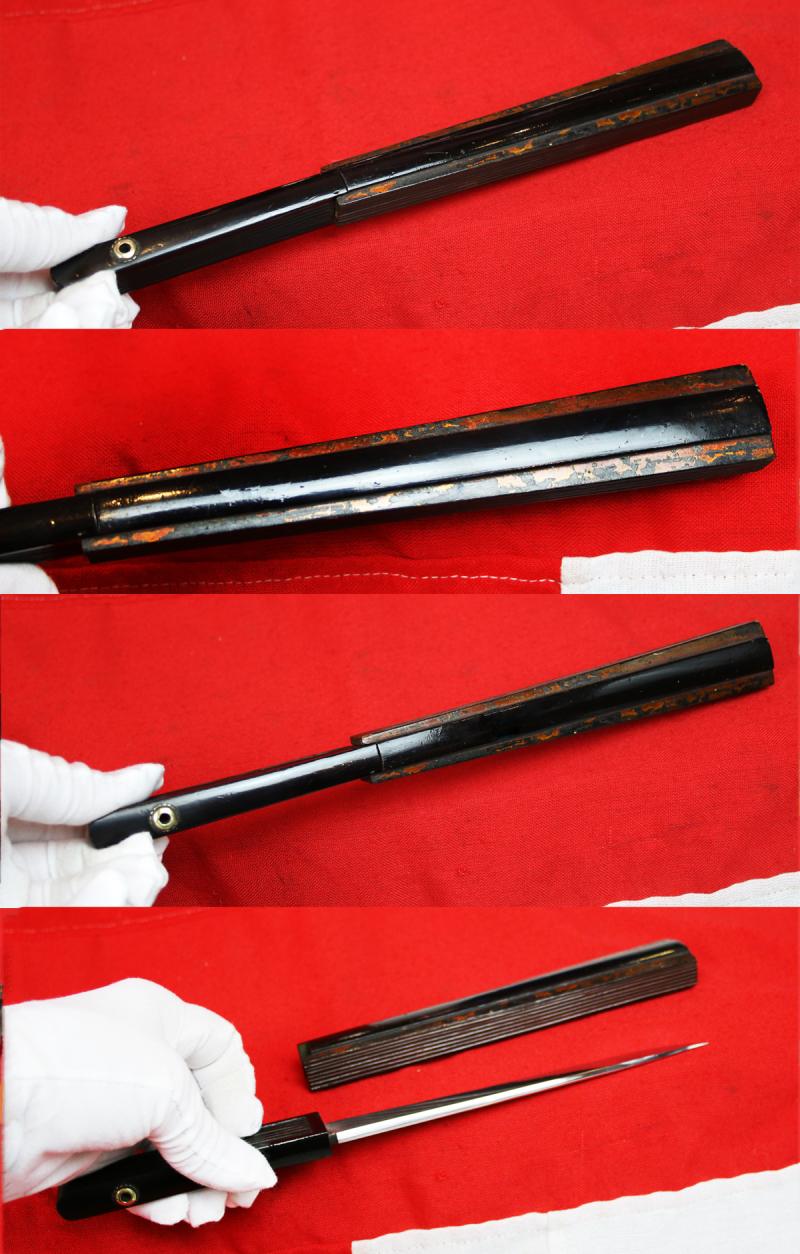


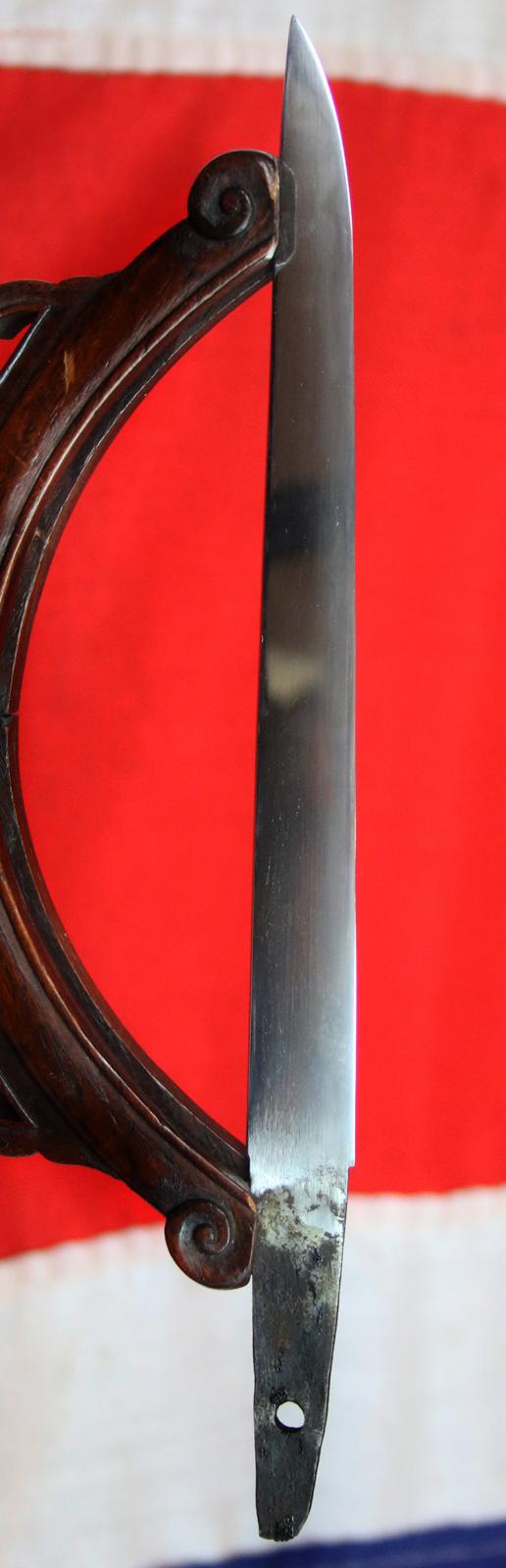
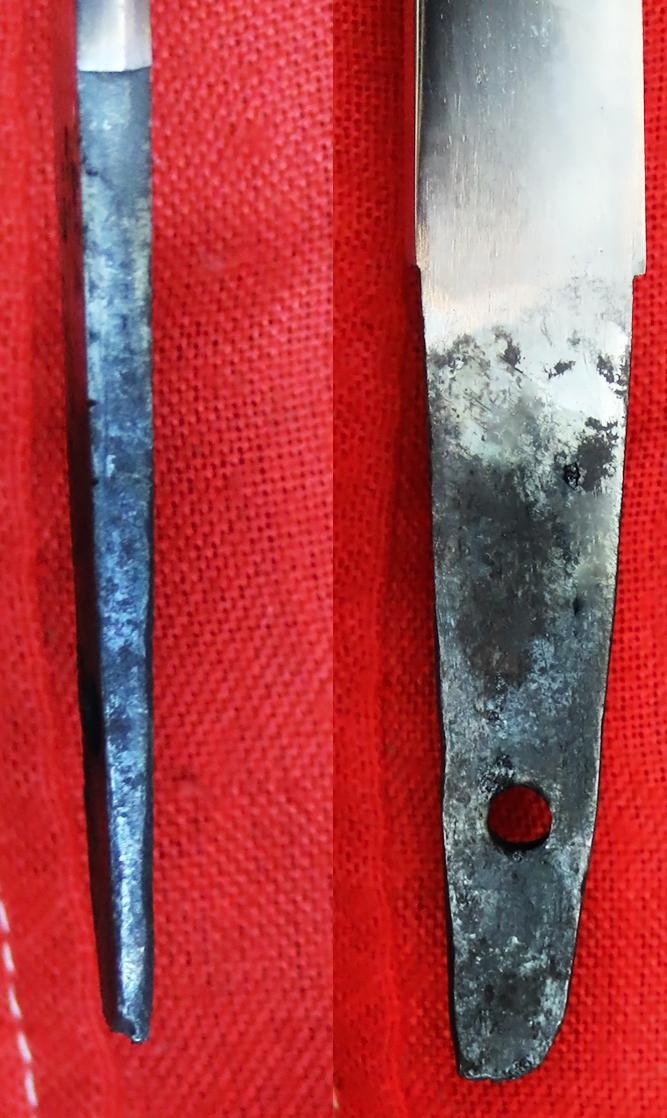
A Most Superb And Rare Early Koto Period Shikome-Tessen, with Fine Quality Concealed Blade Bearing a Stunning Hamon & Hada A Hidden High Ranking Samurai's, {Such as a Daimyo, or Kumigashira 組 頭} Samurai Tanto War Fan, Called a Shikome-Tessen
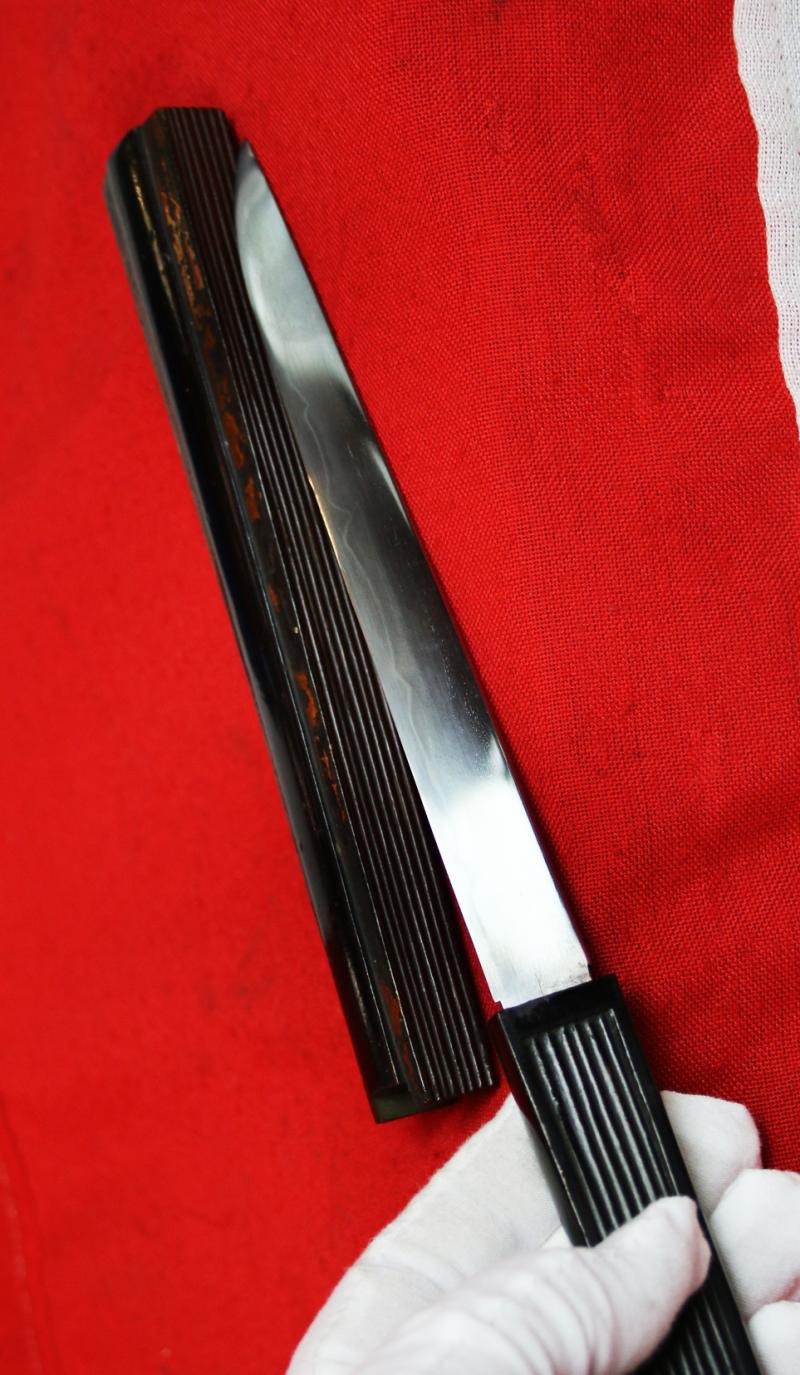
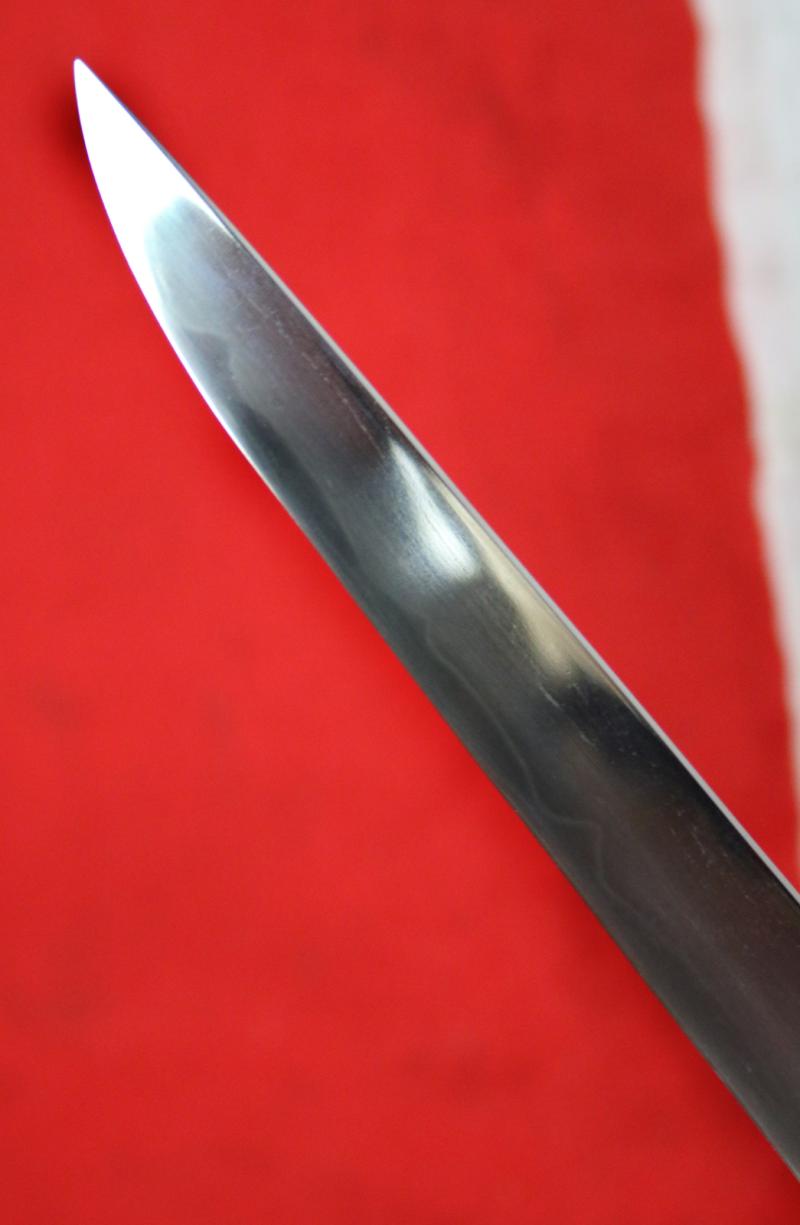
A fantastic, original, and very rare, late Muramachi hira-zukuri 16th century samurai concealed weapon war fan, a samurai tanto {dagger} disguised as a folded fan, called a shikome-tessen, that has a fabulous, traditional tanto blade concealed within with midare hamon.
The kumigashira 組 頭 mounted warriors held the highest rank below the daimyo lord, commanding all the hirashi, mounted samurai for their lord.
A narrow thrusting and cutting blade with a stunning hamon and hada. It was also a perfect dagger for an assassination, thus a disarmed samurai, visiting or negotiating with a daimyo lord of an opposing clan, would seem to be completely harmless and of little threat, but armed with an innocent looking shikome-tessen, he would be as dangerous and formidable as if he was armed with his daisho.
Early Edo period secret bladed tanto, with carved wood and multi coloured urushi lacquered fittings, of black, with gold-over-black tortoishell pattern lacquer edge trim, in a beautiful, traditional Japanese folded samurai tessen war-fan form.
Samurai carried the tessen in their belt (obi) or bosom during the feudal era, particularly in formal settings or locations where carrying swords (katanas) was strictly prohibited.
It allowed nobles and warriors a legal means of self-defense that did not immediately trigger alarm.
Beyond combat, war fans were occasionally used by commanders on the battlefield to signal troop movements.
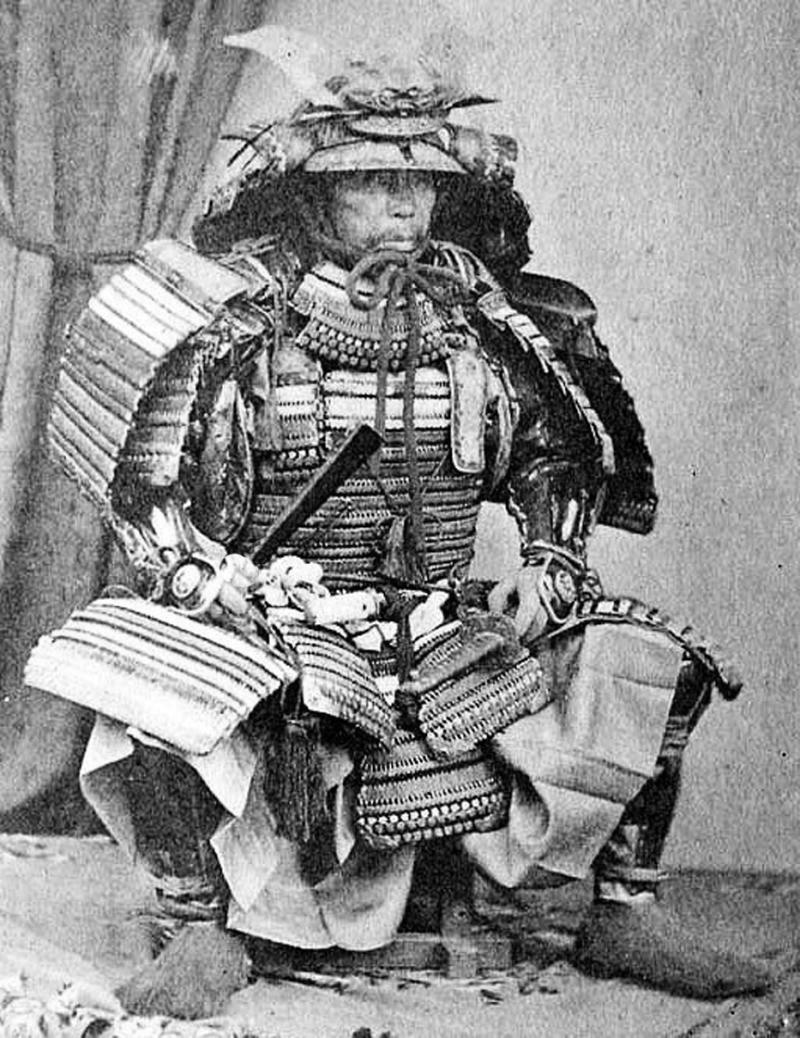
A photo in the gallery from Edo Japan of a seated high ranking samurai holding his tachi and war fan. Another samurai standing also with fan and daisho through his obi. Samurai sometimes disguised their blades as inoffensive items, such as cleverly made walking sticks or other common objects such as fans. Their ancestors, the classical warriors, overlooked nothing which could be used as a weapon.
The blade nakago sealed in place, so there was no telltale visible mekugi blade affixing peg.
A Japanese war fan is a fan designed for use in warfare. Several types of war fans were used by the samurai class of feudal Japan and each had a different look and purpose.
One particularly famous legend involving war fans concerns a direct confrontation between Takeda Shingen and Uesugi Kenshin at the fourth battle of Kawanakajima. Kenshin burst into Shingen's command tent on horseback, having broken through his entire army, and attacked; his sword was deflected by Shingen's war fan. It is not clear whether Shingen parried with a tessen, a dansen uchiwa, or some other form of fan. Nevertheless, it was quite rare for commanders to fight directly, and especially for a general to defend himself so effectively when taken so off-guard.
Minamoto no Yoshitsune is said to have defeated the great warrior monk Saito Musashibo Benkei with a tessen.
Araki Murashige is said to have used a tessen to save his life when the great warlord Oda Nobunaga sought to assassinate him. Araki was invited before Nobunaga, and was stripped of his swords at the entrance to the mansion, as was customary. When he performed the customary bowing at the threshold, Nobunaga intended to have the room's sliding doors slammed shut onto Araki's neck, killing him. However, Araki supposedly placed his tessen in the grooves in the floor, blocking the doors from closing. Types of Japanese war fans;
Gunsen were folding fans used by the average warriors to cool themselves off. They were made of wood, bronze, brass or a similar metal for the inner spokes, and often used thin iron or other metals for the outer spokes or cover, making them lightweight but strong. Warriors would hang their fans from a variety of places, most typically from the belt or the breastplate, though the latter often impeded the use of a sword or a bow.
Tessen could be folding fans with outer spokes made of heavy plates of iron which were designed to look like normal, harmless folding fans or solid clubs shaped to look like a closed fan. Samurai could take these to places where swords or other overt weapons were not allowed, and some swordsmanship schools included training in the use of the tessen as a weapon.
The tessen was also used for fending off knives and darts, as a throwing weapon, and as an aid in swimming.
Gunbai (Gumbai), Gunpai (Gumpai) or dansen uchiwa were large solid open fans that could be solid iron, metal with wooden core, or solid wood, which were carried by high-ranking officers. They were supposedly used to ward off arrows, as a sunshade, and to signal to troops.
Another most interesting fan tanto is in a museum collection in Boston Mass. USA
The Isabella Stewart Gardner Museum, Boston;
The deceptive 'Knife in Fan-Shaped Case'—or fan tanto, as it was typically known, with “tanto” meaning a short blade that may either be single- or double-edged in Japanese culture—was found in the desk during an inventory of the galleries shortly after Isabella Stewart Gardner’s death in 1924. The inventory provides little additional information. The hilt (or handle) of the knife is disguised as the base of the fan’s sticks and rivet; the sticks and leaves of the fan in folded position form the knife’s scabbard.
Japanese, Knife in a Fan-Shaped Case, 19th century. Lacquered wood with metal blade
Isabella Stewart Gardner Museum, Boston. Isabella kept this in her desk in the Macknight Room
An appearance of a samurai fan concealed tanto in Victorian culture can be found in the 1879 French novel 'Le Crime de l’Opera' by Fortuné de Boisgobey.
The story features a scene in which a blackmailer is assassinated in an opera box by one of three masked ladies with a “Japanese fan-dagger, or poniard so made as to be concealed under the form of a fan.”
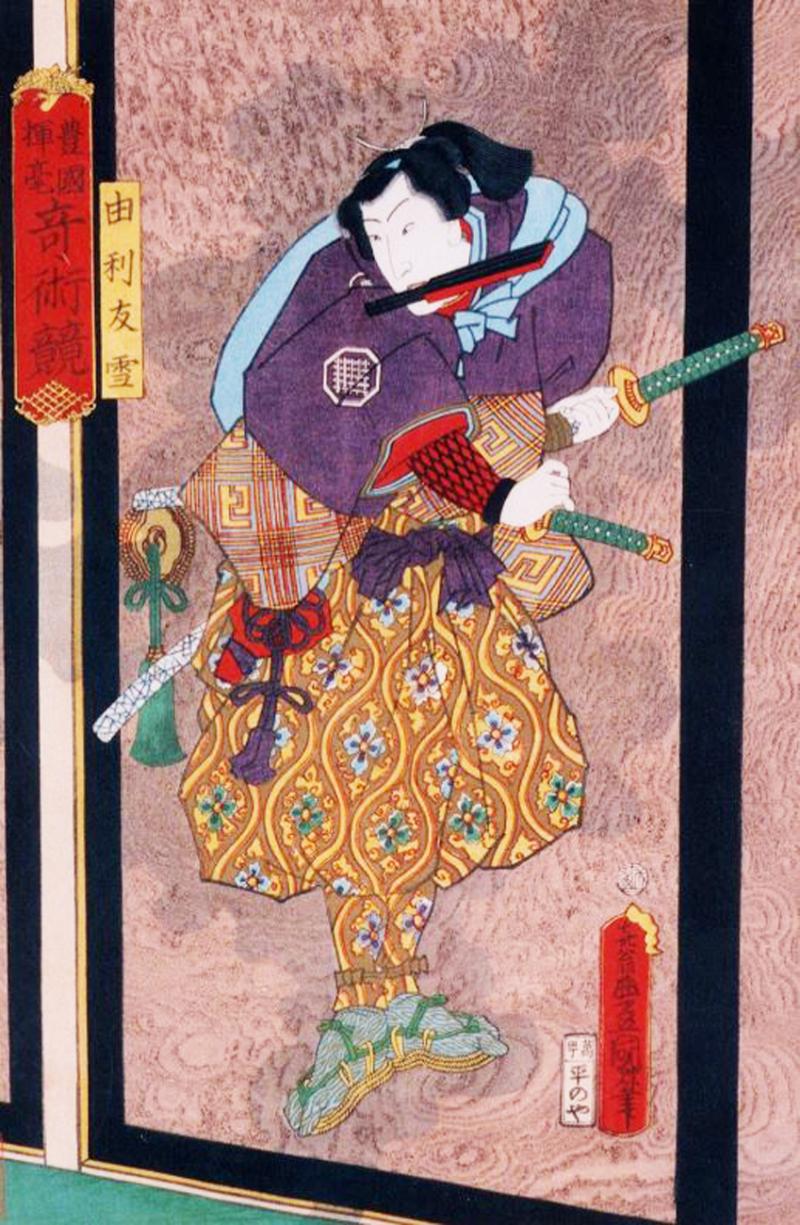
Two pictures in the gallery, one of a woodblock print of a samurai holding a tessen between his teeth in a pre-combat pose, and a Victorian photograph of a Meiji samurai seated with his tessen war-fan.
This Shikome-Gessan is 11.5 inches long overall. approx 7 inch blade.
https://www.gardnermuseum.org/blog/isabellas-folding-fan-deception
Woodblock print from The Lanes Armoury library Collection
by Utagawa Kunisada幅日本版画
Utagawa Kunisada (also known as Toyokuni III) was a leading 19th-century ukiyo-e master famed for his dynamic kabuki actor prints (yakusha-e) and warrior scenes.
Code: 26315
2995.00 GBP