
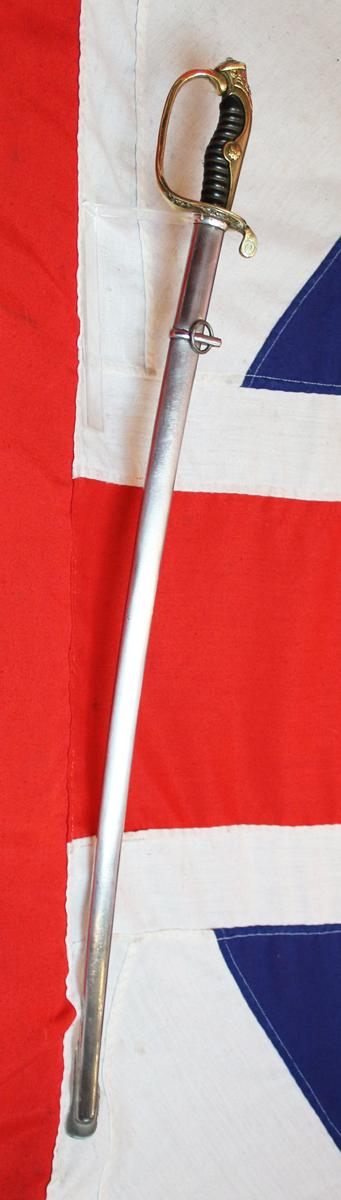
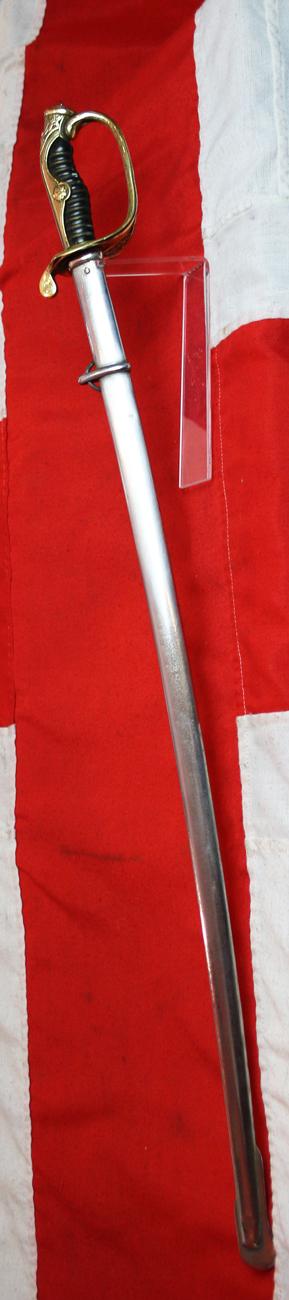

An 1886 Japanese Company Grade Type 19 Kyu-Gunto Officer's Sword Used Up To WW2. Used In 4 Wars, Sino Japanese War, The Russo Japanese War, WW1 & WW2
Company Grade Type 19 Kyu-Gunto having a single suspension mount on the nickeled steel scabbard
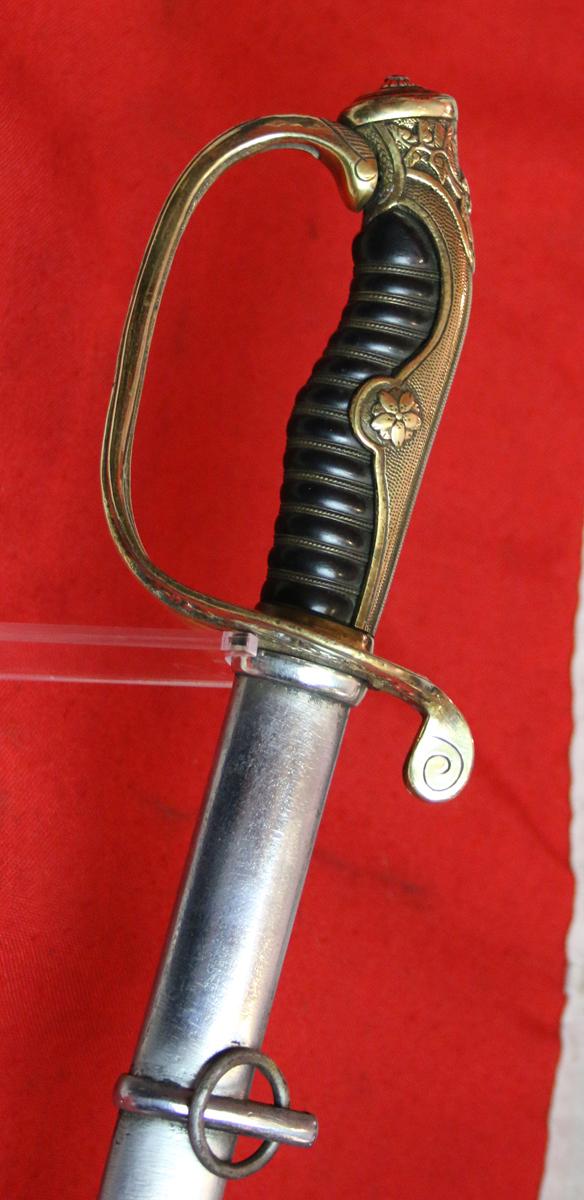
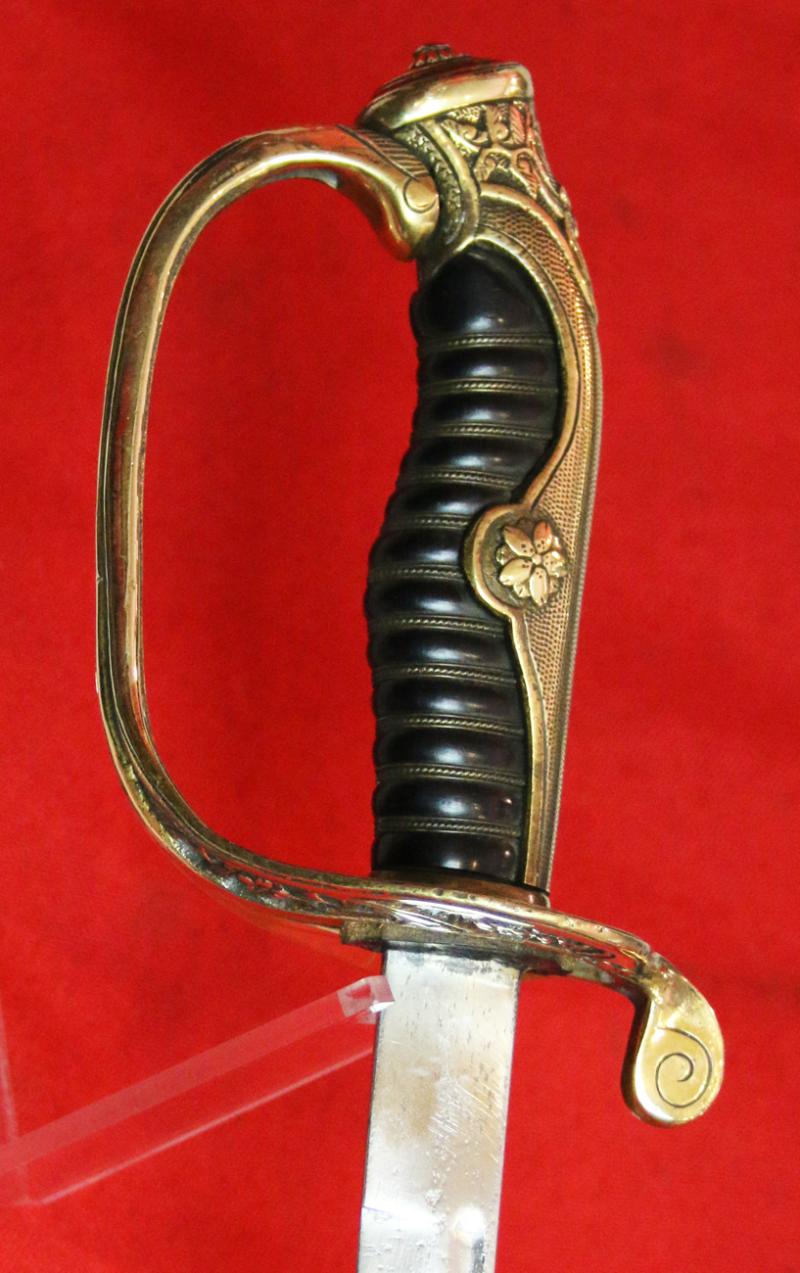
The blade is plated steel as is common on these Type 8 and Type 19 swords. The black polished horn grip and the hilt decoration on this sword indicating this was a sword for a junior Army Officer.
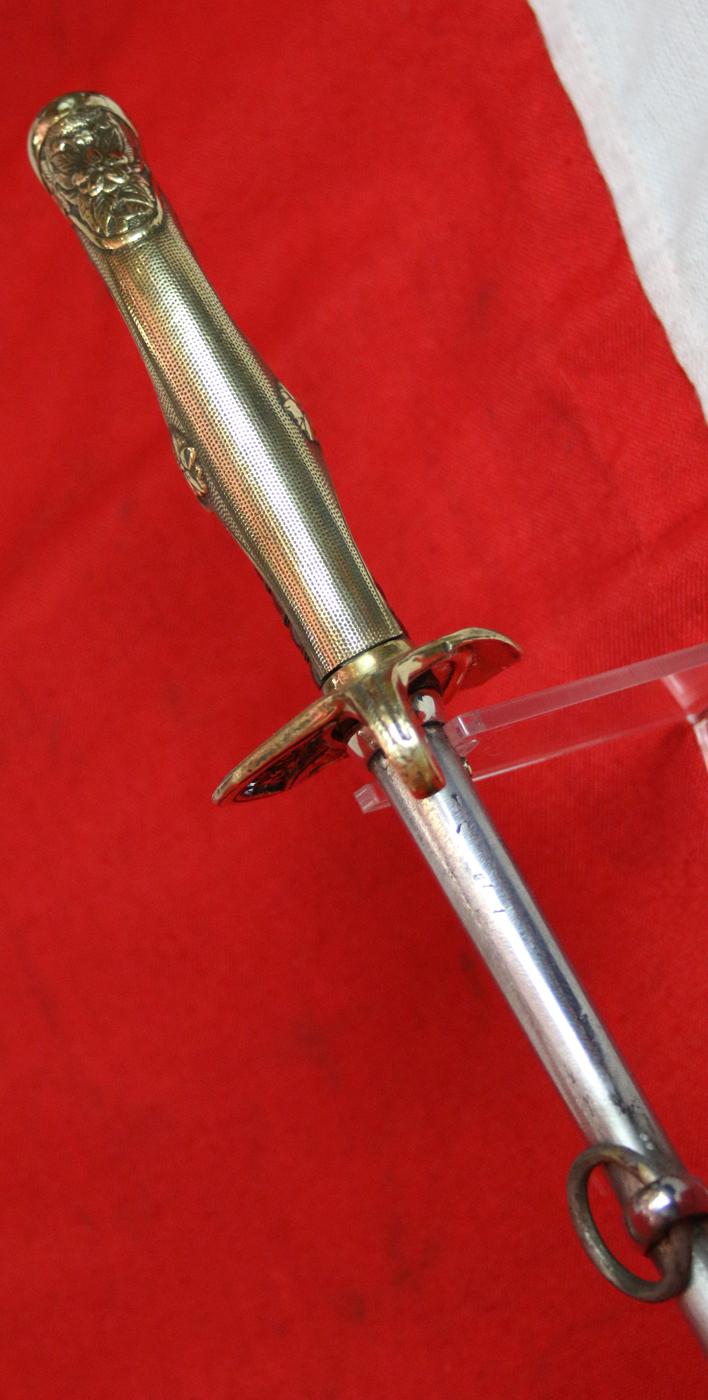
Company grade army officer’s parade sabre featuring brass hilt with pierced floral pattern
in the guard; knuckle bow joining the pommel with integral backstrap. A chrysanthemum in
relief is on the side and upper rear of the backstrap. Black polished horn grip with triple strands of alternating straight and twisted brass wire wrap.
Chrome-plated single-edged blade. Original
nickel-plate scabbard with single carry ring. Scabbard with some loss to the nickel plating. Guard
excellent with pleasing patina
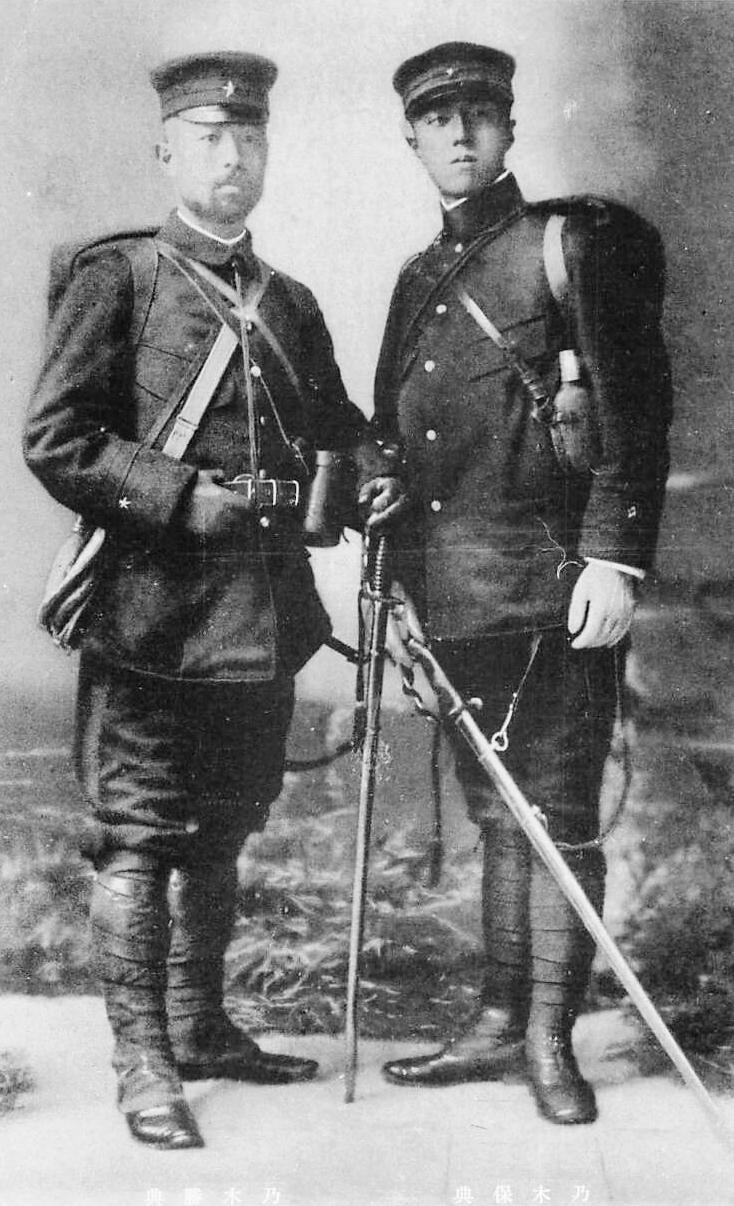
Patterned after their Western martial counterparts, these kyu gunto swords were used for parade and
dress events by Army officers. Though they are by no means scarce, prices for original
WWII era swords and daggers have been rising steadily as fewer and fewer WWII
veterans survive.
First Sino-Japanese War (1894–1895)
Control over Korea and influence in East Asia. Japan easily beat China's Qing dynasty.
Japan gained Taiwan and the Liaodong Peninsula, proving its new modern military was strong.
Russo-Japanese War (1904–1905)
Competing power over Manchuria and Korea.
Japan shocked the Western world by eventually defeating the Russian Empire on both land and sea.
Japan took control of Korea and railway rights in Manchuria, cementing its status as a global military power.
Imperial Japan entered World War I on August 23, 1914, joining the Allied Powers against Germany under the Anglo-Japanese Alliance. Japan seized German territories in China and the Pacific, sent a naval squadron to the Mediterranean, and emerged at the Paris Peace Conference as one of the world's major military powers
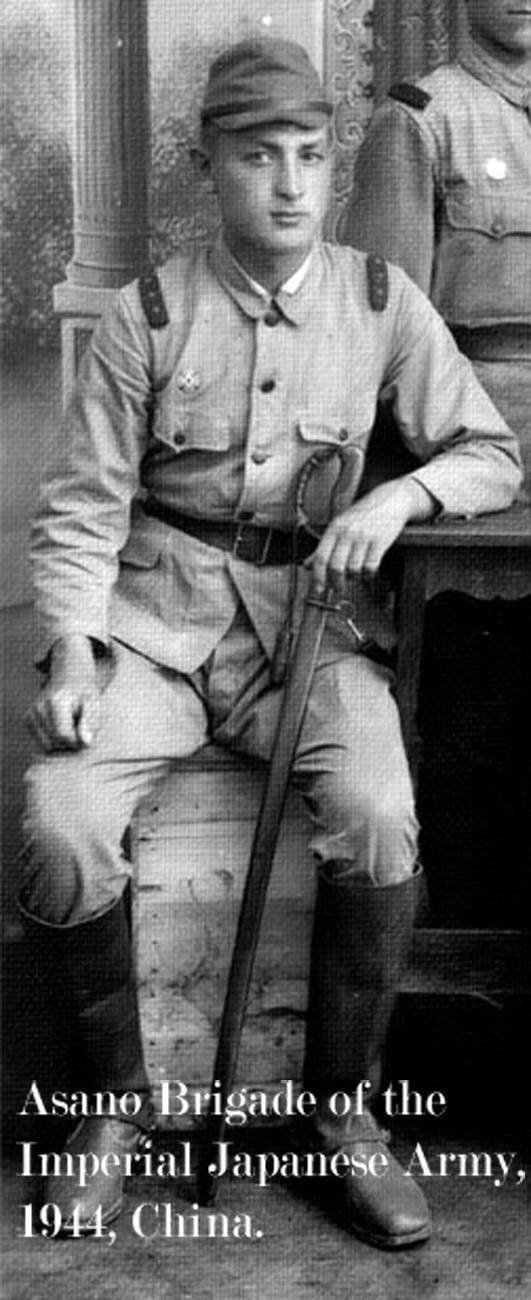
Second Sino-Japanese War leading to WW2 (1937–1945) Total economic and territorial control of China.
Full-scale invasion following the 1931 seizure of Manchuria. It led to brutal campaigns, massive casualties, and large-scale occupation. This conflict merged directly into World War II and dragged on until Japan's final defeat
The blade has numerous areas of old pitting
Overall in scabbard around 33.5 inches long.
Code: 26340
525.00 GBP