
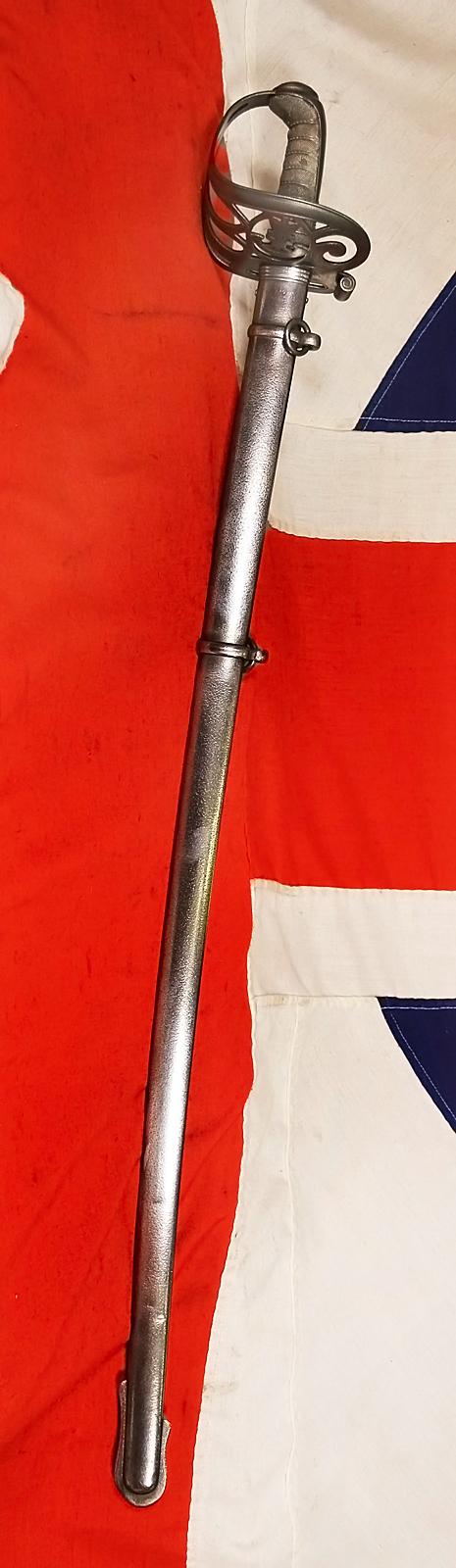
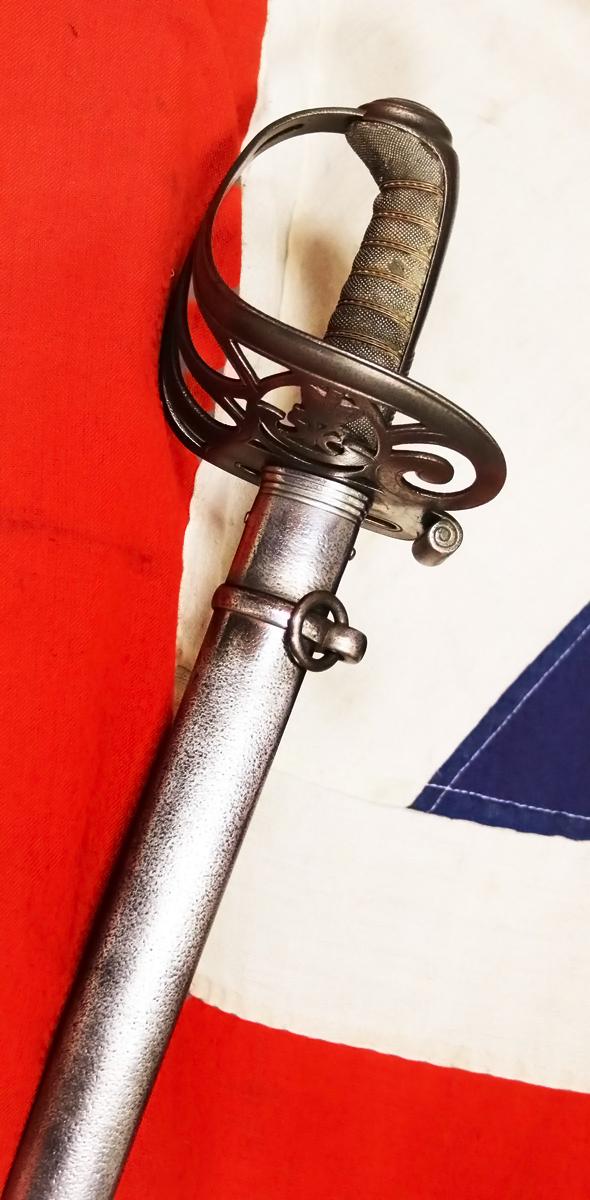
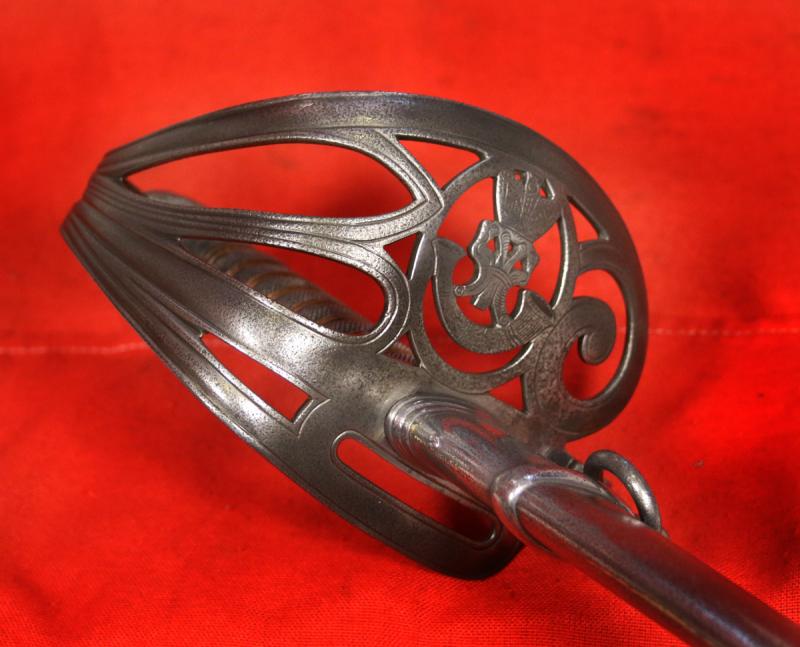
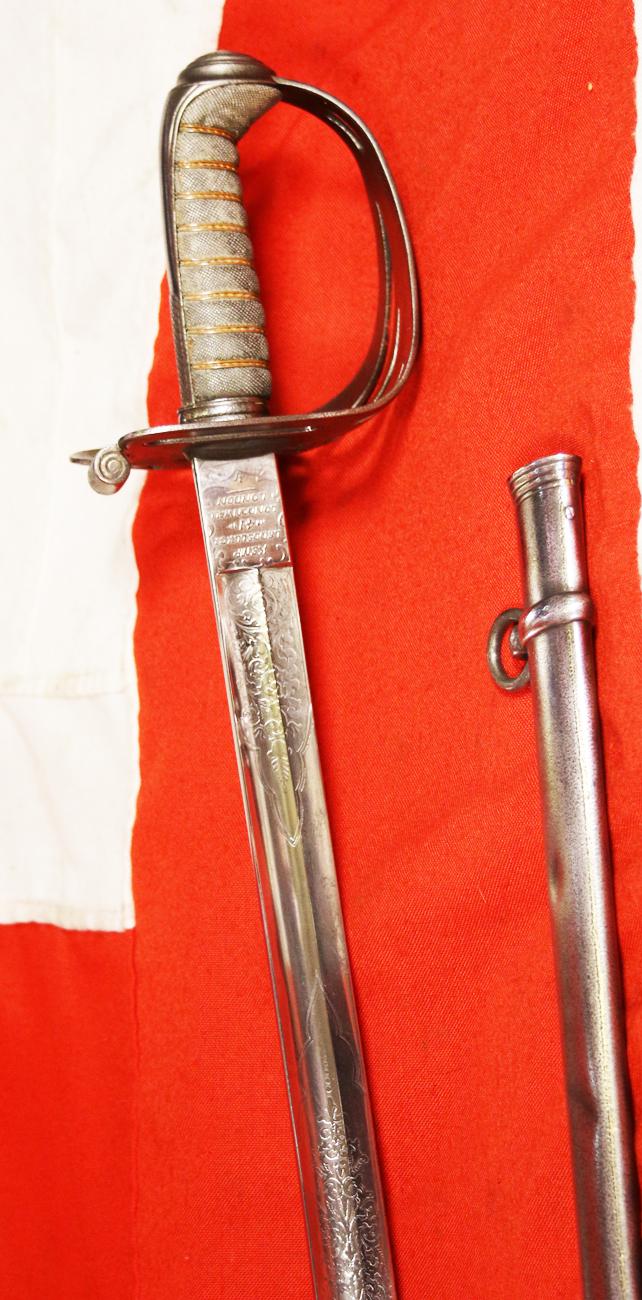
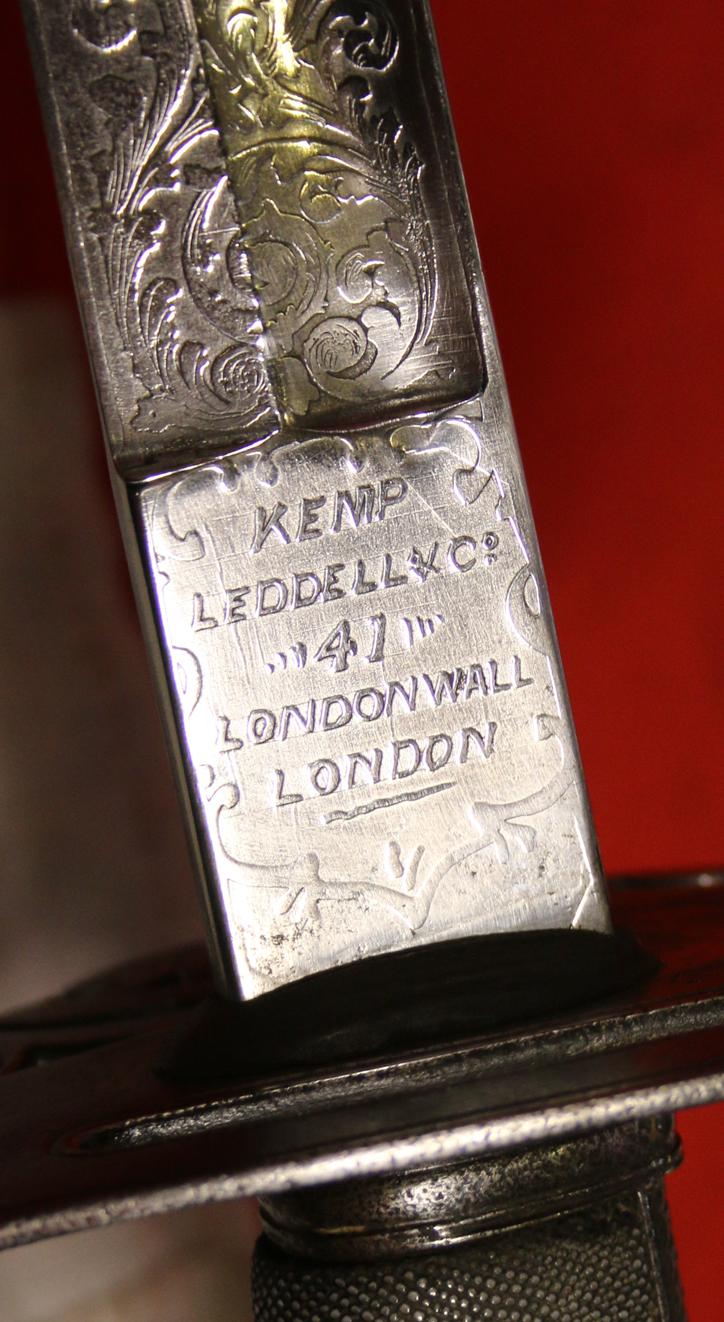
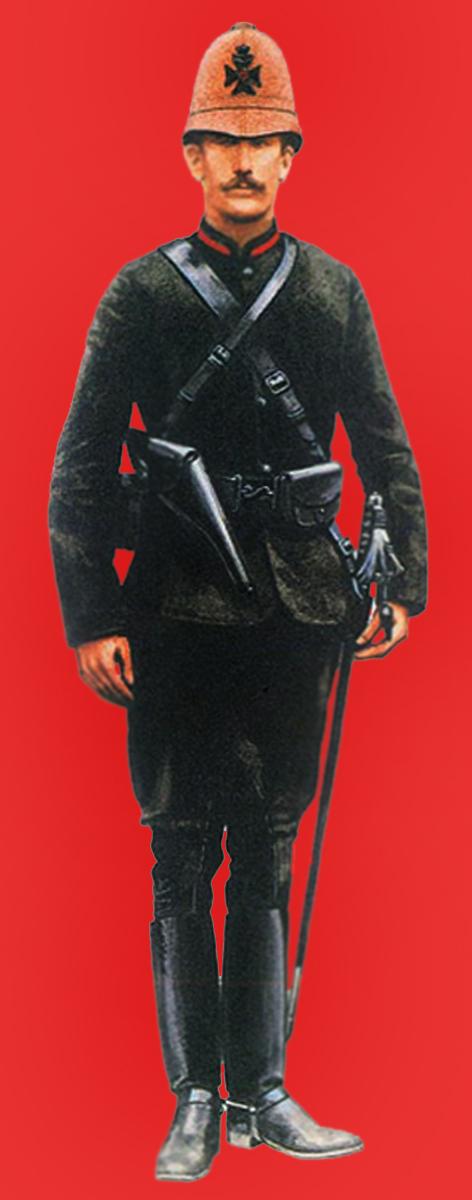
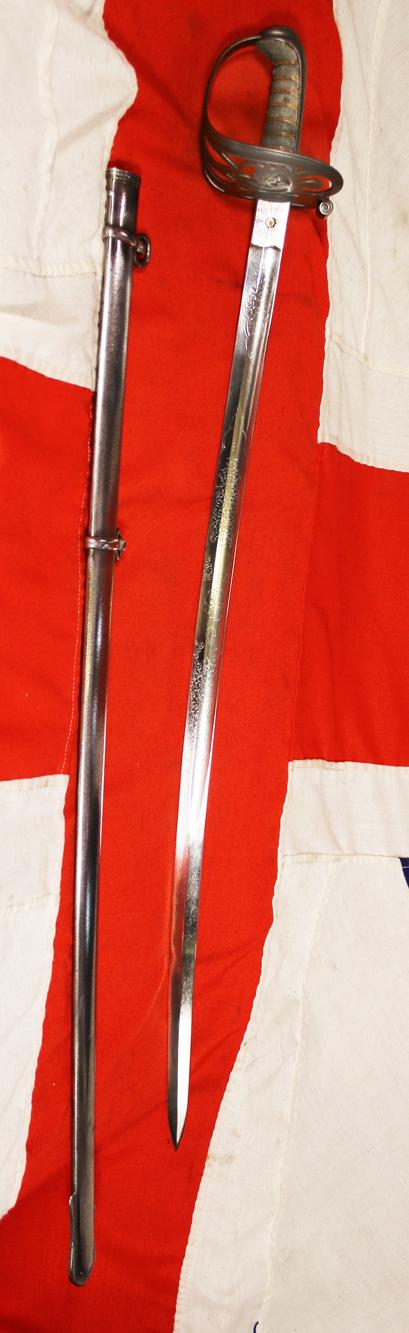
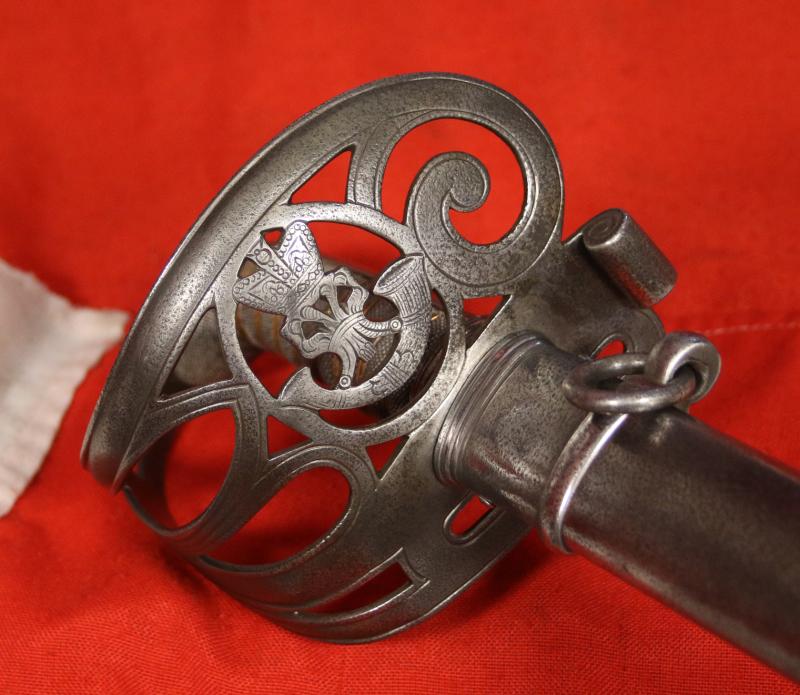
A Fine Regimental Victorian 60th Rifles Officer's Sword of the Rifle Brigade Signed Blade by Kemp, Leddell & Co. Armourers, 41 London Wall, London, Used In The Zulu War and in The Boer War As The Later Regiments Name The Kings Royal Rifle Corps
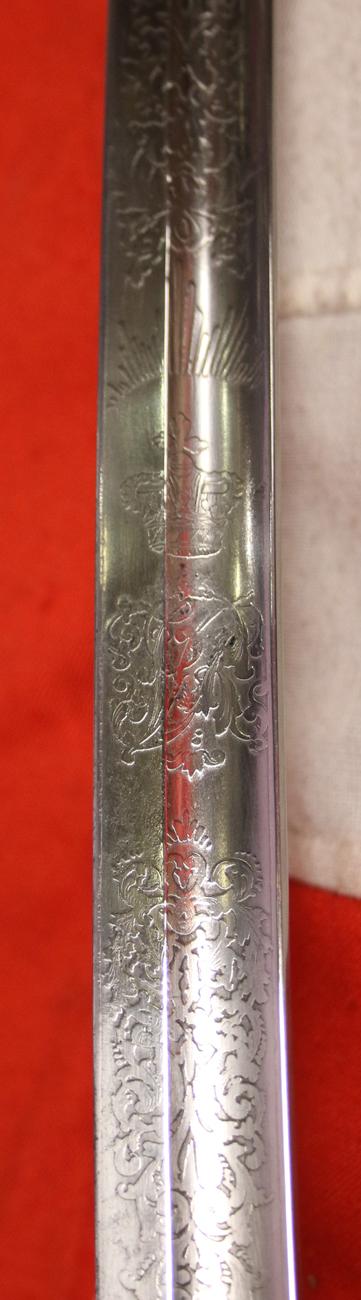
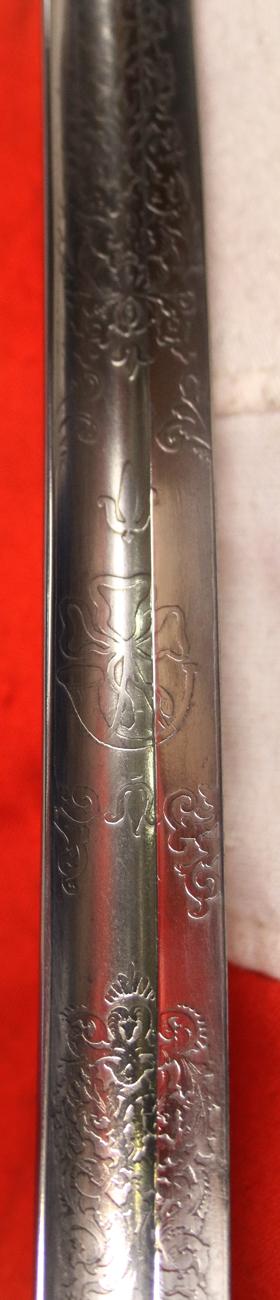
Etched with foliate scrolls, crowned VR cypher, regimental title device of the strung bugle blade in superb bright polish. Regulation grey steel gothic hilt, also incorporating a slung bugle horn, wire bound fish skin covered grip, in its good steel combat weight scabbard with two suspension rings. Sword bespoke commisioned from Kemp, Leddell & Co in London, circa 1870
3rd Battalion, 60th or The King’s Royal Rifle Corps (1755-1958)
The 60th Rifles in 1879 were part of No. 1 Column (the Main Force) under Colonel Glyn and Lord Chelmsford.
Fought in key engagements, including the decisive Battle of Ulundi on July 4, 1879, which effectively broke Zulu military power. After the Zulu war the regiments name was changed to the KRRC, the Kings Royal Rifle Corps.
The 60th Rifles (The King's Royal Rifle Corps) served actively during the Anglo-Zulu War of 1879, (with individual officers like Major Charles Walter Robinson served on staff).
The 3rd Battalion arrived in South Africa as part of the vital wave of British reinforcements sent after the initial disaster at Isandlwana. Before reaching Ulundi, they took heavy part in relieving the siege of Eshowe and fought at the Battle of Gingindlovu on April 2, 1879.
The British fought in their traditional square formation at the battle of Gingindlovu, with the 60th Rifles taking position on the northern face of the square. According to Castle and Knight, “the main Zulu body split into columns, then crossed the Nyezane (River) at two drifts a mile apart; and, as it advanced up the slopes towards the laager, it fanned out into the traditional chest and horns attack formation. The order to hold fire until the enemy were within 300 yards condemned the troops at the front of the square to the nerve wracking spectacle of the Zulus deploying to attack without a shot being fired to stop them. It was a sight that was to strain the nerves of the untried men of the 60th. The British fought in their traditional square formation at the battle of Gingindlovu, with the 60th Rifles taking position on the northern face of the square. According to Castle and Knight, “the main Zulu body split into columns, then crossed the Nyezane (River) at two drifts a mile apart; and, as it advanced up the slopes towards the laager, it fanned out into the traditional chest and horns attack formation. The order to hold fire until the enemy were within 300 yards condemned the troops at the front of the square to the nerve wracking spectacle of the Zulus deploying to attack without a shot being fired to stop them. It was a sight that was to strain the nerves of the untried men of the 60th.
At Ulundi: The battalion marched into the heart of Zululand with Chelmsford's advancing field force. At the decisive Battle of Ulundi, the British formed a massive, mobile hollow square (or rectangle) out on the Mahlabatini plain to repel an estimated 20,000 Zulu warriors.
During the Second Anglo-Boer War (1899–1902), the King's Royal Rifle Corps (KRRC)—originally the 60th Regiment of Foot—served with distinction in South Africa. Their actions inspired several notable historical paintings, commemorative prints, and portrait commissions.
The Battle of Talana Hill (20 October 1899): The 1st Battalion KRRC played a pivotal role in this early clash, successfully storming the heights alongside the Royal Dublin Fusiliers. Famous period illustrations and paintings capture the intense infantry assault up the boulder-strewn slopes where the KRRC's commanding officer, Lieutenant Colonel Gunning, was killed.
The Battle of Colenso (15 December 1899): The 3rd Battalion KRRC was deployed just 700 yards behind Colonel Long's exposed artillery batteries to prevent the Boers from capturing the guns. This chaotic scene is immortalised in multiple famous paintings depicting the desperate struggle to rescue the artillery pieces under heavy fire.
Code: 26344
950.00 GBP