
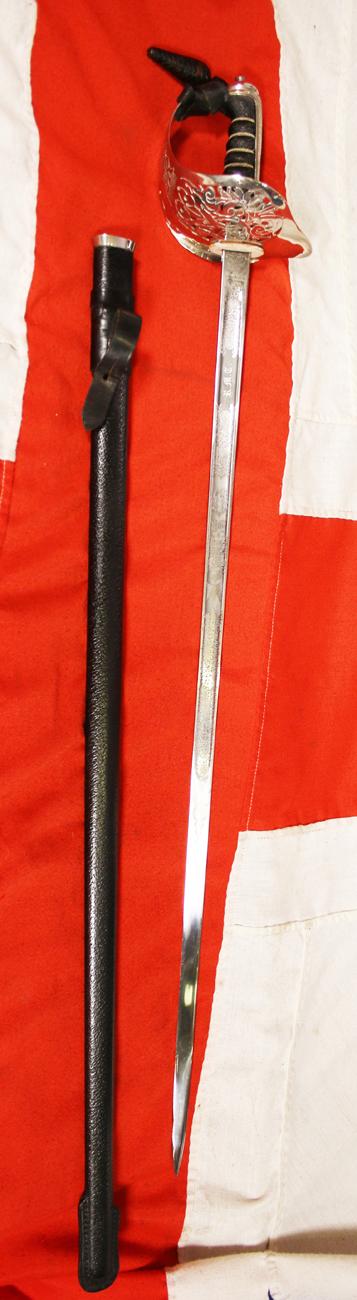
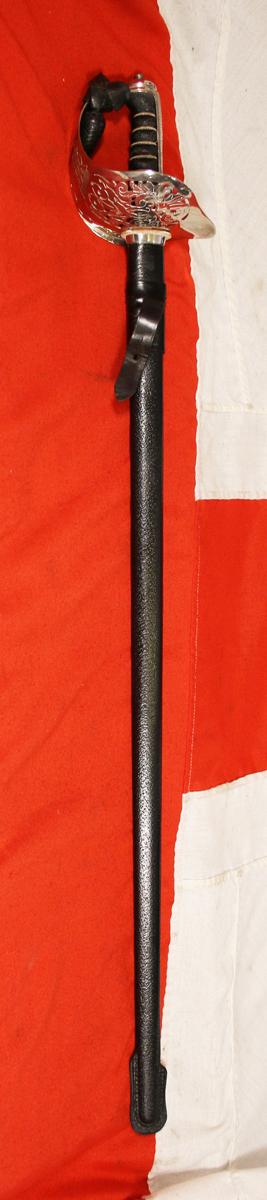
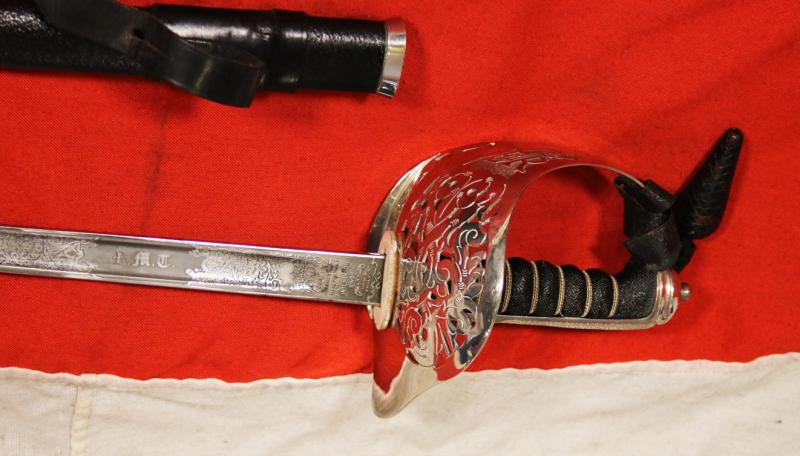
A Near Mint Regimental Officer's 1897 Pattern British Army Wilkinson Sword of the Royal Tank Regiment. Perfect For Current Service in The British Army, For A Future or Veteran Officer of The Royal Tank Regiment
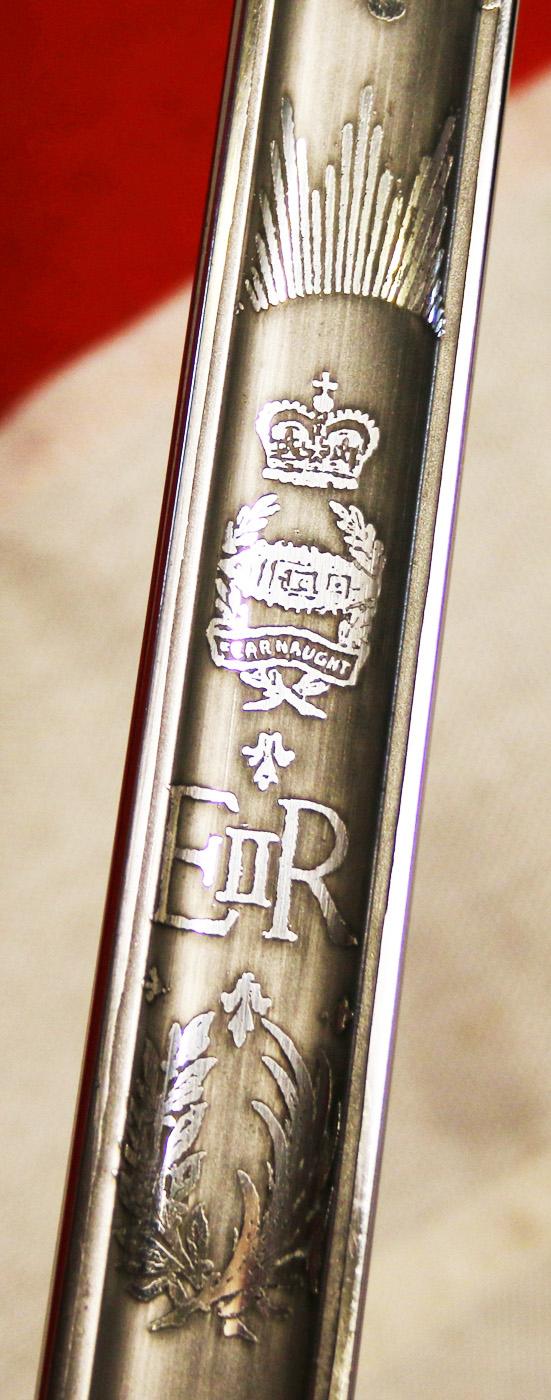
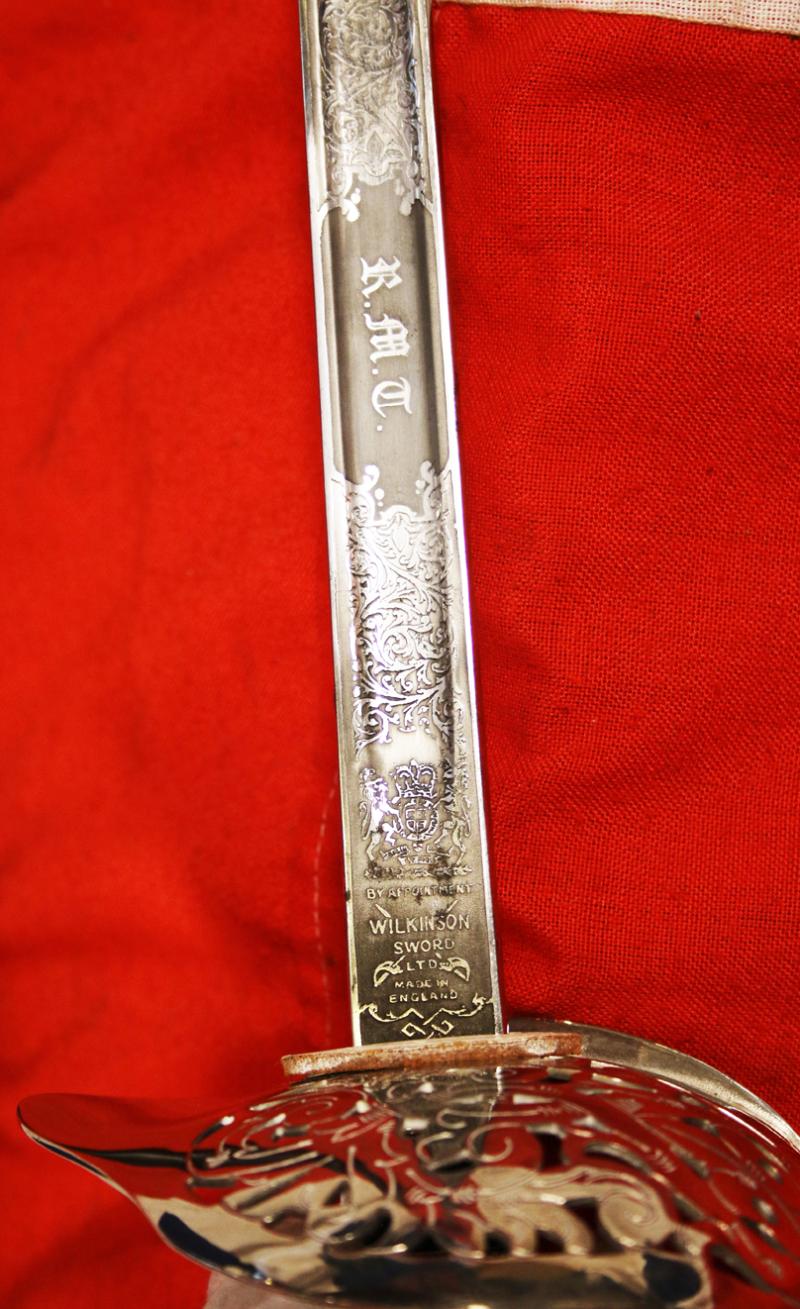
Overall in superb condition after its return from hand cleaning and conservation in the artisan workshop. This finest sword was commissioned from Wilkinson Sword Co. in circa 1964. It features a straight stainless-steel blade etched with the regimental crest
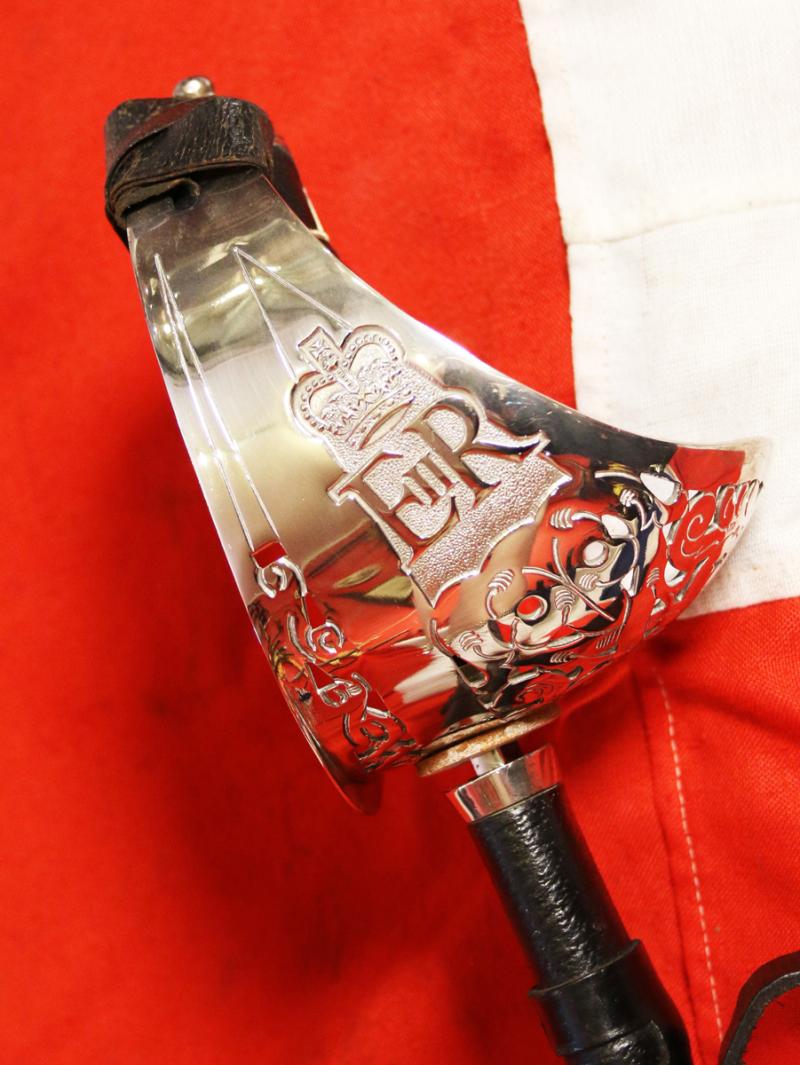
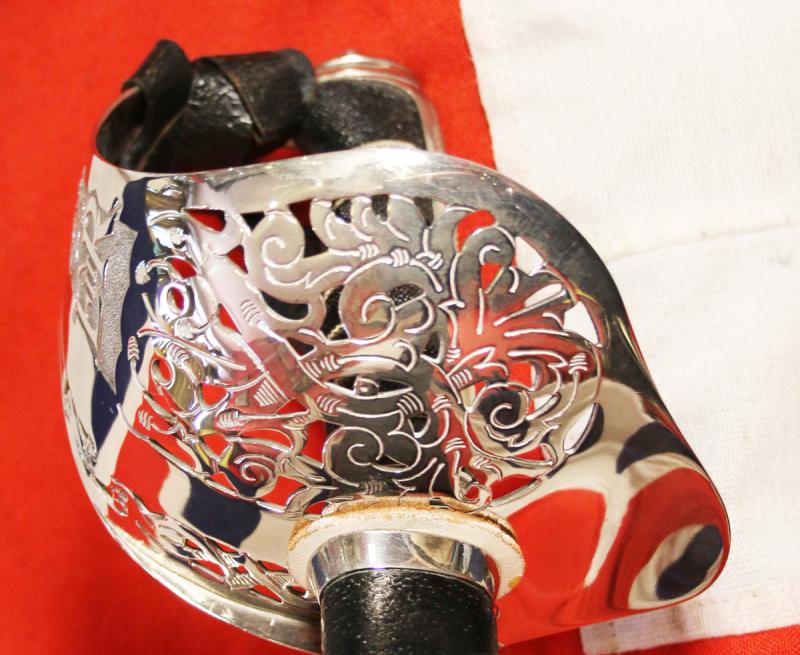
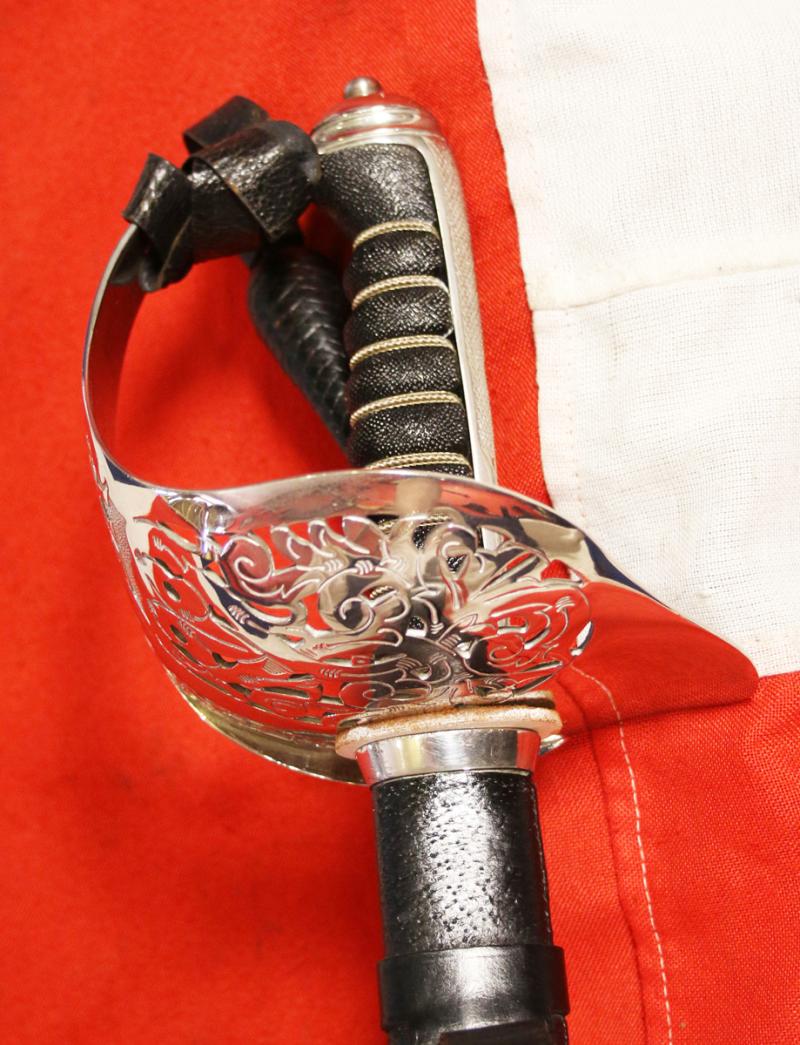
The guard is a nickel-plated three-quarter basket hilt is pierced and etched with a scroll pattern
The grip is in black fish-skin bound with silver-plated copper wire. Can be carried in a Sam Browne with its black leather scabbard.
Wilkinson sword has always been regarded as Britains best bespoke swordmakers since the 19th century, and it certainly was in the 20th and 21st century until they closed down the bespoke sword workshop in September 2005. Without question a true, vintage, Wilkinson sword today is considered the best that money can buy.
The Royal Tank Regiment (RTR) is the oldest tank unit in the world, being formed by the British Army in 1916 during the First World War. Today, it is an armoured regiment equipped with Challenger 2 main battle tanks and structured under 12th Armoured Brigade. Formerly known as the Tank Corps and the Royal Tank Corps, it is part of the Royal Armoured Corps.
The formation of the Royal Tank Regiment followed the invention of the tank. Tanks were first used at the Battle of Flers–Courcelette in September 1916 during the Battle of the Somme in the First World War. They were at first considered artillery, and crews received artillery pay. At that time the six tank companies were grouped as the Heavy Section of the Machine Gun Corps (MGC). In November 1916 the eight companies then in existence were each expanded to form battalions (still identified by the letters A to H) and designated the Heavy Branch MGC; another seven battalions, I to O, were formed by January 1918, when all the battalions were changed to numbered units. On 28 July 1917, the Heavy Branch was separated from the rest of the Corps by Royal Warrant and given official status as the Tank Corps. The formation of new battalions continued and, by December 1918, 26 had been created though only 25 battalions were equipped with tanks, as the 17th had converted to armoured cars in April 1918. The first commander of the Tank Corps was Hugh Elles. The Corps saw much action at the Battle of Cambrai in November 1917
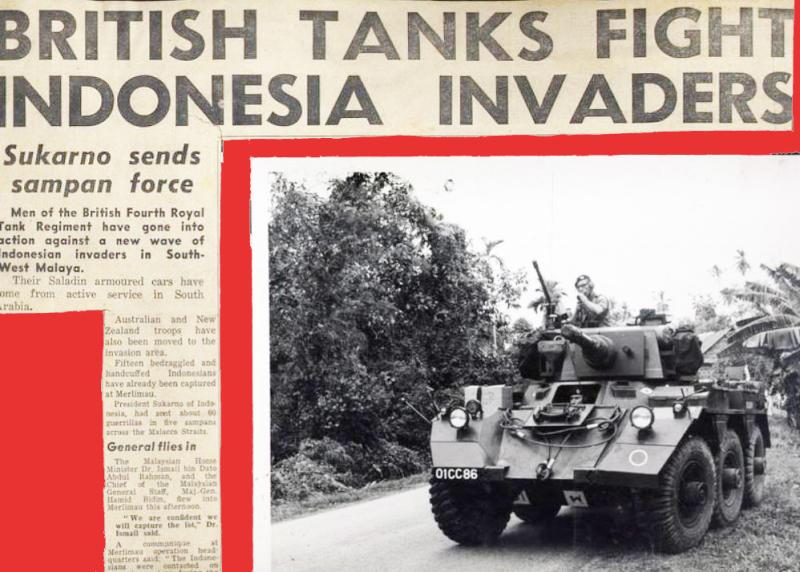
The service period of this sword; In September 1964 the Regiment replaced the QRIH as the Far East Recce Regiment. 4 RTR (-) was at Paroi Camp, Seremban in Malaya, B Sqn had a half Sqn in Singapore and a half Sqn in Brunei, A and C Sqns rotated every six months between Seremban and Sarawak.
It was the time known as “Confrontation” in which Indonesia sought to annex Eastern Malaysia (Sarawak, Sabah) and Brunei from Kalimantan, and disrupt the Malaysian mainland by infiltration across the Straits of Malacca.
Initially
The Seremban Sqn was under command 28 Commonwealth Brigade based at Terendak. Tps were involved in coast patrols and follow-up operations when insurgents came ashore as for example sixty did at Molimau close to the Malacca/Jahore Border.
The Singapore Sqn worked for both Singapore District and 48 Gurkha Bde in Brunei.
The Sarawak Sqn was under command 99 Gurkha Bde (West Bde) based at Kuching with Tps at Sungei Tennang, Bau, Serian and in sp of 1/10 Gurkhas on border operations.
In 1965, the Cyclops squadron became an essential component of the 2nd Royal Tank Regiment Battlegroup. Throughout the Cold War, it was frequently deployed on operations, including missions in Radfan, north of Aden in 1966, Cyprus in 1974, and multiple tours in Northern Ireland.
Code: 26345
745.00 GBP