
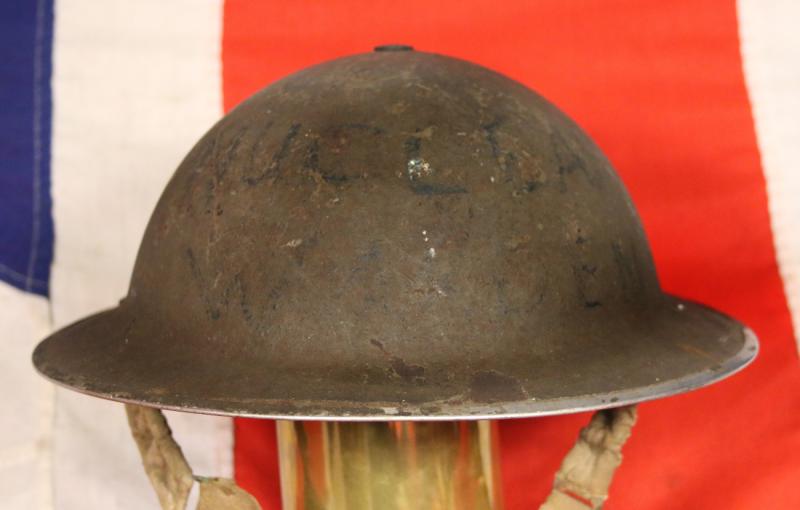
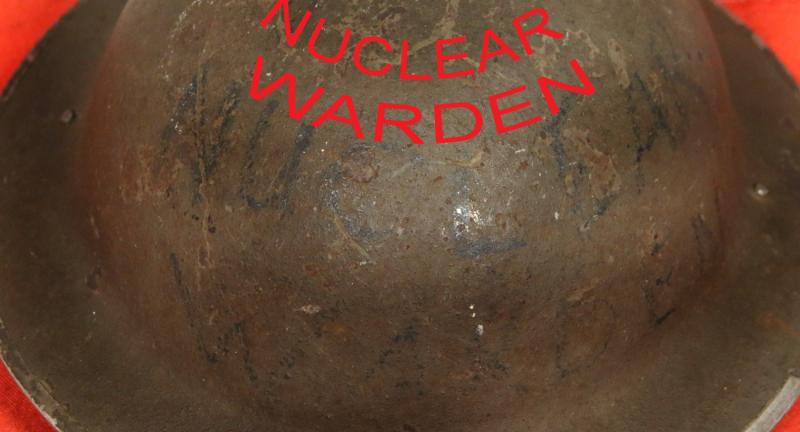
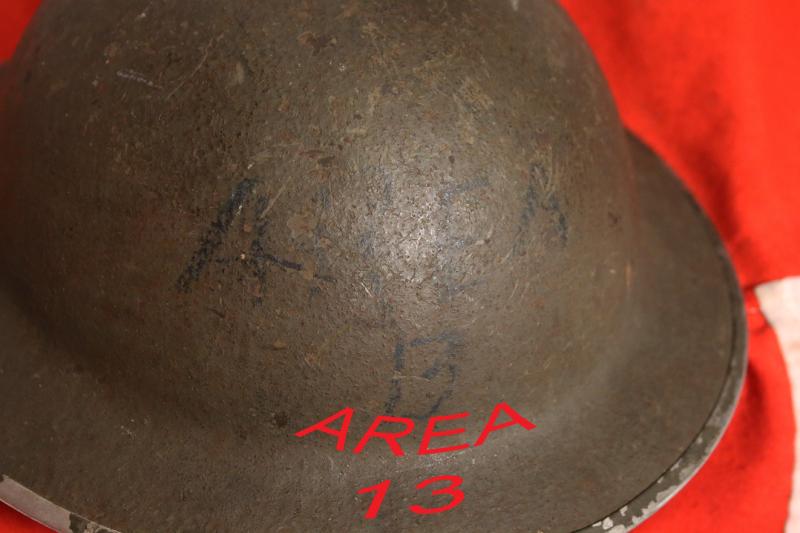
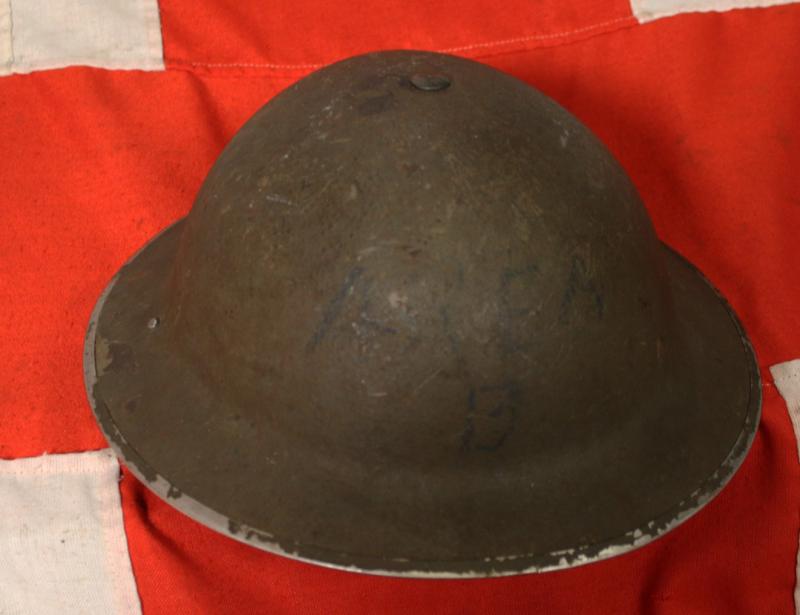
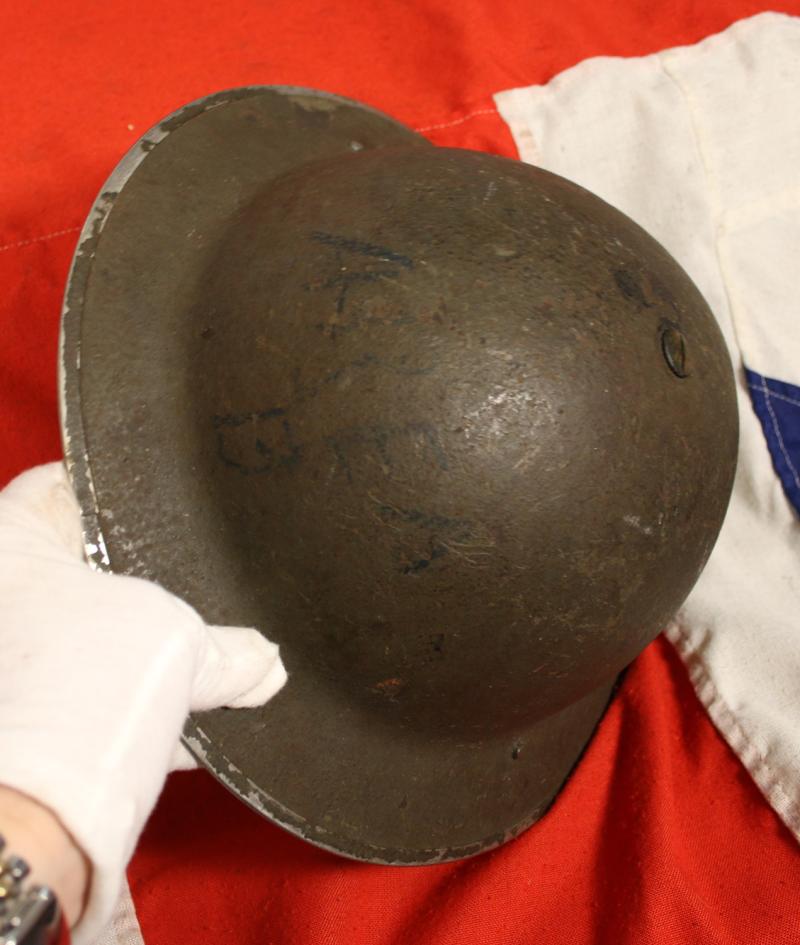
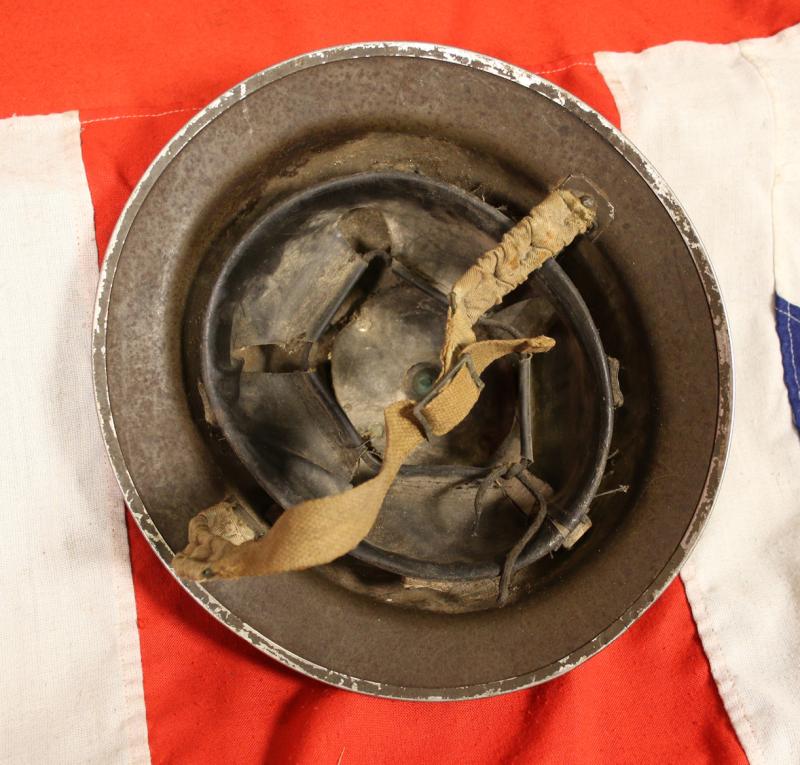
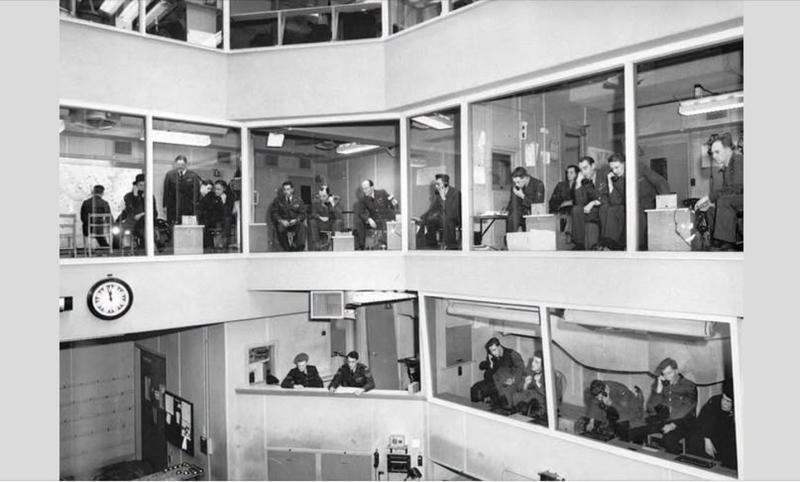
Incredibly Rare Collectors Item. A Nuclear Warden's Helmet 1950-55. Named For "Area 13" in the Central Government War Headquarters Bunker, Codename 'Turnstile', 120 feet Underground In Wiltshire, A Complex Housing 4,000 People Incl. 60 Miles Of Roads
We first starting buying WW2 Tommy Helmets within a year of the wars end, and Cold War Civil Defence kit since the 1970's, yet this is the very first Nuclear Warden's helmet we have ever seen outside of a museum.
As can be plainly seen, this is a simple and purely functional helmet, with no elaborate decor or attractiveness at all, but, that was the very point, it was simply supplied to the wardens, with hand painted area designation, for an effective purpose, and without any frills or fancy badging required, or even used. Similar as to how camouflage was applied German combat helmets in WW1 and WW2
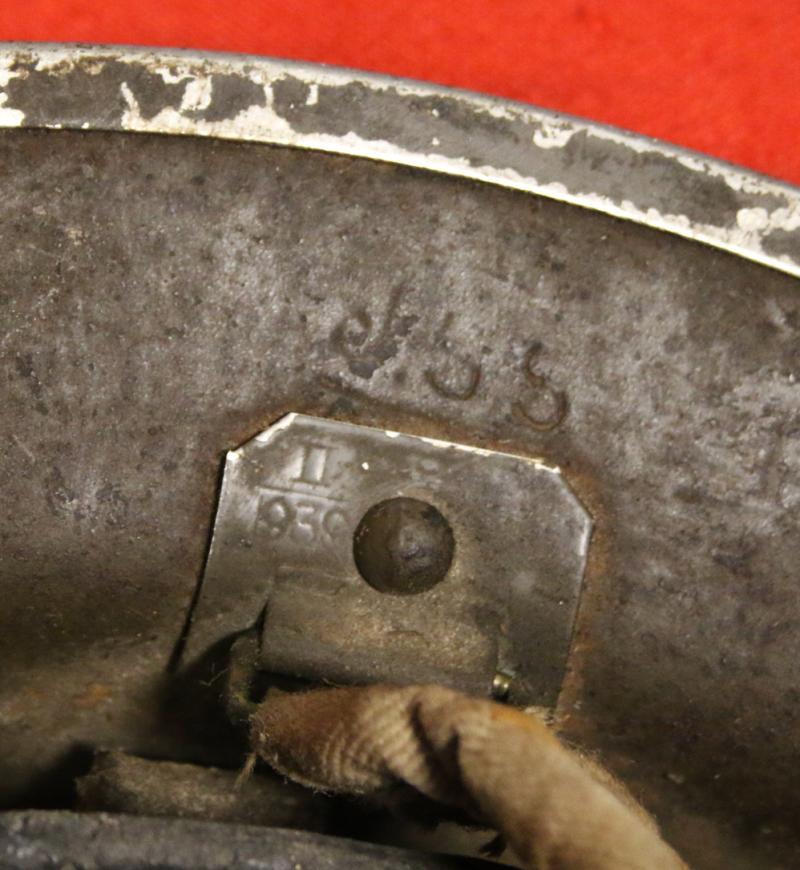
A WW2 manufactured, Tommy Helmet, aka the MKII Brodie pattern. Maker stamped dated 1939 Mk II maker stamped JSS. During World War II, the stamp J.S.S. stood for Joseph Sankey & Sons Ltd, a major metal-press and automotive parts manufacturer based at the Albert Street Works in Bilston, Staffordshire, England from 1938 to 1941. Re-purposed in 1950 for the Cold War, British, Nuclear Bunker Government Headquarters.
Original British Army green paint, with original, hand painted, naming of Nuclear Warden and Area 13 on the rear. Area 13 was the section for power and agricultural supply within the bunker complex.
The Civil Defence Corps (Established 1948)
Following the Civil Defence Act of 1948, the British government established the Civil Defence Corps to prepare for potential future conflicts, including the threat of nuclear attacks.
Volunteers were organized into localized sections, including a Warden Section.
These wardens were not divided into nationwide "nuclear warden areas" only the underground headquarters 'Turnstile, aka, Burlington', likely due to its massive size. Instead, they were organized locally by individual county and borough councils across the UK,
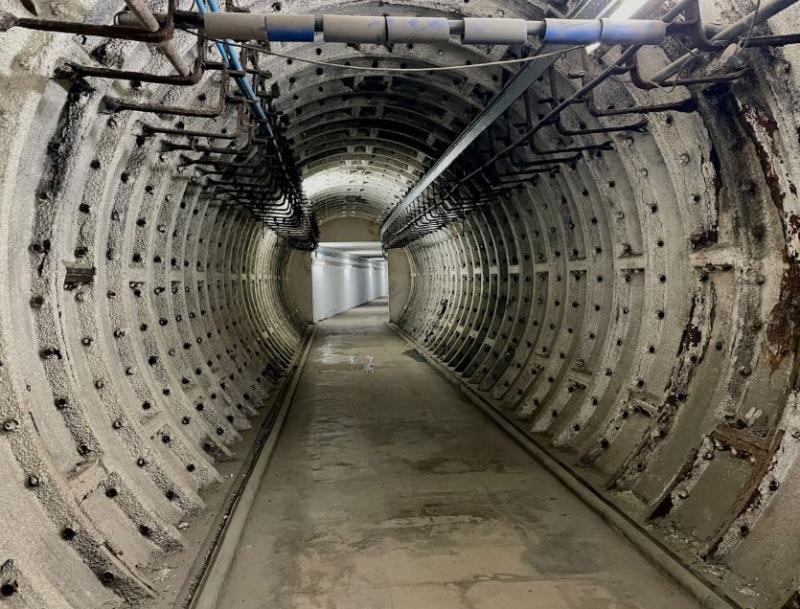
The massive underground complex was located 120 feet underground at Spring Quarry in Corsham, Wiltshire, known by codenames Burlington, Turnstile, or Chanticleer—was designed to act as the UK's emergency shadow government headquarters during a nuclear war.
While the quarry was used as an aircraft engine factory during World War II, the Cabinet Office did not take it over for nuclear civil defence planning until around 1950, with official commissioning happening in 1955. Within this underground city, Area 13 was a specific corridor inside the bunker that housed the power rooms and the agricultural supplies.
The history of 'Burlington' & 'Turnstile'
The Quarrying Era (19th Century)
The complex originated as a series of deep underground mines for Bath stone (Oolite limestone). The industry boomed in the 1840s following the construction of Isambard Kingdom Brunel’s famous Box Tunnel for the Great Western Railway. Quarrying excavated vast, pillar-supported subterranean chambers roughly 80 to 120 feet underground.
Beginning in 1938, sites like Tunnel Quarry were converted into the largest ammunition dump in the world , the Central Ammunition Depot (CAD). At its peak, it spanned 125 acres, stored 300,000 tonnes of munitions, and featured its own underground railway platform linked directly to the main line
As the threat of aerial bombardment escalated in the late 1930s, the British government requisitioned the quarries. They were developed into two distinct, massive wartime installations:
In 1940, the Ministry of Aircraft Production took over the 35-acre Spring Quarry. It was retrofitted into a bomb-proof, air-conditioned factory where the Bristol Aeroplane Company manufactured Centaurus aircraft engines safe from Luftwaffe raids
In 1954, following the dawn of the thermonuclear age, the government purchased Spring Quarry to build a hardened, secret bunker code-named Burlington (also known as Turnstile or Site 3). Commissioned under Prime Minister Anthony Eden
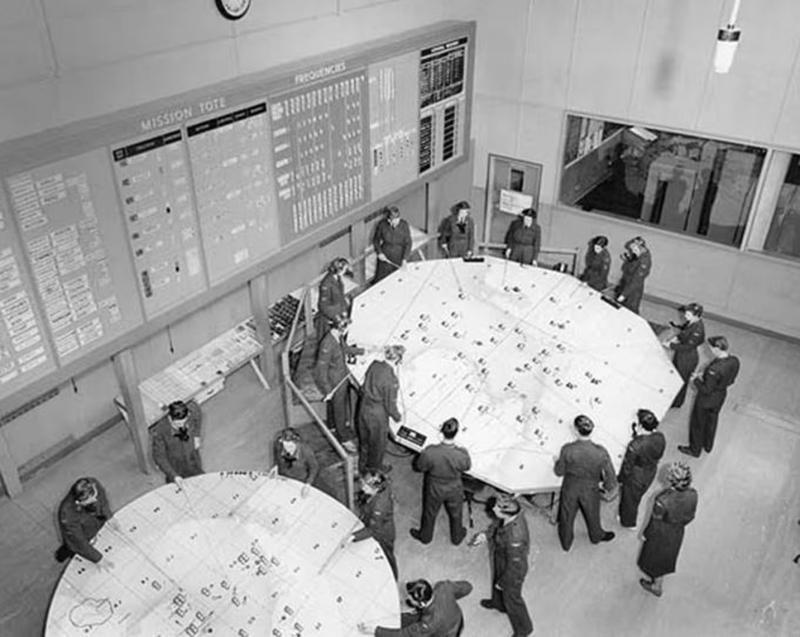
Built to operate in total isolation for up to three months, the grid-mapped bunker included 60 miles of underground roads, a hospital, industrial kitchens, water treatment facilities supplied by an underground lake, and a massive telephone exchange. It even featured a fully equipped BBC broadcasting studio to address the surviving population
The Subterranean City: The complex was designed to relocate 4,000 central government personnel, including the Prime Minister, the Cabinet Office, and an army of civil servants
Code: 26384
775.00 GBP