
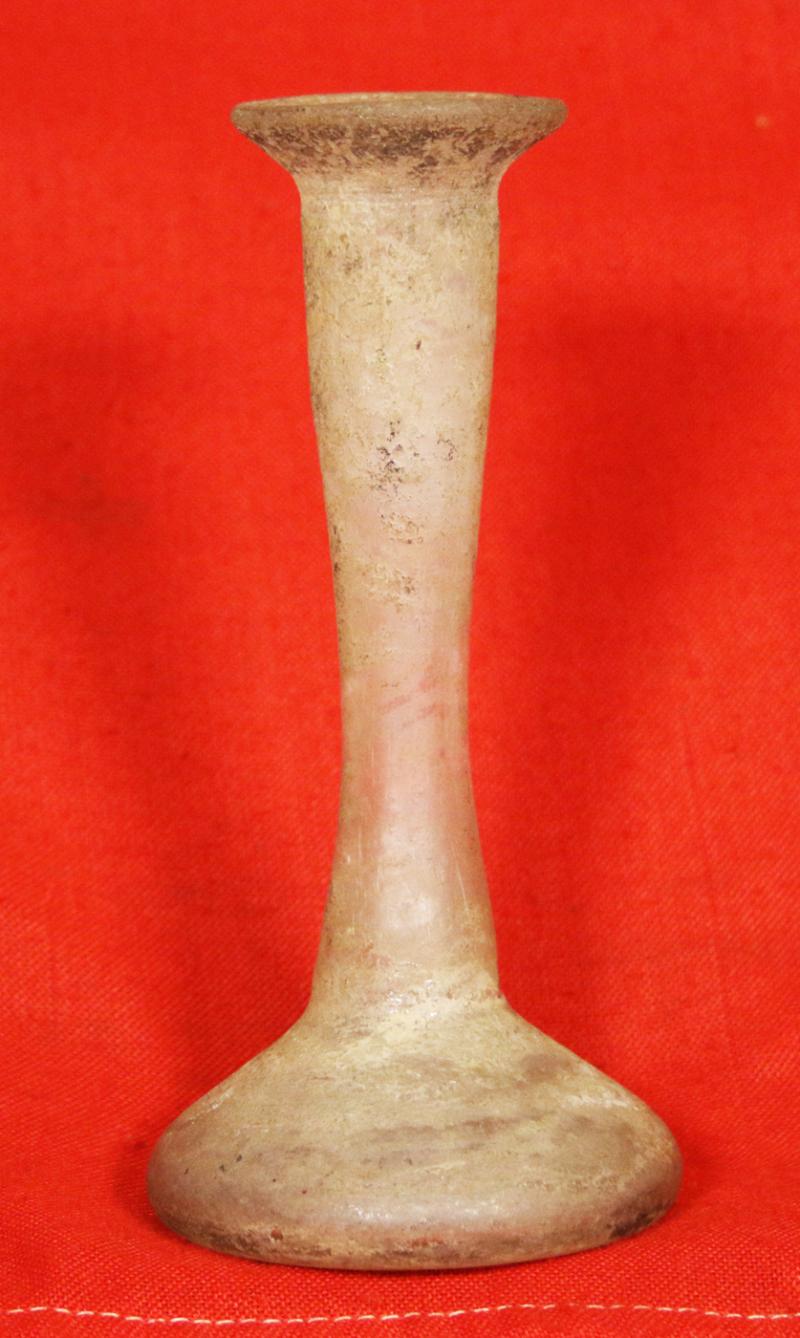
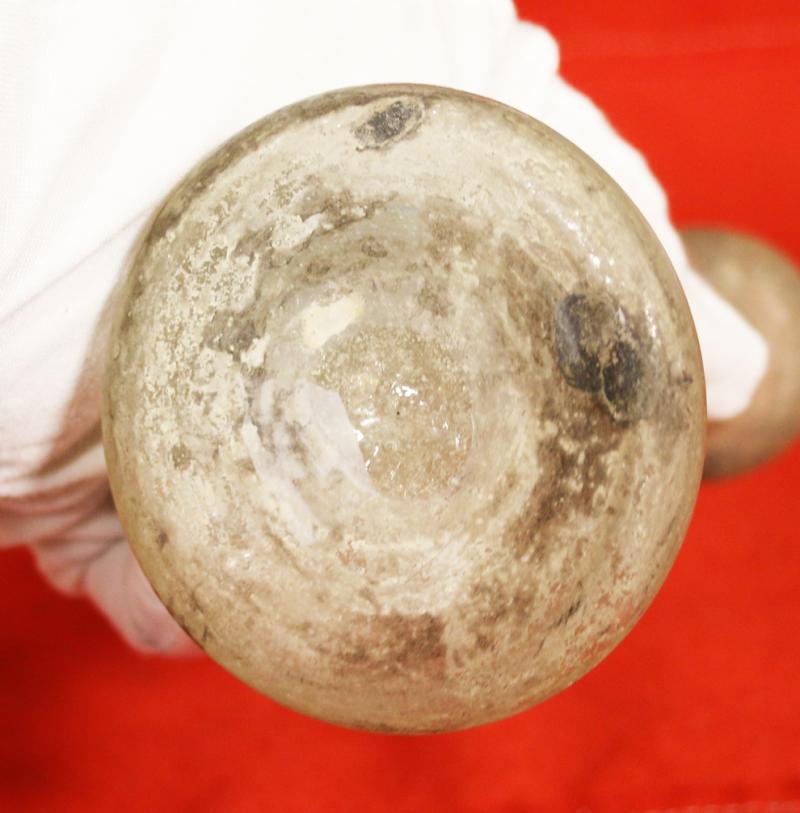
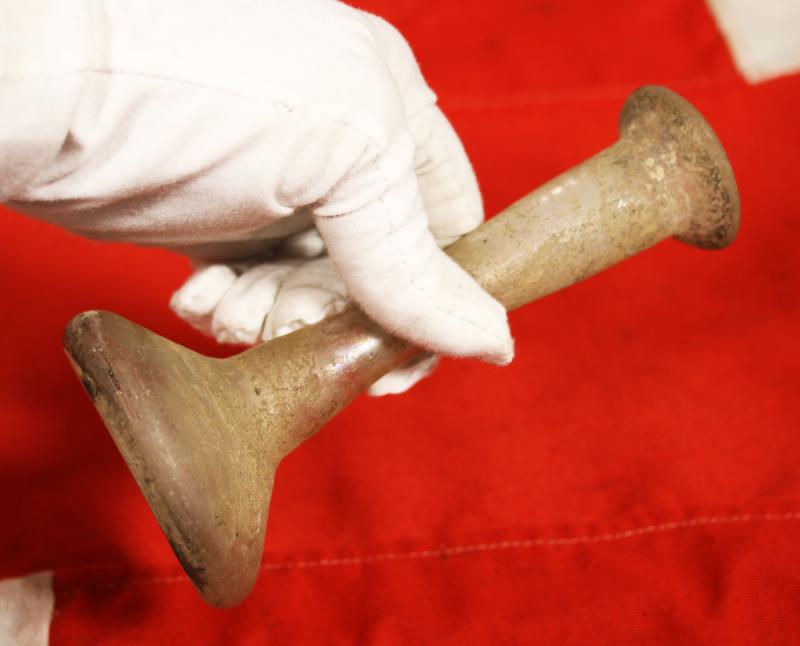
A Beautiful, Ancient Roman Candlestick Unguentarium Blown, Iridescent Glass Vase, Circa 1st-2nd Century AD Around 2000 Years Old
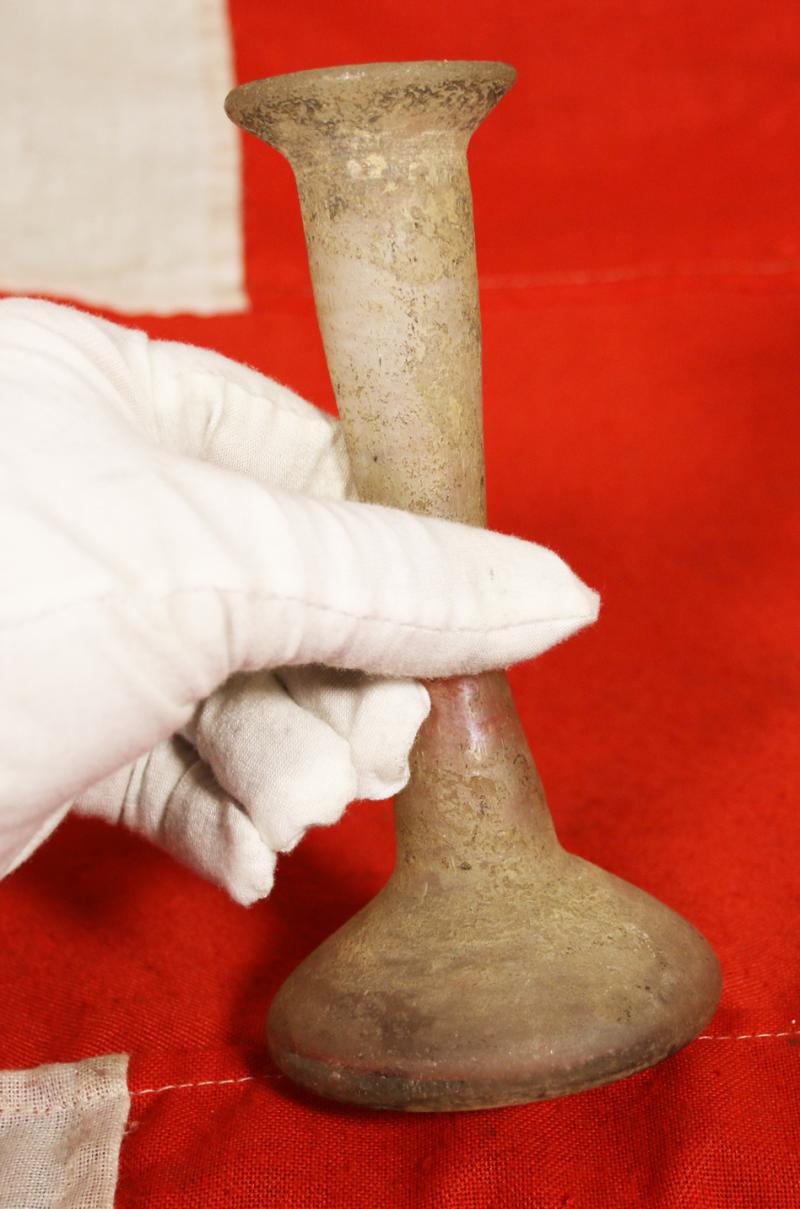
Unusually large survivor from Ancient Rome, as most original glass pieces that remain are barely 3.5 inches tall.
A candlestick unguentarium vase was a vase to contain unguents, perfumes and oils, shaped in the candlestick form of profile.
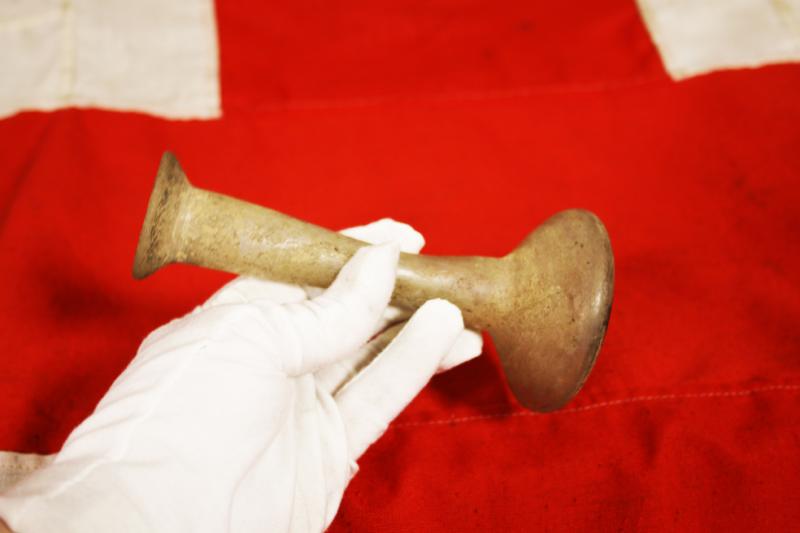
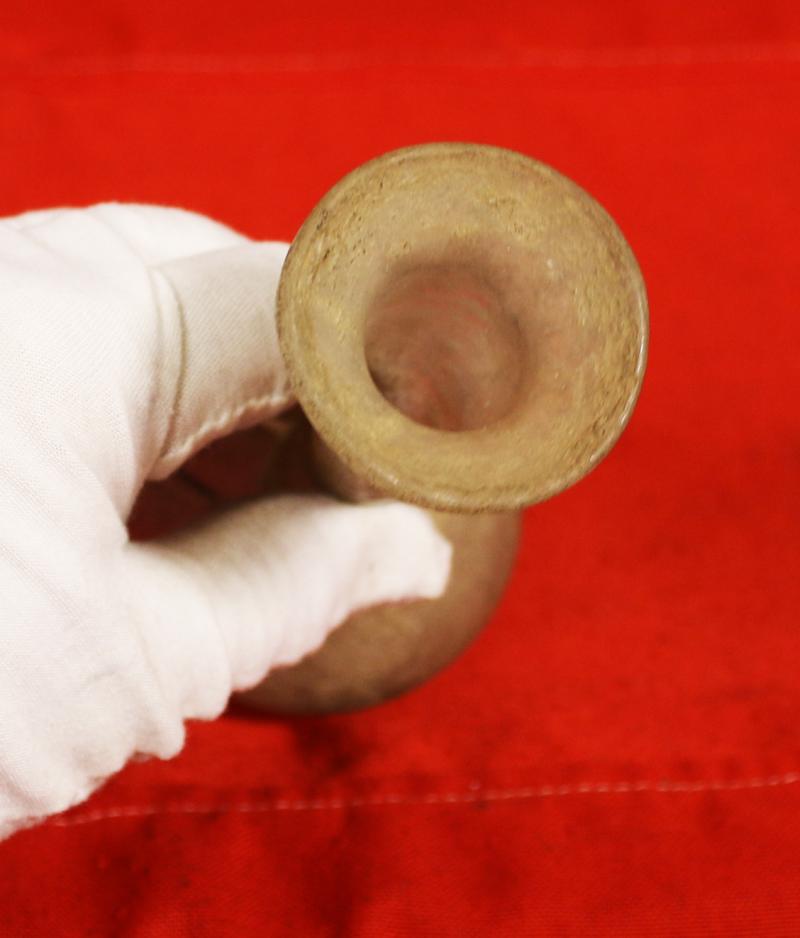
An early Roman glass vessel or bottle with a 16 cm (approx. 6.25-inch) height typically dates from the 2nd AD and features a fine and elegant form, it sits upon a concave base and features a domed body leading to a long cylindrical neck and out-splayed folded rim.
Roman glass objects have been recovered across the Roman Empire in domestic, industrial and funerary contexts. Glass was used primarily for the production of vessels, although mosaic tiles and window glass were also produced. Roman glass production developed from Hellenistic technical traditions, initially concentrating on the production of intensely coloured cast glass vessels.
However, during the 1st century AD the industry underwent rapid technical growth that saw the introduction of glass blowing and the dominance of colourless or 'aqua' glasses. Production of raw glass was undertaken in geographically separate locations to the working of glass into finished vessels, and by the end of the 1st century AD large scale manufacturing resulted in the establishment of glass as an available material in the Roman world, and one which also had technically very difficult specialized types of luxury glass, which must have been very expensive, and competed with silver and gold as elite tableware.
https://www.britishmuseum.org/collection/object/G_1919-0618-4
Code: 26385
875.00 GBP