
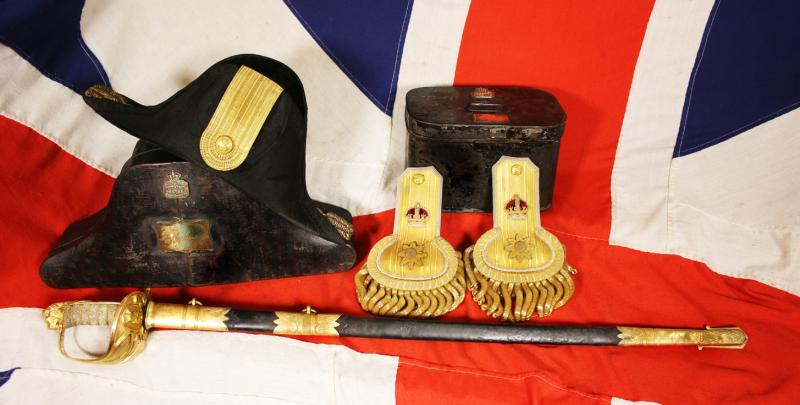
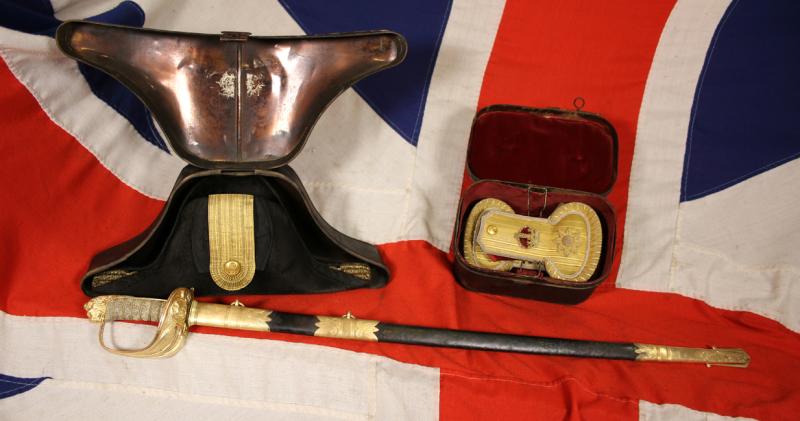
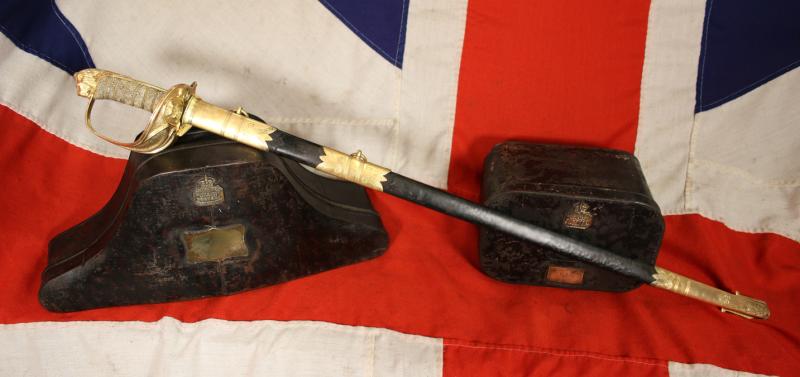
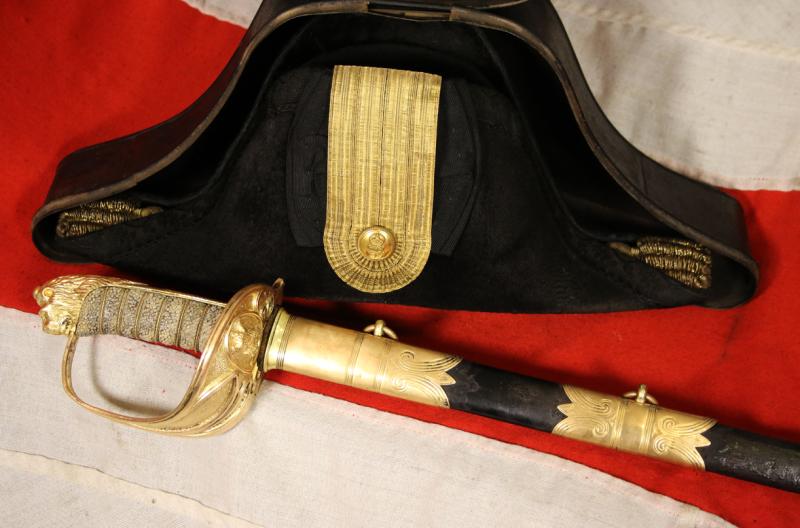
A Superb Victorian & WW1 Senior Naval Officer's Sword Bicorn Hat and Eppaulettes All In Superb Condition With Profile Shaped Helmet Storage Tin and EppauletteTransit and Storage Case
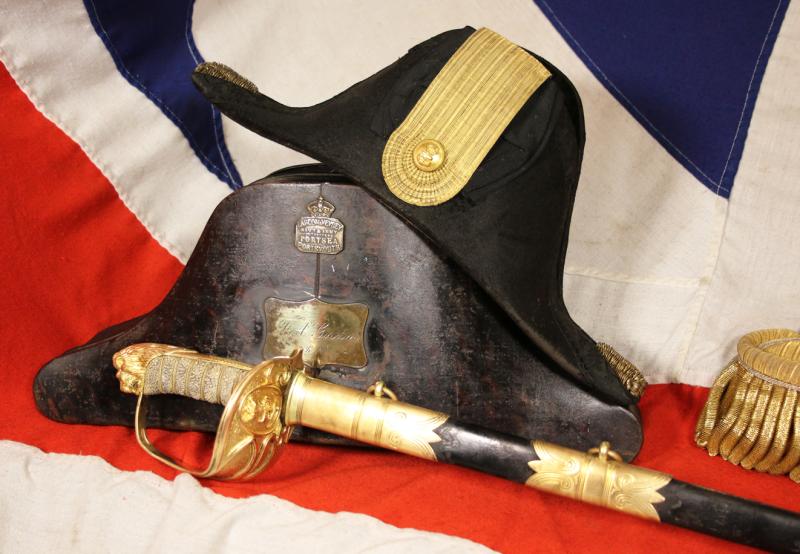
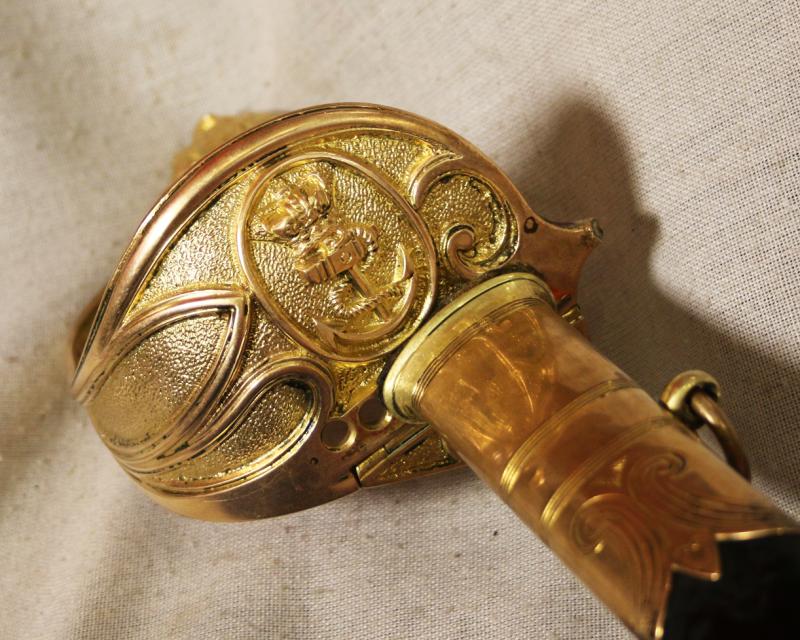
The sword is in fabulous condition with all its original mercurial gilt to the hilt and scabbard mounts.
The 1827 Pattern British Royal Navy Officer's Sword was introduced during the reign of George IV, replacing the 1805 spadrun pattern. It features a half-basket gilt-brass hilt with a crowned fouled anchor, a lion-head pommel, a white fishskin (shagreen) or ray-skin grip bound with wire, and a distinctive hinged folding inner guard designed to lock into the scabbard pin. Early versions used a "pipe-backed" blade style until 1846, when standard fullered and straight blade specifications evolved
the Royal Naval Bicorn hat is is very nice condition within its original bicorn profile shaped tin case with name plate.
A lovely officers silk bicorn with bullion scrolls and King's Crown buttons for King Edward VIIth. The bicorne or bicorn (two-cornered) is an archaic form of hat widely adopted in the 1790s as an item of uniform by British naval officers. It is readily associated with Napoléon Bonaparte and Admiral Nelson, but in practice most generals and staff officers of the Napoleonic era, of all European nations wore bicornes, and it survived as a widely worn full-dress head dress until at least 1914 in the Navy.
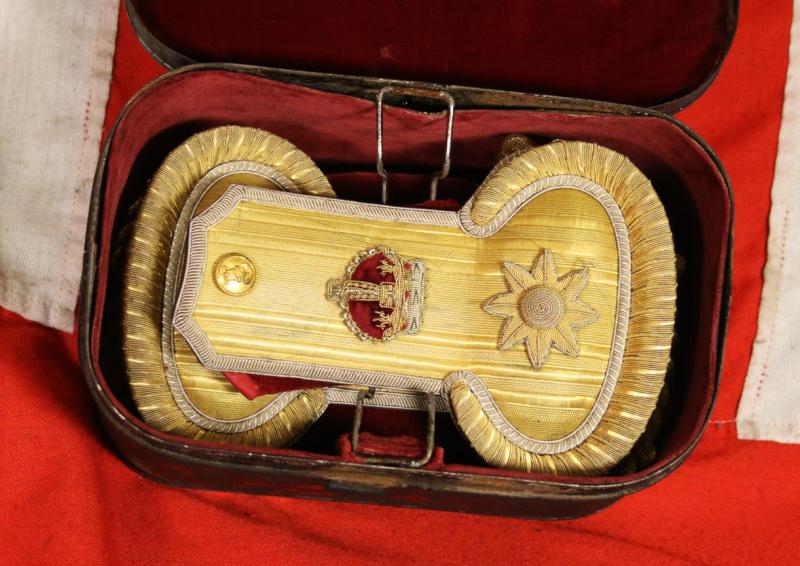
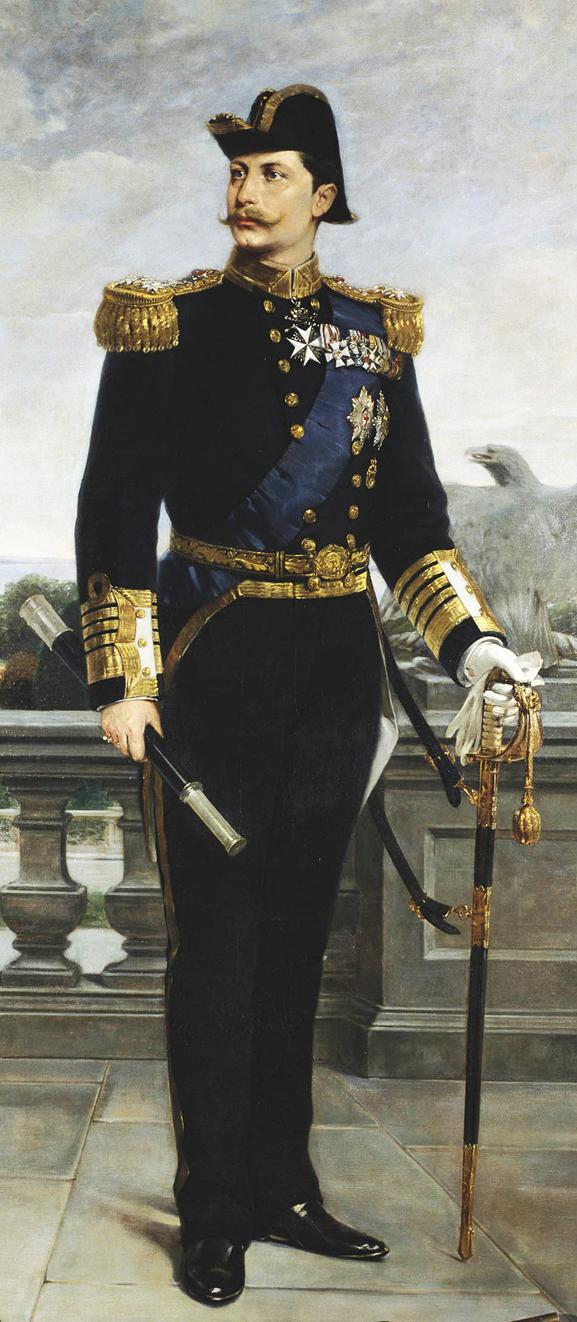
Epaulette is a type of ornamental shoulder piece or decoration used as insignia of rank by armed forces and other organizations. In the French and other armies, epaulettes are also worn by all ranks of elite or ceremonial units when on parade. It may bear rank or other insignia, and should not be confused with a shoulder mark - also called an shoulder board, rank slide, or slip-on - a flat cloth sleeve worn on the shoulder strap of a uniform (although the two terms are often used interchangeably).
Epaulettes are fastened to the shoulder by a shoulder strap or passenten, a small strap parallel to the shoulder seam, and the button near the collar, or by laces on the underside of the epaulette passing through holes in the shoulder of the coat or by a metal slide arrangement. Colloquially, any shoulder straps with marks are also called epaulettes. The placement of the epaulette, its colour and the length and diameter of its bullion fringe are used to signify the wearer's rank. Although originally worn in the field, and they certainly were when these were made, epaulettes are now normally limited to dress or ceremonial military uniforms. A photo in the gallery of Nelson's shot-through epaulette from Trafalgar. He has two stars due to his superior Admirals rank.
Code: 26429
Price
on
Request