
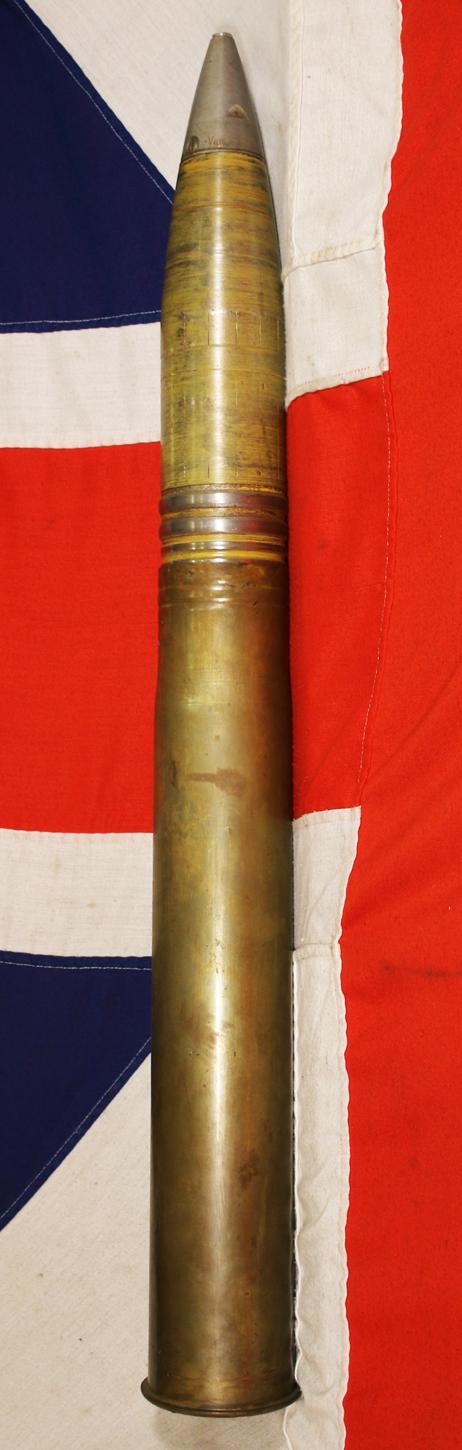
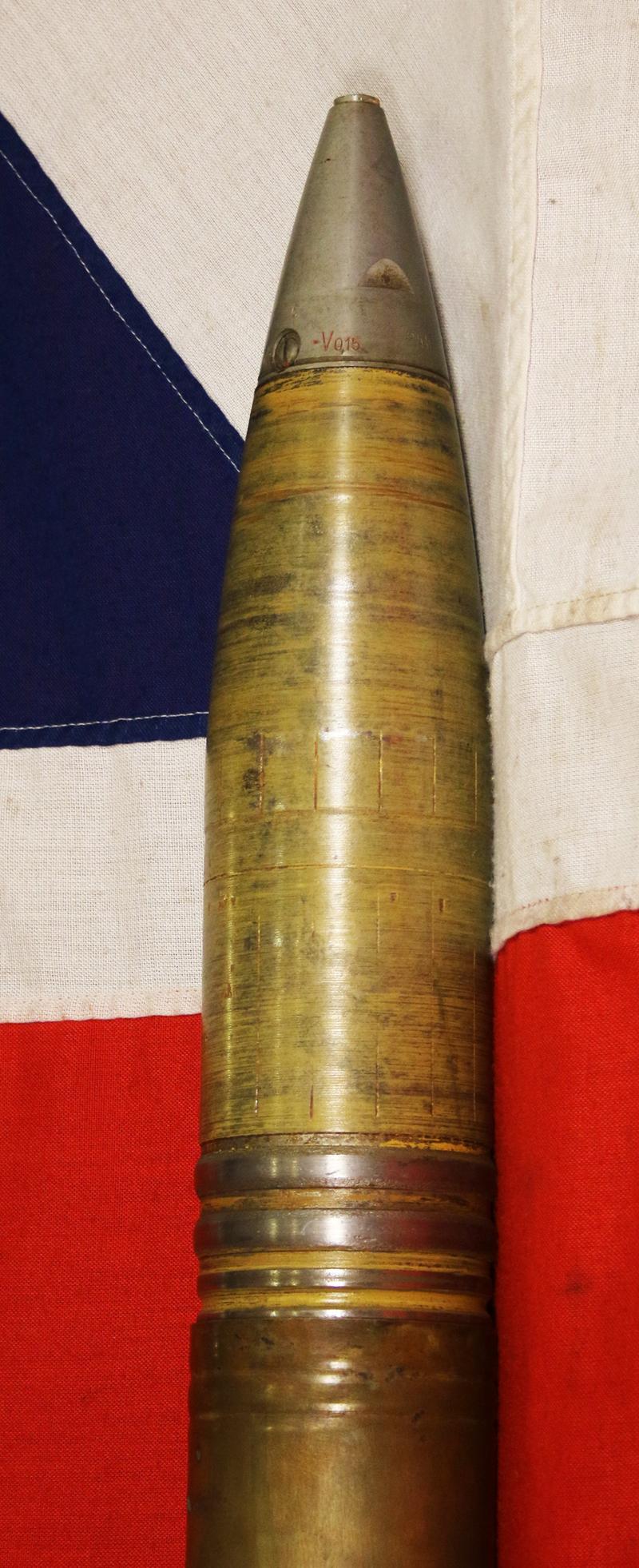
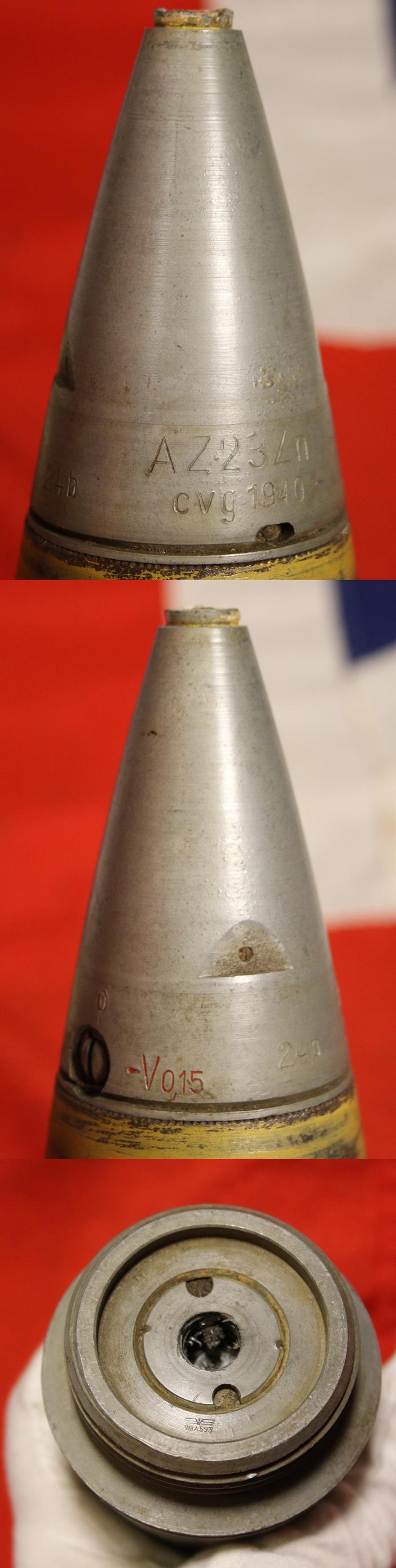
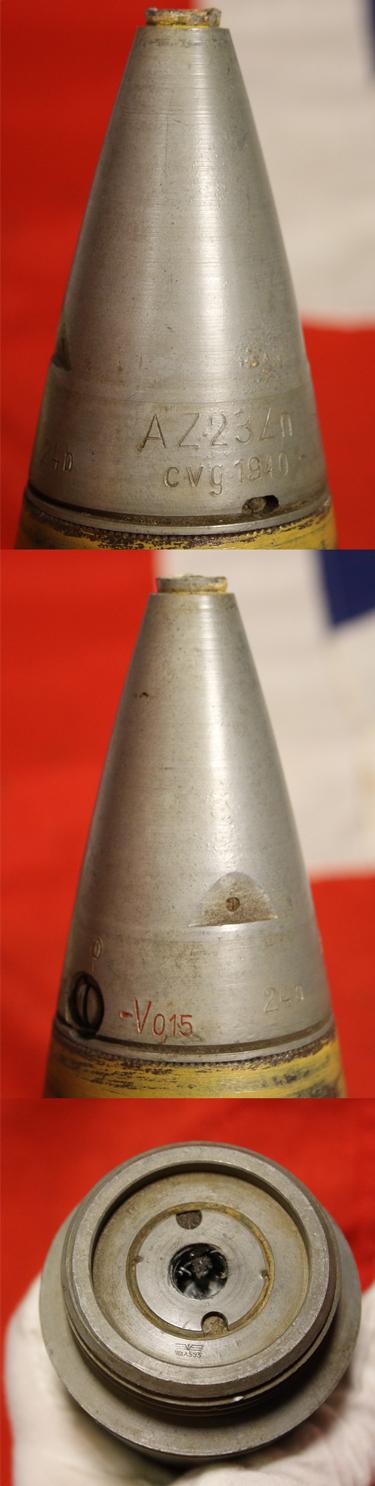
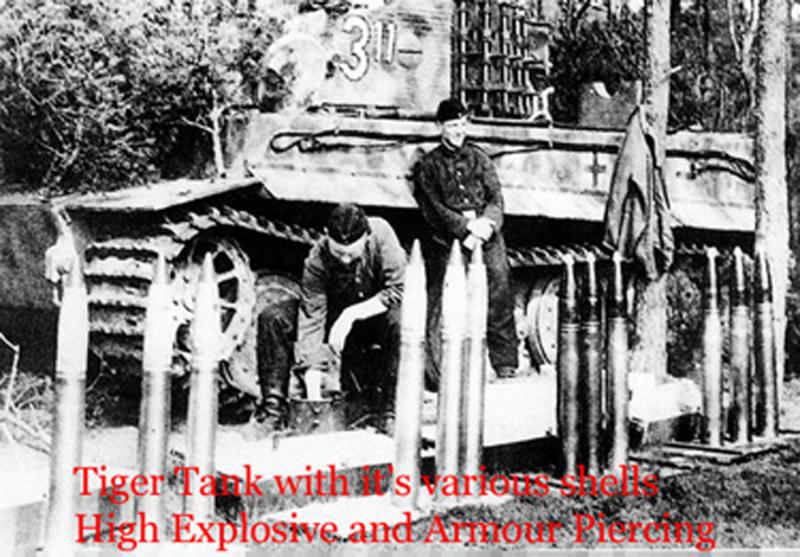

An Amazing & Rare Original Souvenir of German Tank Warfare in WW2. A German 88mm Tiger Tank Shell, Superior Early War Brass Case Type, High Explosive, Diglykol-Röhrenpulver (Digl. R.P.), Ground Combat, Impact Fuze AZ23 Dated 1940
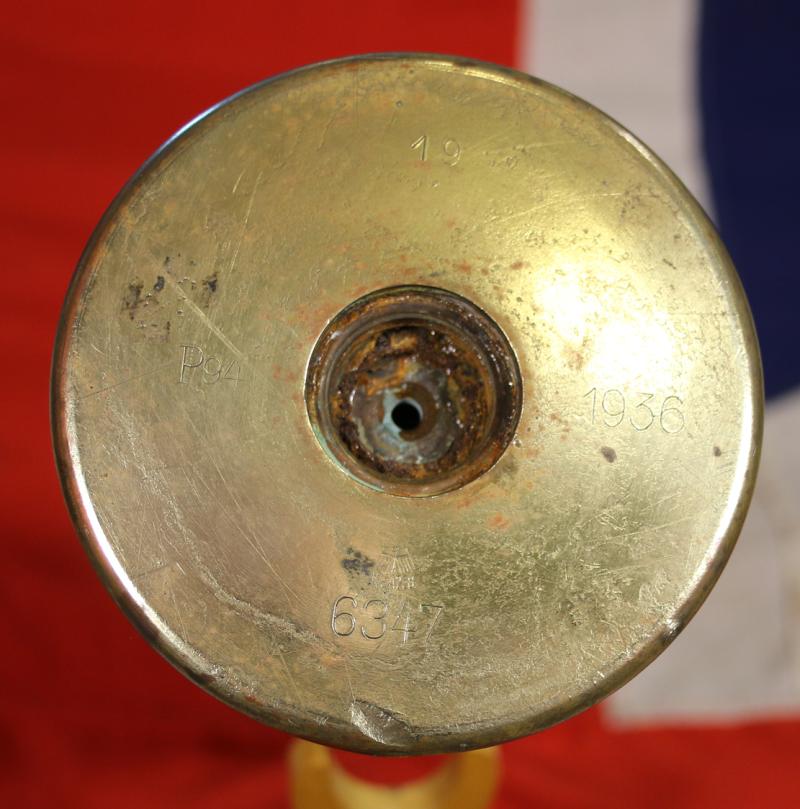
Shell case in brass, with steel impact fuze ground combat, fully waffenamt stamped throughout and dated.
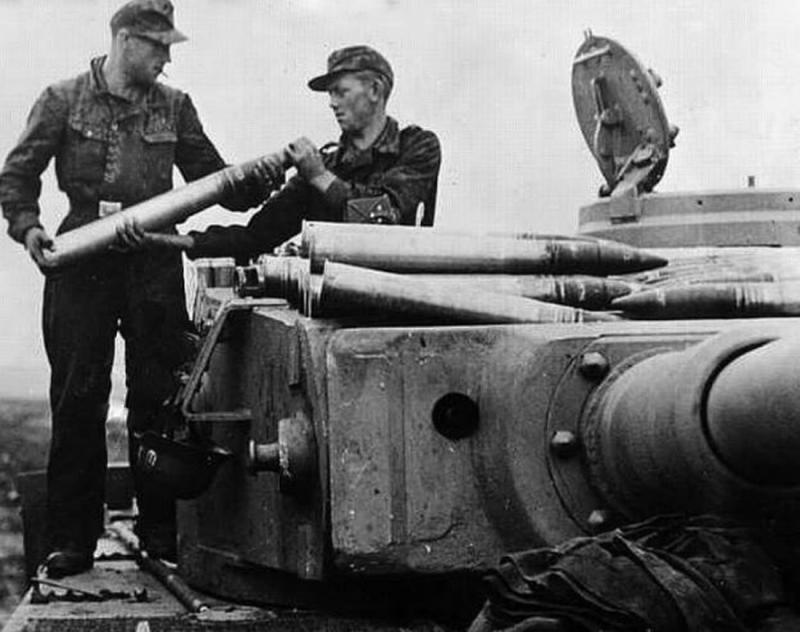
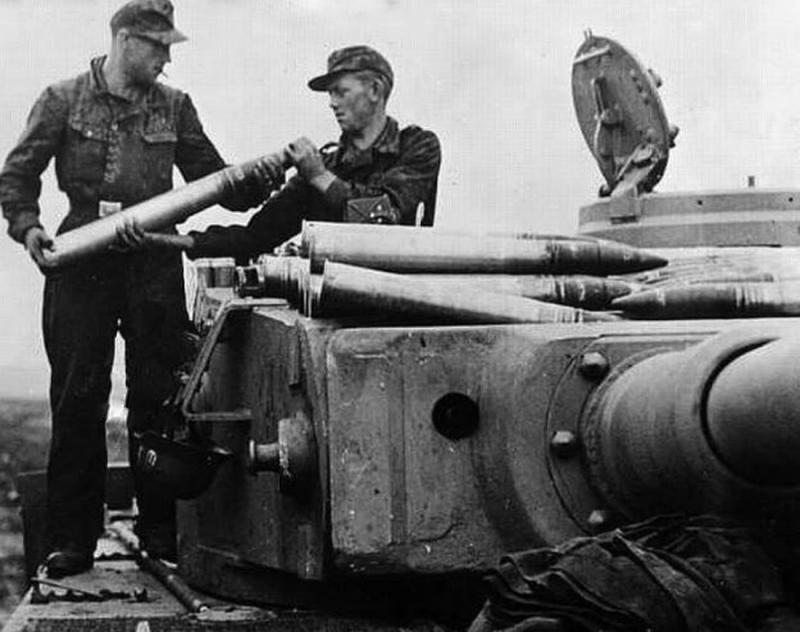
Once fired in combat the cases were ejected from the 88mm cannon, then gathered by the panzer grenadiers and transported back to Germany, or the occupied territories, for re-arming, loaded with powder and fitted with new shell heads, sometimes many times over. German 88mm shells used smokeless, tubular nitrocellulose-based propellants, primarily Diglykol-Röhrenpulver (Digl. R.P.) and Gudol-Röhrenpulver (Gudol R.P.). The term Röhrenpulver (abbreviated RP) means "tube powder," referring to how the propellant was extruded into long, hollow cylindrical tubes to control its burn rate and pressure curve
The early war 88mm shell cases were brass, the late war were painted steel.
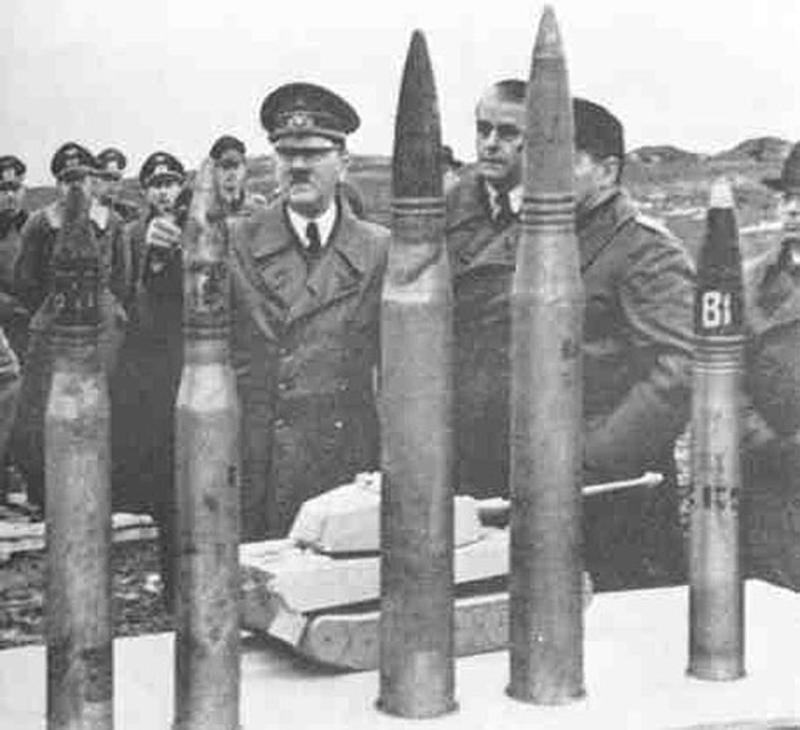
Photo in the gallery of Hitler inspecting different forms of 88mm rounds.
Rare German WW2 88mm Shell Used by the German 88 mm Tiger Tank I Cannon during WW2.
A simply superb example, impact fuze AZ23 with a 1936 brass shell case, initially made for the Condor Legion in the Spanish Civil war in 1936, then returned to Germany for re-loading re-arming and re-issue for use in WW2.
The world famous 88's were the bane of the Allies in WW2. The 88 millimetre cannon and the Tiger Tank 88 cannons fired these huge shells. Superb maker codes stamps etc. with full Waffenamt Nazi Eagle markings. To get an impression of the difference between the size and power of Allied shells against the German equivalent, in 1942 an Allied Tank Round was approximately the size of a small Coca Cola bottle, the German Tank Shell was the size of a small child!. The 88 performed well in its original role of an anti-aircraft gun, and it proved to be a superb anti-tank, and anti-soft skinned vehicle gun as well. Its success was due to its versatility: the standard anti-aircraft platform allowed gunners to depress the muzzle below the horizontal, unlike most of its contemporaries. During the initial stages of the war, as it was becoming increasingly clear that existing anti-tank weapons were unable to pierce the armour of heavier enemy tanks, gunners were more likely to put the weapon to use against enemy tanks, a situation that was aided by the prevalence of the 88 among German forces.
Similarly to the anti-aircraft role, as an anti-tank weapon the 88 was tactically arranged into batteries, usually four guns to each. The higher-level tactical unit was, most commonly, a mixed anti-aircraft battalion (Flak-Abteilung, gemischte). It totalled 12 such guns on average, supplanted by light cannons.
The German Condor Legion made extensive use of the 88 in the Spanish Civil War, where its usefulness as an anti-tank weapon and a general artillery piece exceeded its role as an anti-aircraft gun.The success of the 88 caused the Allies to take steps to defend against it in new tank designs. On July 18 and 19 1944 a Luftwaffe 8.8 cm anti-aircraft battery was re-purposed by then Major Hans von Luck to attack British tanks near Cagny taking part in Operation Goodwood. 20 tanks were killed by these guns within the first few seconds and at least 40 tanks were knocked out by 88's during the engagement.
The single largest tank battle in history was the Battle of Kursk, also called the Battle of the Kursk Salient, was a major World War II Eastern Front battle between the forces of Nazi Germany and the Soviet Union near Kursk in south western Russia during the summer of 1943, resulting in a Soviet victory, marking the decisive end of Nazi Germany's offensive capability on the Eastern Front.
The Battle of Kursk is the single largest battle in the history of warfare. It ranks only behind the Battle of Stalingrad several months earlier as the most often-cited turning point in the European theatre of the war. It was one of the costliest battles of the Second World War,the single deadliest armoured battle in history.The opening day of the battle, 5 July, was the single costliest day in the history of aerial warfare in terms of aircraft shot down.The battle was further marked by fierce house-to-house fighting and hand-to-hand combat.
German Forces. Roughly 900,000 troops, 2,700 to 3,000 tanks and assault guns (including new Tiger and Panther tanks, and Ferdinand tank destroyers), and 2,000 aircraft.
Soviet Forces. Roughly 1.3 to 1.9 million troops, 5,000 to 6,000 tanks (backbone: T-34 medium tanks), and 3,000 to 4,000 aircraft.
The Battle of Prokhorovka. Fought on July 12, 1943, this famous engagement on the southern flank has often been called the peak tank-on-tank collision of the battle. While earlier myths claimed over 1,500 total tanks clashed head-on in a chaotic field, modern research shows roughly 186 German armor units faced off against over 600 Soviet vehicles, resulting in massive losses on both sides
Diglykol-Röhrenpulver (Digl. R.P.): This was a double-base smokeless propellant made from nitrocellulose and diethylene glycol dinitrate, stabilized with centralite. It burned cooler than earlier nitroglycerin-based powders, which significantly reduced barrel erosion and extended the life of the 88mm gun tube.
Gudol-Röhrenpulver (Gudol R.P.): This was a triple-base propellant introduced later in the war that added nitroguanidine to the nitrocellulose and diethylene glycol dinitrate mixture. Adding nitroguanidine further lowered the combustion temperature, minimized barrel wear, and substantially reduced the bright muzzle flash that could give away a tank's position.
Depending on the specific round—such as the standard armour-piercing PzGr. 39 or high-explosive Sprgr.—a single 88 × 571mmR brass or steel cartridge case held roughly 2.5 kg to 2.9 kg (5.5 to 6.4 lbs) of propellant tubes.
We can bright polish the brass case for display in its full beauty, or historiccally, left as is.
Not suitable to export, for sale to over 18s only, safe inert and empty 37 inches high
Code: 26437
1545.00 GBP