
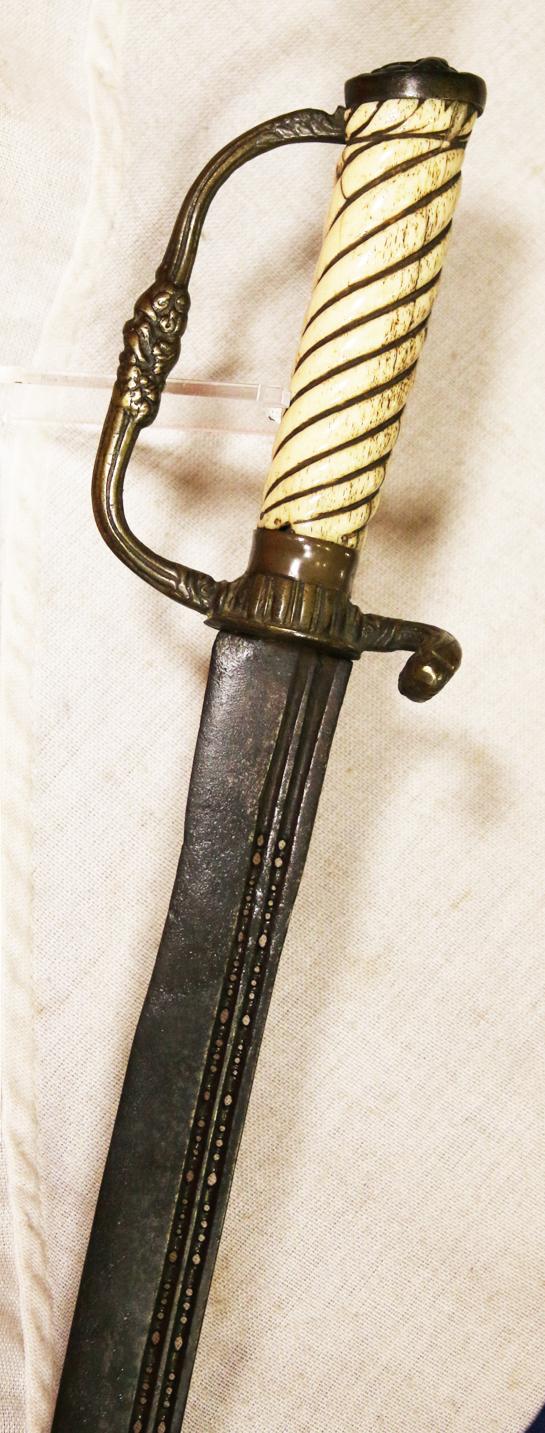
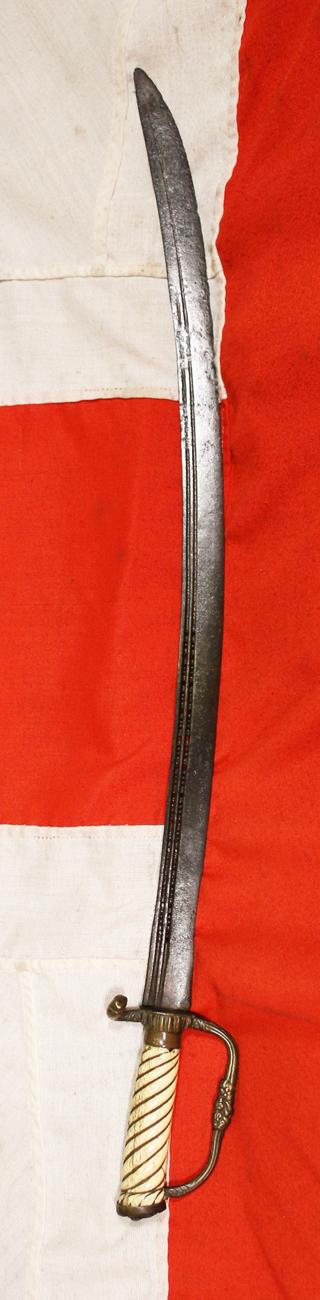
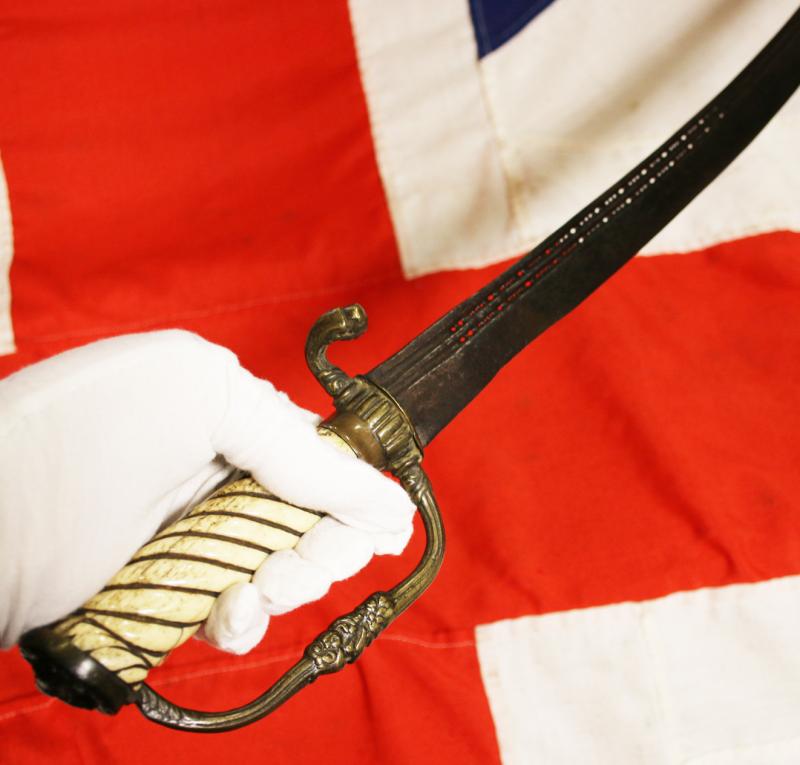
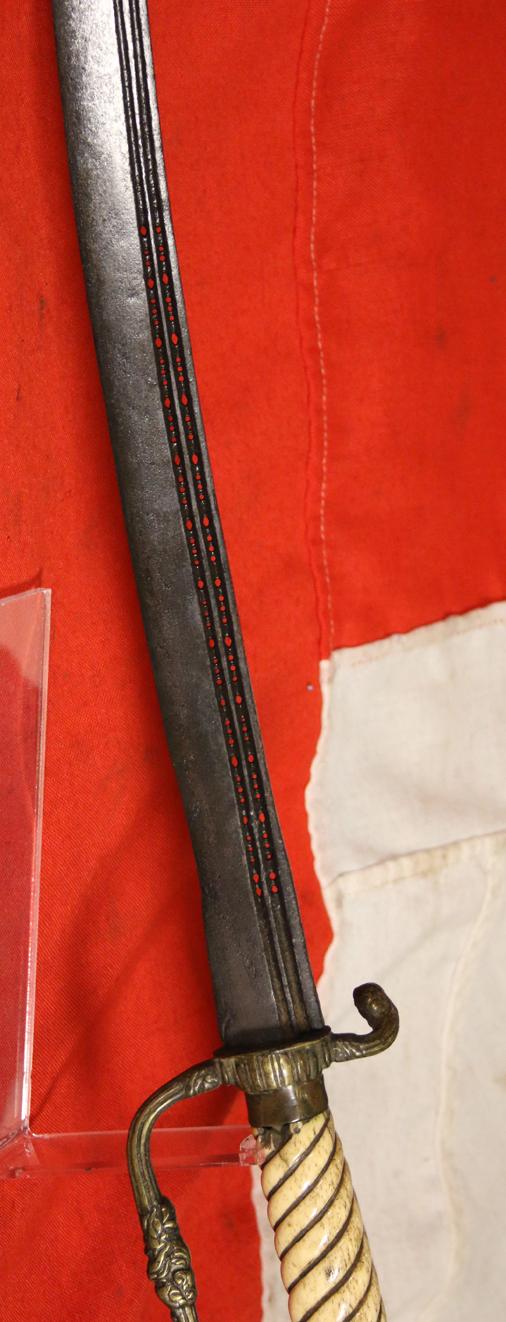
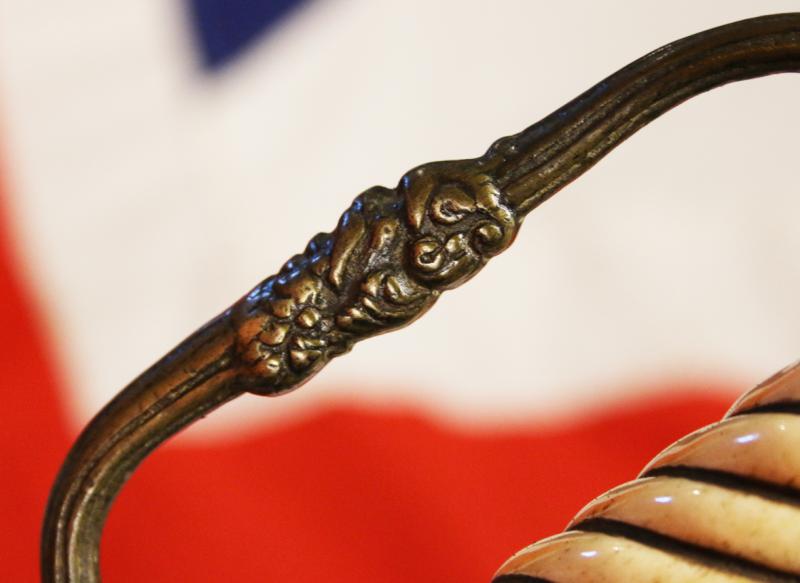
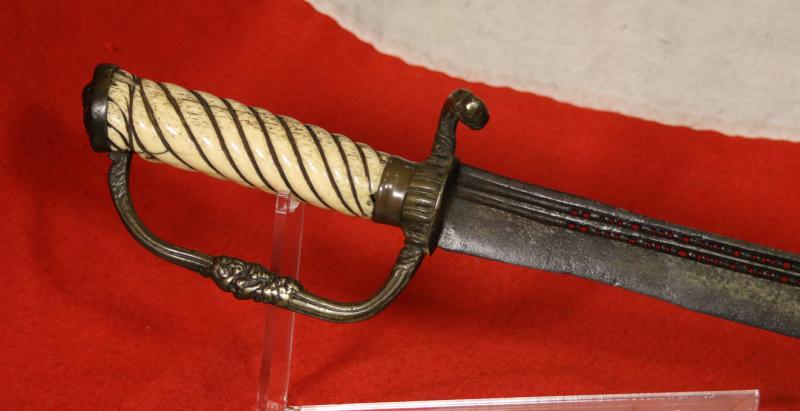
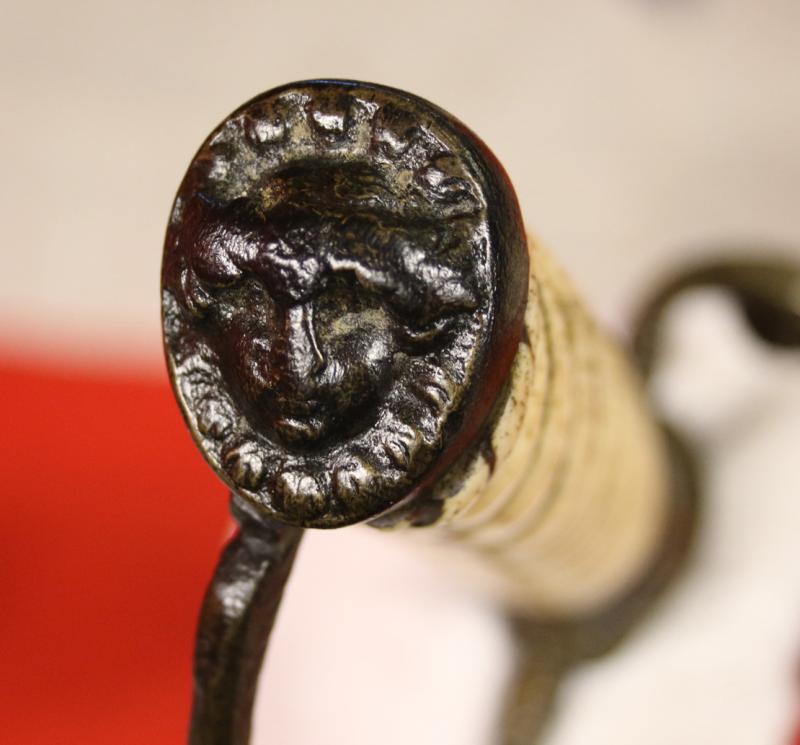
Very Fine, Early 17th Cent., Period Hangar Sword Cutlass of Senior Naval Officer's Admirals and Captains of the Royal Navy. Bearing the Portrait Bust Pommel of a Crowned King. With A Most Rare & Valuable Pierced, 'Slots and Dots' Blade, In Parallel
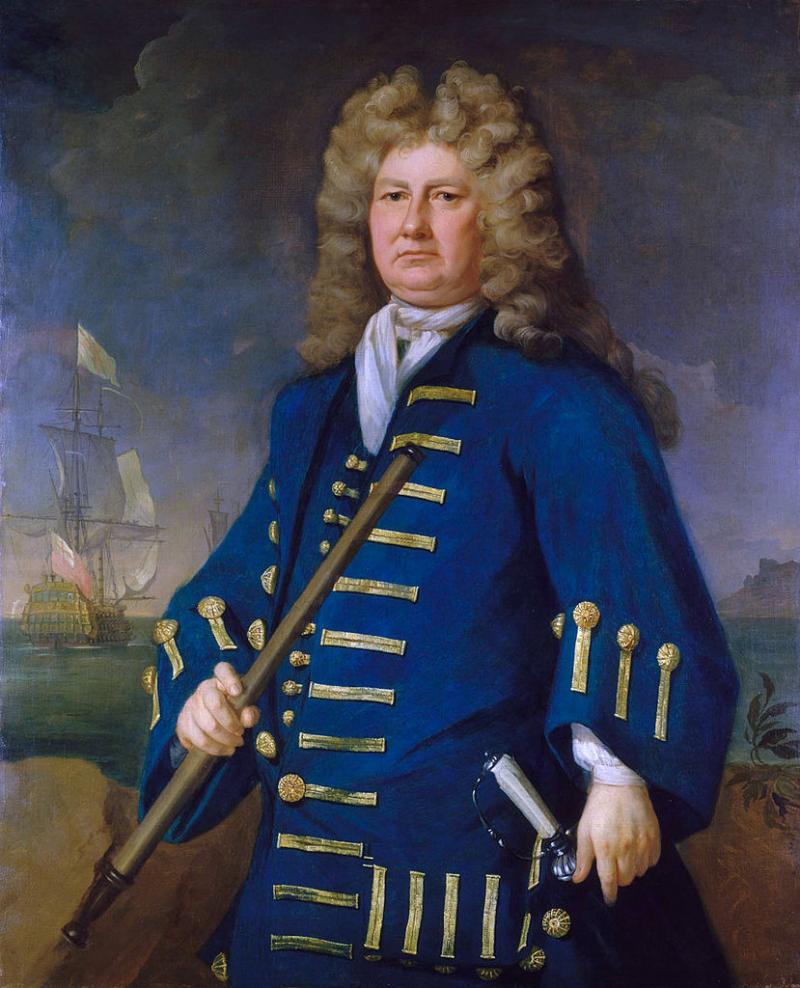
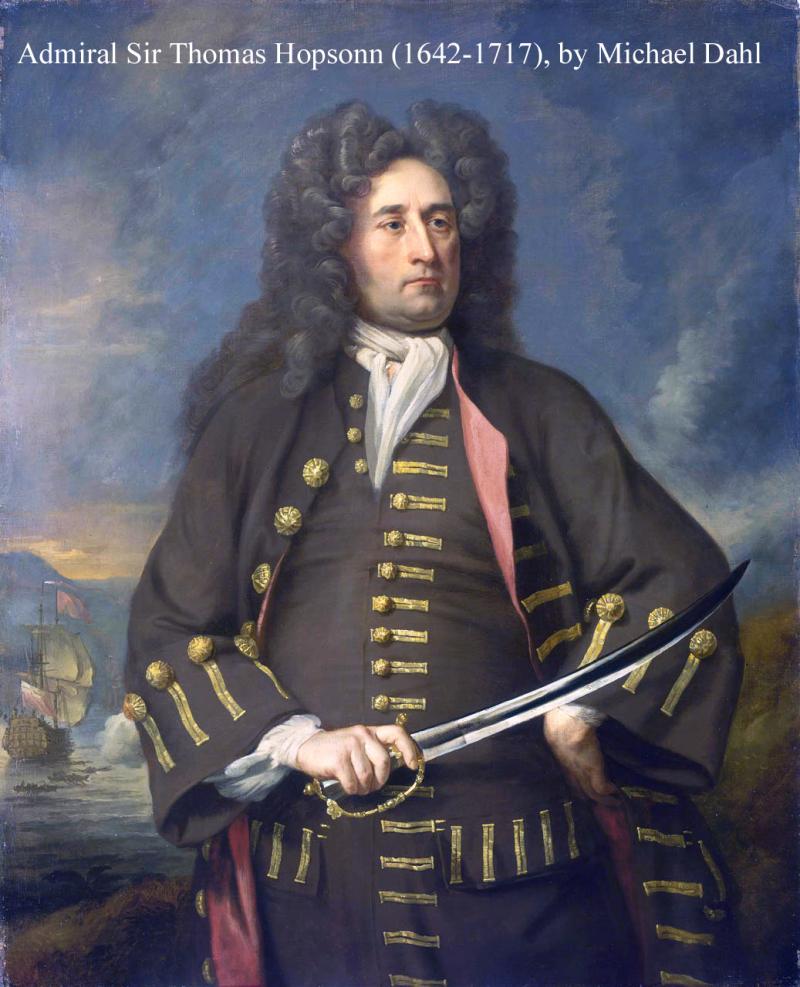
The sword of choice for senior officer's {Admirals and Captain's} serving in the Royal Navy during the early 17th century and later. We show three portraits in the gallery of admirals of the age each bearing their same swords.
Most unusual fully pierced with slots and dots, the expression of wealth and taste was the main goal of these decorative and impressive blades. Carrying such a blade let everyone know you were fashionable and rich. Nonchalantly drawing your blade just enough to show the piercing would let your friends, foes, and any nearby ladies know that you were a man (or woman) of both taste and action. The use of piercings in the blades of swords and daggers was a trend driven by fashion and display. It created fantastic examples of the blade makers art.
Today we will see these intricate details created by historical artisans and try to find a tactical reasons for their use. But this is to miss how important the representation of your status and position was to the renaissance person. Even if you were reaching above your means, it was considered a vital to display the embodiment of the person that you wanted to be. This was a driving force of the social structure of this time and should never be overlooked when studying the period.
Another similar portrait bust hilted cutlass hangar was recovered {in a very poor state} from the wreck of notorious pirate, Captain Blackbeard's ship, the Queen Anne's Revenge, that was found at Beaufort inlet in 1996, the remains of the vessel have become the property of the people of North Carolina. And another 'William and Mary' portrait bust sword-cutlass is in a museum collection in Colonial Williamsburg in America.
This was the most popular form of sword used by the early British Naval Commanders when at sea. There are numerous great portraits in the National Gallery, and at the National Maritime Museum, of 17th and 18th century Admirals adorned with identical swords. Such as Admirals Benbow, Shovel et al. we show three such portraits in our gallery, of Hopsonn, Shovel and Benbow.
Vice-Admiral John Benbow (10 March 1653 – 4 November 1702) was an English Royal Navy officer. He joined the Navy in 1678, seeing action against Barbary pirates before leaving to join the Merchant Navy in which Benbow served until the 1688 Glorious Revolution, whereupon he returned to the Royal Navy and was commissioned.
Benbow fought against the French Navy during the Nine Years' War, serving on and later commanding several English warships and taking part in the battles of Beachy Head and Barfleur and La Hogue in 1690 and 1692. He went on to achieve fame during his military accomplishments, which included fighting against Barbary pirates such as the Salé Rovers, besieging Saint-Malo and seeing action in the West Indies against the French during the War of the Spanish Succession.
Admiral of the Fleet Sir Cloudesley Shovell (c. November 1650 – 22 or 23 October 1707) was an English naval officer. As a junior officer he saw action at the Battle of Solebay and then at the Battle of Texel during the Third Anglo-Dutch War. As a captain he fought at the Battle of Bantry Bay during the Williamite War in Ireland.
As a flag officer Shovell commanded a division at the Battle of Barfleur during the Nine Years' War, and during the battle distinguished himself by being the first to break through the enemy's line. Along with Admiral Henry Killigrew and Admiral Ralph Delaval, Shovell was put in joint command of the fleet shortly afterwards.
During the War of the Spanish Succession, Shovell commanded a squadron which served under Admiral George Rooke at the capture of Gibraltar and the Battle of Málaga. Working in conjunction with a landing force under the Earl of Peterborough, his forces undertook the siege and capture of Barcelona. He was appointed commander-in-chief of the Navy while at Lisbon the following year. He also commanded the naval element of a combined attack on Toulon, base of the main French fleet, in coordination with the Austrian army under Prince Eugene of Savoy in the summer of 1707. Later that year, on the return voyage to England, Shovell and more than 1,400 others perished in a disastrous shipwreck off the Isles of Scilly.
Thomas Hopsonn enjoyed a naval command on 18 May 1688, when James II appointed him to the Bonaventure. This ship was part of the fleet sent to The Nore under Strickland to prevent the Dutch invasion. However, Hopsonn was one of the conspirators within the fleet who supported William of Orange in the Glorious Revolution.
Following the revolution, Hopsonn retained command of the Bonaventure and was part of the squadron that relieved the siege of Derry in June 1689. On 28 October 1689, he was posted to the York, and commanded that vessel during the battle of Beachy Head the following year. Hopsonn's immediate commander in the battle was Sir George Rooke, who formed a high opinion of his gallantry and was afterwards much associated with him. He commanded Royal Katherine for two months starting in August 1690, before moving to command the St Michael. It was aboard the latter that he followed Rooke in the battle of Barfleur on 19 May 1692. In the same year, he was promoted to become a captain in the foot guards on the recommendation of admiral Edward Russell.
Code: 26457
1395.00 GBP