


The Lanes Armoury Probably The Largest Online Militaria Website in the World, After Over 100 Years of Brighton Trading, &, The 25th Anniversary of Our Best Antique & Collectables Shop in Britain Award
In this very special anniversary year of 2026
Presented by MILLER'S Antiques Guide, THE BBC, HOMES & ANTIQUES MAGAZINE in 2001.
Five years ago we were approached by a most historically enthusiastic young person studying at Sussex University who asked if they could research through our archive to complete a 'paper' based on us as one of the oldest remaining Sussex family business's.
It resulted in some remarkable statistics, that we thought we would share with our regulars, for those that have interest. The research only included the types of items that we regularly buy, sell and export today, with general antiques, furniture, porcelain, clocks, silver and works of art excluded, as we haven't been devoted to that side of the trade since selling our antique export shipping companies in 1992.
In over 100 years of shop keeping in Brighton, at the time of his research, 80 of them pre-internet, apparently, we have likely sold over 200,000 books, {vintage and antique books were, and are, our largest selling single item}, 135,000 medals & badges, over 95,000 worldwide swords, knives and bayonets, over 32,000 Japanese samurai swords {for example, around 28 years ago we bought over 150 Japanese WW2 NCO swords in one vast lot, from the grandson of a WW2 British military surplus dealer, who acquired them for scrap in 1946 from the War Dept}. We have sold and exported,, apparently over 28,500 helmets of all origins and types, 27,000 pistols and muskets of all countries, at least 2450 suits of armour, European, British or Japanese, and over 1,500 cannon, both signal and full sized. Believe it or not, apparently, according to their research and calculations, these are potentially conservative figures, and the actual figure could indeed be much higher.
So, please enjoy our historical website, and remember, every thing you see is available and for sale, we try to not keep our webstore filled with past 'sold' items.
Being part of the centre of the historic Brighton Lanes, anything up 2,000 to 3,000 people, will visit us here most days {especially on Saturdays} winter and summer, rain or shine.
We issue our unique, certificate of authenticity, with every single item purchased, and in regards to our Japanese items, both weapons and fittings etc. our ability to do this is based on well over a century of experience, as probably the largest military antiques dealers in Europe. We detail within our certificates, their beauty, approximate age, style, and the feature of their fittings and mounts, and their potential position and status in Japanese samurai history. We will detail the translations, if known, of the kanji (names) chisselled upon the nakago of swords, under their hilt bindings, but purely for information only, although the myth persists that all Japanese master smiths signed their swords, historically, and factually, it is likely less than 30% of samurai blades were in fact ever signed. This fact is certainly found, and confirmed by us to be the case, due to our family’s 100 plus years experience. For example, it is said one of the greatest master smiths who ever lived, Masamune, was, apparently, most reluctant to ever sign his swords. Although this must be relative speculation, as so very few of his swords have been recognised to still exist
Our Certificates of Authenticity are our own unique version of a lifetime guarantee, based on our expertise honed over 100 years, containing a detailed description of any item purchased from our stock. In relation to our samurai weapons, the description with be a combination of our opinion of its style, approximate age and beauty, and for our Japanese samurai swords in particular, that it is an ‘original’, samurai sword, made and used by samurai, both ancient and vintage, within Japan, over the past 700 years, up to the last samurai period in the Meiji era of 1868, as well as up to 1945, if it is a military mounted shingunto sword.
Photos 4 and 5 are part of an editorial in Art and Antiques Weekly Magazine, featuring the story so far { in 1975} of the partner’s former family antiques export company, one of the largest in the world at that time. In 1992 Mark and David retired from the mass wholesale export market and morphed their business into the becoming one of the largest dedicated ‘military antiques’ businesses instead, both of their true passions. read more
Price
on
Request

From the Roald Knutsen Collection. A Superb Hira Sankaku Yari Blade Signed Yamashiro no kami Kunishige 1751 in Superb Condition with fine Suguha Hamon, and an Horimono Cut Bo-Hi {Fuller} Decorated with Red Lacquer
A super antique samurai's combat pole arm blade with a three sided bo hi blade in the form of an Isosceles triangle with a very sharp point and two sharp edges on a sockle, in beautiful polish, with narrow suguha hamon, and its very long, signed, full, tang
Ideal for use by samurai both on foot and horseback, with armour piercing blade.
Yari is the Japanese term for a spear, but technically it is actually a lance, or more specifically, the straight-headed lance.
Red Painting (Lacquer): Historically, the deep recessed grooves of Bo-hi on a Yari were often lacquered in bright red (shu-urushi). This prevented rust in areas that were hard to clean and provided a striking, aggressive visual accent on the battlefield.
The martial art of wielding the yari is called sojutsu. A yari can range in length from one metre to upwards of six metres (3.3 to 20 feet). The longer versions were called omi no yari while shorter ones were known as mochi yari or tae yari. The longest versions were carried by foot troops (ashigaru), while samurai usually carried a shorter yari , up to around 8 feet long, such as this example. Yari are believed to have been derived from Chinese spears, and while they were present in early Japan's history they did not become popular until the thirteenth century.
The original warfare of the bushi was not a thing for "commoners"; it was a ritualized combat usually between two warriors who may challenge each other via horseback archery and sword duels. However, the attempted Mongol invasions of Japan in 1274 and 1281 changed Japanese weaponry and warfare.
The Mongol-employed Chinese and Korean footmen wielded long pikes, fought in tight formation, and moved in large units to stave off cavalry. Polearms (including naginata and yari) were of much greater military use than swords, due to their much greater range, their lesser weight per unit length (though overall a polearm would be fairly hefty), and their great piercing ability. Swords in a full battle situation were therefore relegated to emergency sidearm status from the Heian through the Muromachi periods. Around later half of sixteenth century, ashigaru holding pikes (naga yari) with length of 4.5 to 6.5 m (15 to 22 feet) or sometimes 10 m became main forces in armies. They formed lines, combined with harquebusiers and short spearmen. Pikemen formed two or three row of line, and were forced to move up and down their pikes in unison under the command.Yari overtook the popularity of the daikyu for the samurai, and foot troops (ashigaru) used them extensively as well
Various types of yari points or blades existed. The most common blade was a straight, flat, design that resembles a straight-bladed double edged dagger. This type of blade could cut as well as stab and was sharpened like a razor edge. Though yari is a catchall for spear, it is usually distinguished between kama yari, which have additional horizontal blades, and simple su yari (choku-so) or straight spears. Yari can also be distinguished by the types of blade cross section: The triangular sections were called sankaku yari and hira sankuku, the latter for Isosceles of two equal sides as opposed to three.
It was formerly part of the collection of sensei Roald Knutsen, likely the worlds foremost expert and author on samurai polarms and their use in combat, with various pieces acquired with, or from, Henry Russell Robinson's private collection. (7 May 1920, Hackney, London - 15 January 1978) He became Keeper of Armour at The Tower Of London The Japanese armour exhibition in 1965, which featured samurai artefacts arranged to demonstrate evolving defensive technologies and cultural contexts, drawing thousands of visitors to the Tower.
He was a British military armourer and historian.He served in the RAF during the Second World War making models interpreting aerial photographs. This was when he met Sir James Mann, Master of the Armouries at the Tower of London. Robinson joined the staff of the Tower Armouries in 1946 as a Temporary Assistant, before rising to Assistant Keeper and finally, in 1970, Keeper of Armour.
Robinson was a founder member and president of the Arms and Armour Society. In 1965, he was elected a Fellow of the Society of Antiquaries of London. In 1977, he was awarded an honorary MA by the University of Newcastle upon Tyne.
Between 1967 and 1969, he (a practical armourer) worked with Charles Daniels to interpret and reconstruct the Roman armour nowadays known as 'lorica segmentata'. He produced a series of reconstructions of the two sub-types of armour from the Roman site at Corbridge and one from Newstead in time for them to be exhibited at the 1969 Congress of Roman Frontier Studies held in Cardiff.
His work on the armour featured in one of his best-known books, The Armour of Imperial Rome. Published in 1975 by Lionel Leventhal at the Arms and Armour Press, it included line illustrations by his friend, Peter Connolly. Robinson's system of categorizing Roman helmets has been widely adopted in the UK and USA but never really found favour in Europe.
Robinson was not only known for Roman armour, since he worked on an exhibition of Japanese armour at the Tower Armouries and subsequently wrote two books on the subject. He was also an authority on Native American artefacts and was responsible for the production of the replica of the revised reconstruction of the Sutton Hoo helmet and wrote a guide to the Stibbert Museum.
Blade length 7.4 inches, overall 21 inches long read more
1795.00 GBP

From the Roald Knutsen Collection. A Shinto Horseman's Yari Long Spear Blade By Kunitomo Minamoto No Masahisa Circa 1660 to 1680. in Superb Condition with fine Suguha Hamon, and Three, Horimono Cut Bo-Hi {Fullers} Decorated with Red Lacquer
A super antique samurai's combat pole arm blade Hira Sankaku Yari with a three sided bo hi blade in the form of an Isosceles triangle with a very sharp point and two sharp edges on a sockle, in beautiful polish, with narrow suguha hamon, and its very long, signed, full, extra length tang especially designed as a samurai horseman's yari, for additional strength, and to stop a sword from cutting through its haft. With three mounting ana {peg holes}
Ideal for use by samurai both on foot and horseback, but especially effective as a horseman's yari, with armour piercing blade.
Yari is the Japanese term for a spear, but technically it is actually a lance, or more specifically, the straight-headed lance.
Red Painting (Lacquer): Historically, the deep recessed grooves of Bo-hi and Triple-hi on a Yari were often lacquered in bright red (shu-urushi). This prevented rust in areas that were hard to clean and provided a striking, aggressive visual accent on the battlefield.
The martial art of wielding the yari is called sojutsu. A yari can range in length from one metre to upwards of six metres (3.3 to 20 feet). The longer versions were called omi no yari while shorter ones were known as mochi yari or tae yari. The longest versions were carried by foot troops (ashigaru), while samurai usually carried a shorter yari , up to around 8 feet long, such as this example. Yari are believed to have been derived from Chinese spears, and while they were present in early Japan's history they did not become popular until the thirteenth century.
The original warfare of the bushi was not a thing for "commoners"; it was a ritualized combat usually between two warriors who may challenge each other via horseback archery and sword duels. However, the attempted Mongol invasions of Japan in 1274 and 1281 changed Japanese weaponry and warfare.
The Mongol-employed Chinese and Korean footmen wielded long pikes, fought in tight formation, and moved in large units to stave off cavalry. Polearms (including naginata and yari) were of much greater military use than swords, due to their much greater range, their lesser weight per unit length (though overall a polearm would be fairly hefty), and their great piercing ability. Swords in a full battle situation were therefore relegated to emergency sidearm status from the Heian through the Muromachi periods. Around later half of sixteenth century, ashigaru holding pikes (naga yari) with length of 4.5 to 6.5 m (15 to 22 feet) or sometimes 10 m became main forces in armies. They formed lines, combined with harquebusiers and short spearmen. Pikemen formed two or three row of line, and were forced to move up and down their pikes in unison under the command.Yari overtook the popularity of the daikyu for the samurai, and foot troops (ashigaru) used them extensively as well
Various types of yari points or blades existed. The most common blade was a straight, flat, design that resembles a straight-bladed double edged dagger. This type of blade could cut as well as stab and was sharpened like a razor edge. Though yari is a catchall for spear, it is usually distinguished between kama yari, which have additional horizontal blades, and simple su yari (choku-so) or straight spears. Yari can also be distinguished by the types of blade cross section: The triangular sections were called sankaku yari and hira sankuku, the latter for Isosceles of two equal sides as opposed to three.
It was formerly part of the collection of sensei Roald Knutsen, likely the worlds foremost expert and author on samurai polarms and their use in combat, with various pieces acquired with, or from, Henry Russell Robinson's private collection. (7 May 1920, Hackney, London - 15 January 1978) He became Keeper of Armour at The Tower Of London The Japanese armour exhibition in 1965, which featured samurai artefacts arranged to demonstrate evolving defensive technologies and cultural contexts, drawing thousands of visitors to the Tower.
He was a British military armourer and historian.He served in the RAF during the Second World War making models interpreting aerial photographs. This was when he met Sir James Mann, Master of the Armouries at the Tower of London. Robinson joined the staff of the Tower Armouries in 1946 as a Temporary Assistant, before rising to Assistant Keeper and finally, in 1970, Keeper of Armour.
Robinson was a founder member and president of the Arms and Armour Society. In 1965, he was elected a Fellow of the Society of Antiquaries of London. In 1977, he was awarded an honorary MA by the University of Newcastle upon Tyne.
Between 1967 and 1969, he (a practical armourer) worked with Charles Daniels to interpret and reconstruct the Roman armour nowadays known as 'lorica segmentata'. He produced a series of reconstructions of the two sub-types of armour from the Roman site at Corbridge and one from Newstead in time for them to be exhibited at the 1969 Congress of Roman Frontier Studies held in Cardiff.
His work on the armour featured in one of his best-known books, The Armour of Imperial Rome. Published in 1975 by Lionel Leventhal at the Arms and Armour Press, it included line illustrations by his friend, Peter Connolly. Robinson's system of categorizing Roman helmets has been widely adopted in the UK and USA but never really found favour in Europe.
Robinson was not only known for Roman armour, since he worked on an exhibition of Japanese armour at the Tower Armouries and subsequently wrote two books on the subject. He was also an authority on Native American artefacts and was responsible for the production of the replica of the revised reconstruction of the Sutton Hoo helmet and wrote a guide to the Stibbert Museum.
32.25 inches long overall, blade 4.5 inches long read more
1895.00 GBP
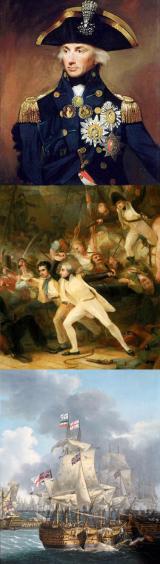
An 1801 Pattern, Tower of London, Royal Navy Issue, Long ‘Sea Service Pistol’, With Original Belt Hook, Tower of London GR Crown Lock, Fine Stock & Skull Crusher Butt, From The Battle Of Trafalgar Historic Nelson Period,
A very fine example indeed, profusely stamped.
Photos to be added tomorrow.
Probably one of the best complete and original examples of a Royal Navy Sea Service pistol that we ever have seen for quite a while.
Profusely struck with numerous ordnance and inspectors marks, clearly issue dated 1805 into the stock, with its original belt hook. Some hooks were removed in service
Fantastic patina to the stock. The King George IIIrd issue British Royal Naval Sea Service pistol has always been the most desirable and valuable pistol sought by collectors, but this example, like our other 1805 sea service pistol, is truly exceptional.
Exactly as issued and used by all the British Ship's-of-the-Line, at the Battle of Trafalgar in 1805.
Such as;
HMS Victory,
HMS Temeraire,
HMS Dreadnought,
HMS Revenge,
HMS Agamemnon,
HMS Colossus
HMS Leviathan &
HMS Achilles.
Some of the most magnificent ships, manned by the finest crews, that have ever sailed the seven seas.
Battle of Trafalgar, (October 21, 1805), naval engagement of the Napoleonic Wars, which established British naval supremacy for more than 100 years; it was fought west of Cape Trafalgar, Spain, between Cádiz and the Strait of Gibraltar. A fleet of 33 ships (18 French and 15 Spanish) under Admiral Pierre de Villeneuve fought a British fleet of 27 ships under Admiral Horatio Nelson.
At the end of September 1805, Villeneuve had received orders to leave Cádiz and land troops at Naples to support the French campaign in southern Italy. On October 19–20 his fleet slipped out of Cádiz, hoping to get into the Mediterranean Sea without giving battle. Nelson caught him off Cape Trafalgar on October 21.
Villeneuve ordered his fleet to form a single line heading north, and Nelson ordered his fleet to form two squadrons and attack Villeneuve’s line from the west, at right angles. By noon the larger squadron, led by Admiral Cuthbert Collingwood in the Royal Sovereign, had engaged the rear (south) 16 ships of the French-Spanish line. At 11:50 AM Nelson, in the Victory, signaled his famous message: “England expects that every man will do his duty.” Then his squadron, with 12 ships, attacked the van and centre of Villeneuve’s line, which included Villeneuve in the Bucentaure. The majority of Nelson’s squadron broke through and shattered Villeneuve’s lines in the pell-mell battle. Six of the leading French and Spanish ships, under Admiral Pierre Dumanoir, were ignored in the first attack and about 3:30 PM were able to turn about to aid those behind. But Dumanoir’s weak counterattack failed and was driven off. Collingwood completed the destruction of the rear, and the battle ended about 5:00 PM. Villeneuve himself was captured, and his fleet lost 19 or 20 ships—which were surrendered to the British—and 14,000 men, of whom half were prisoners of war. Nelson was mortally wounded by a sniper, but when he died at 4:30 PM he was certain of his complete victory. About 1,500 British seamen were killed or wounded, but no British ships were lost. Trafalgar shattered forever Napoleon’s plans to invade England.
Obviously this arm has signs of combat use and the stock has minor dings. But when taken into consideration its service use, it is of little consequence compared to it's condition, which is truly exceptional, with, incredibly, absolutely not a trace of rust or corrosion on the more usually heavily pitted, steel, lock and barrel.
It still has it's original 12" barrel, which is very scarce as the barrels were shortened by official order, to 9", before the Napoleonic wars. read more
3850.00 GBP

A Most Impressive, Fearsome, & Effective, Combat Weapons Ever Created. A 1600's to Early 1700's Mughul Period Battle Mace Gurz or Shishpar With 8 Flanged Head and Khanda Sword Hilt. A Most Formidable Mace AKA The Sky Borne Splitter
In ancient Persian texts this has been the decisive weapon of choice by great warriors, used to kill the dragon Kasfud by Gev, in ancient Persian texts, and known as the ‘Thunderbolt of Indra’ in ancient Indian texts, and also the Sky Borne Splitter.
A style of battle mace that goes back to the earliest days of medieval knightly warfare. As popular in Europe as it was in the Indian Sub Continent. Being a fantastic Moghul period example it has the highly distinctive khanda sword hilt, which has a protective half basket guard for the hand, and the projecting pommel spike to enable both two handed combat and a counter point for reverse striking and blows.
It has its traditional iconic feature of a shaped flange head, common with all steel flanged head maces, with ring turned finial, ring turned haft with characteristic hilt with upturned guard and broad knuckle bow, dished disc pommel with elongated spike finial.
Rare 17th - 18th C. Indian shishpar battle mace with khanda sword Hilt. Rare early example of the Indian battle-mace weapon "Shishpar" used by skilled warrior for fighting through armoured troops, armed with a 8-flang steel head topped with an armour exhibiting heavy but smooth patina with occasional fine pitting, the edges of several flanges with dents indicating on period usage against armour. Mounted on the well balanced steel shaft with a large Khanda sword hilt of early type, some light chiselled art work around the broad guard and at the base of the large pommel spike designed to be used for two handed grip at the battle. Grip with original old ox chords still present and intact. Powerful and very battle-efficient weapon of early Hindu and Muslim warriors.
Probably from Rajasthan. Despite successive waves of Muslim conquest, Rajasthan remained predominately Hindu. It was divided into a number of small states centred around fortified cities such as Jaipur, Jodhpur and Udaipur, all of which had their own armouries that a few of these survive within today. The Gorz is a weapon often mentioned and variously described in Iranian myths and epic. In classical Persian texts, particularly in Ferdowsi’s Šha-nama , it is characterised as the decisive weapon of choice in fateful battles, and to kill the dragon of Kasafrud; by Gev, in the expedition to Mazandaran. In Indian mythology, Indra owns a club/mace (vajra-) called the Thunderbolt of Indra and made of the bones of Risi Dadici, a sacred figure in the Vedic literature. It has been also referred to by many other names and descriptions, including sky-borne, splitter, destructive.
Overall length 80cm, a heavy grade piece of superb quality
Every single item from The Lanes Armoury is accompanied by our unique Certificate of Authenticity. Part of our continued dedication to maintain the standards forged by us over the past 100 years of our family’s trading, as Britain’s oldest established, and favourite, armoury and gallery read more
2975.00 GBP

A Super Pair of WW2 Badges For A Scottish ATS Girl Based at Rosneath House and Her US Submariners Sweetheart Badge for Crewman of USS Herring, Lost With all Hands Off Matsuwa Island
A regulation WW2 issue ATS cap badge, and a silver US Submariner's sweetheart brooch. The ATS girl served at Rosneath House Dumbartonshire, and her sweetheart was a crewman of USS Herring based in Scotland in Submarine Squadron 50. Tragically the submaring was lost in the Pacific June 1st 1944 off the Japanese Islands. The house was of note as both the home of Princess Louise, Duchess of Argyll and as the military base where Operation Torch was planned, and was the location of the important meeting between Churchill, Eisenhower and Montgomery to negotiate Operation Torch: the invasion of North Africa.
The ATS girl, Miss Mary Smith, was not informed of the loss of the submarine for well over six months. She later married after the war.
The Auxiliary Territorial Service (ATS) in Rosneath served vital support roles for both the Royal Navy and the US Navy (HMS Rosneath/US Navy Base Two). ATS personnel were stationed there to operate switchboards, provide clerical support, maintain vehicles, and run vital communication centers for the Allied amphibious operations.
ATS women managed the administrative and clerical burden at Rosneath House, which became the American staff headquarters for planning operations like the 1942 invasion of North Africa (Operation Torch).
Operating telephones and teleprinters was crucial for coordinating the heavy convoy and amphibious traffic on the Firth of Clyde.
Members of the ATS drove military vehicles and helped maintain transport pools that supplied the bases and surrounding camps
Submarine Squadron 50 (SubRon 50) was a specialized U.S. Navy wolfpack established in September 1942 at New London, Connecticut, and deployed to Scotland to hunt German U-boats and enemy shipping during the Battle of the Atlantic.The squadron consisted of seven brand-new Gato-class fleet submarines—including the USS Herring. Between 1942 and 1943, these vessels operated out of Rosneath, Scotland, making them the only U.S. submarines to operate in European waters during the war.
Assigned to patrol the Bay of Biscay, Norway, and Iceland, as well as support the Operation Torch amphibious landings.
Utilized the Rosneath Naval Base in Dumbartonshire
Operating the USS Beaver (AS-5) as a tender, the unit prowled the approaches to Europe and conducted patrols off North Africa.
Herring's The Atlantic was less fruitful for targets than the Pacific, and the boats in SubRon 50 were hindered by defective torpedoes and mechanical issues.
Because of these limitations and a lack of German shipping targets, Squadron 50 was reassigned to the Pacific theatre in 1943 to combat the Japanese.
On June 1, 1944, during her eighth war patrol, the USS Herring was sunk with all 83 crew members by Japanese shore batteries and depth charges near Matsuwa Island in the Kuriles.
Crew list;
RT2 Fred Harvey Anderson
MoMM2 John Leonard, Jr. Anderson
RM1 James Elbert Armstrong
ENS Salvatore Balestrieri
F1 Jack Lee Blair
S1 J. T. Blevins
S1 Leo Joseph Boucher
TM1 James Joseph Brennan
SC2 John Jack Bronder
S2 Weldon Junior Brown
CK1 Timothy Burkett
MoMM2 Charles E. Burton
StM2 Nathaniel Campbell
MoMMC Malcolm Dillard Carroll
TM3 Robert Allan Carter
TM1 Robert Joseph Chouinard
TM1 Raymond Walter Christopherson
LT John Norvin Compton
MoMM2 Arnold Jerome Cook
ENS Edward Paul Cunningham
EM1 Henry Lester Cushion
MoMM1 James Ray Dawkins
TM3 Robert Earl Devenport
MoMM3 Franklin Kenneth Edginton
MoMM1 William John, Jr. Eitelbach
MoMM3 George William French
F2 Donald Russell Gagnon
TM3 James LeRoy Gregory
EM2 Charles George Groshens
RM3 Clifford Henry Grote
PhMC Armand Alois Guerra
TM3 Paul Blaney Harper
MoMM2 Robert Gerald Haskell
S1 Billy Glen Hill
LT(jg) William Anthony Hofman
SC3 Lawrence Harvey Isbell
MoMM2 John Martin Johnson
S2 Laurel Kenneth Johnson
RM2 Samuel Loy, Jr. Johnson
StM1 Louis Hill Jones, 26-Jan-44 HERRING (SS-233)
EM2 Earl Albert Kelley
LT(jg) Michael Frank, Jr. Kostal
LT Edward Lawrence, Jr. Leahy
TM3 Warren Edwin Lewis
MoMM1 Rex Henry Loftis
RM3 Robert Lawrence Mack
LCDR (XO) Wilbur Jerome Mason
SM3 John Burns Mayes
QMC John William, Jr. McCreary
TM3 Willie Raderick McLendon
SO2 Joel Atwood, Jr. Merriman
EMC Robert Scott Millis
EM2 Gordon Richard Mitchell
F1 Herbert Barnes Much
F2 Lester Odom
MoMMC Harry Joseph O'Howell (AKA Howell, Harry Joseph), 1-Jun-44
GM2 Robert Edgar Payne
FC2 Gabriel Joseph Pepera
S1 James Gordon Perkins
SM3 Carl Eugene Poland
QM3 Omer Paul Potvin
ENS William Bright Pressnall
EM2 Sone Herbert Price
MoMM2 Charles Edward Riley
MoMM3 Donald Leroy Robbins
EM1 Emerson Everett Rockwell
MoMM3 Donald Edwin Ryan
MoMM3 Andrey Harold Saarm
F1 Charles Augustus Schmidt
GM3 William Kenneth Smiley
S1 William Stern
SC3 Robert Ray Stoneking
F1 James Arthur Sutherland
YN2 Frederick Allen Swanson
EM1 Allan Wilson Twigg
EM3 Van Harlan VanMatre
COX Leroy Moroney Vreeland
FC3 George Edward Wagoner
MoMM2 Carman Duncan Walker
EM3 John Robert Walsh
S1 Kenneth Karl Way
TM2 Howard Ray Wilson
S1 Elmer Christian Wuertele
LCDR (CO) David, Jr. Zabriskie.
Her US sailor beau, ‘Eddy’ was from Rhode Island and was 26 when he was declared MIA read more
235.00 GBP
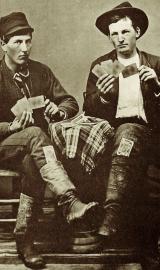
A Simply Superb. Antique, Wild West, Original .32 rimfire Remington Elliot 1860-61 patent, Cased Four-Barrelled Derringer Pistol. As Good, If Not Better, Than Any to Be Currently Seen In American Wild West Museums. Cased by T Underhill of Manchester
A .32 (Rimfire) Remington Elliot patent, Cased Four-Barrelled Derringer Pistol, serial no. ,
circa 1860’s to 70’s, with four 3 3/8in. barrels, the false rib on the left hand side signed 'MANUFACTURED BY E. REMINGTON & SONS ILION N.Y.', the right 'ELLIOT'S PATENTS MAY 29 1860 - OCT 1 1861', release latch below barrel group, open hinged frame with concealed striker, flared grip with smooth moulded hardwood inserts and ring trigger, good original finish remaining, with little or no areas of age pitting. Compared to regular multi shot pistols the production run of this pistol was very low, around 9,000, thus making fine quality and condition surging examples very rare indeed, and cased examples , far far rarer indeed. For example Remington sold over 150,000 of their commercial double barrelled Derringer pistol
Patented during the US Civil War and used in the great Wild West era of America’s Frontier history, this absolute beauty is simply a joy to see. If one was searching for a fine example of these iconic Derringer pistols look no further, this may well be the best you will ever see for sale in Great Britain. Not to mention it is stunningly originally cased in a superb Victorian pistol box, of fine quality, and wonderfully preserved and thus presented as good as any museum piece you may see.
Cased by T Underhill of Manchester {lock case maker marked} 2 Corporation St. He operated at that address for six years up to 1868. A bespoke case maker for instruments and pistols.
Evidence of the practicality of this Pepperbox derringer is found, in infamous sportsman, Grantley Berkeley’s own words, after being presented with one in the Civil War period, when he was in St. Louis, Missouri. He remembered the pistol as “…the most perfect little bijou of a revolver I ever saw in my life… In size it is so small that I carried it in my waistcoat-pocket, and in execution so effective that at eight yards I could shoot as correctly, if not more so, than I could with my favourite pair of John Manton duelling pistols....”
Grantley Berkeley (1800–1881) was a 19th-century British politician, writer, and infamous sportsman whose reputation for violence culminated in an infamous attack on a magazine publisher. Armed with a hunting whip and concealed pistols—often colloquially associated with period derringers —he brutally beat a magazine editor. This led to a widely publicized pistol duel, where he and his opponent fired three shots each with no injuries
"In 1859, the Western United States was still huge, wild, and open. Englishman Grantley Berkeley decided to have a hunt there and so embarked on an adventure very few of his countrymen would ever even contemplate. Enlisting the services of Americans, this plucky Old Countryman got to live out his fantasy of adventure on the high plains. Camping in the open, hunting enormous herds of buffalo, shooting other game and living the life. And he manages to tell the tale with great humor (humour) and keen observation of American social life, habits, and scenery."
Review of The English Sportsman in the Western Prairies
By Grantley Fitzhardinge Berkeley · 1861
1 gallery photo of Harper’s Weekly advertisement for the Elliot Remington Derringer in 1864
T. Underhill, 2 Corporation St, Manchester. Thomas Underhill, a qualified optician, that, according to Clifton’s Directory of British Scientific Instrument Makers, 1550–1851 (1995), worked at the following addresses in Manchester: 40 Water St (1834–1838), 70 Bridge St, Deansgate (1841), 4 Old Millgate (1848), 2 Corporation St (1858–1864), 4 Corporation St (1868), and 53 Princess St (1873–1881) Creating bespoke cases for all manner of instruments and pistols made by respected Victorian makers such E.Remington and Sons, Buron of Paris, McAllister & Brothers (1855) and Negretti and Zambra (1859
Overall in superb working order, nice tight action, and it is an obsolete, antique collectors item, that requires no restriction or licence to own and display as a collectors item.
Photographed with our small boot sized gamblers Bowie knife {not included}
No key for the lock read more
2350.00 GBP

A Very Impressive, Attractive, & Massive, Sukashi, Japanese Spear Head, A Yanagi-Ba (Willow Leaf) Yajirigata Yari (鏃形槍) With Long Tang. With Pierced Boar's Eye and Flower Head Clan Mon Likely a Presentation Piece
Yajirigata yari (鏃形槍) literally means "arrowhead-shaped spear". It is the name given to a particular type of Japanese spearhead that is said to be modeled after an arrowhead used by Chinzei Hachirō Tametomo (1139-1170). Likely Edo era.
Yanagi-Ba (Willow Leaf)
yari are very elaborate with saw-cut patterns like Sakura (cherry blossom), Inome (heart shape or boars eye), Mon patterns (family crests), dragons ad other geometrical patterns. These spearheads are usually signed on the blade below the piercing and above the shoulder. Normally there are characters on both sides of the blade but in many cases the signature (mei) has been almost polished away.
This style of arrowhead yari appeared during the Momoyama period (1573-1615) and continued through the relatively peaceful Edo Period.
Lord Chinzei Hachirō Tametomo (1139-1170) in the Battle of Ōshima used such a wide yanone which was later remounted as a yari."
The Togari-Ya or pointed arrowheads look like a small Yari (spear) and were used only for war and are armour piercing arrows . Despite being somewhat of a weapon that was 'fire and forget' it was created regardless of cost and time, like no other arrow ever was outside of Japan. For example, to create the arrow head alone, in the very same traditional way today, using tamahagane steel, folding and forging, water quench tempering, then followed by polishing, it would likely cost way in excess of a thousand pounds, that is if you could find a Japanese master sword smith today who would make one for you. Then would would need hafting, binding, and feathering, by a completely separate artisan, and finally, using eagle feathers as flights, would be very likely impossible. This is a simple example of how incredible value finest samurai weaponry can be, items that can be acquired from us that would cost many times the price of our original antiques in order to recreate today. Kyu Jutsu is the art of Japanese archery.The beginning of archery in Japan is pre-historical. The first images picturing the distinct Japanese asymmetrical longbow are from the Yayoi period (c. 500 BC – 300 AD).
The changing of society and the military class (samurai) taking power at the end of the first millennium created a requirement for education in archery. This led to the birth of the first kyujutsu ryūha (style), the Henmi-ryū, founded by Henmi Kiyomitsu in the 12th century. The Takeda-ryū and the mounted archery school Ogasawara-ryū were later founded by his descendants. The need for archers grew dramatically during the Genpei War (1180–1185) and as a result the founder of the Ogasawara-ryū (Ogasawara Nagakiyo), began teaching yabusame (mounted archery) In the twelfth and thirteenth century a bow was the primary weapon of a warrior on the battlefield. Bow on the battlefield stopped dominating only after the appearance of firearm.The beginning of archery in Japan is pre-historical. The first images picturing the distinct Japanese asymmetrical longbow are from the Yayoi period (c. 500 BC – 300 AD).
The changing of society and the military class (samurai) taking power at the end of the first millennium created a requirement for education in archery. This led to the birth of the first kyujutsu ryūha (style), the Henmi-ryū, founded by Henmi Kiyomitsu in the 12th century. The Takeda-ryū and the mounted archery school Ogasawara-ryū were later founded by his descendants. The need for archers grew dramatically during the Genpei War (1180–1185) and as a result the founder of the Ogasawara-ryū (Ogasawara Nagakiyo), began teaching yabusame (mounted archery) Warriors practiced several types of archery, according to changes in weaponry and the role of the military in different periods. Mounted archery, also known as military archery, was the most prized of warrior skills and was practiced consistently by professional soldiers from the outset in Japan. Different procedures were followed that distinguished archery intended as warrior training from contests or religious practices in which form and formality were of primary importance. Civil archery entailed shooting from a standing position, and emphasis was placed upon form rather than meeting a target accurately. By far the most common type of archery in Japan, civil or civilian archery contests did not provide sufficient preparation for battle, and remained largely ceremonial. By contrast, military training entailed mounted maneuvers in which infantry troops with bow and arrow supported equestrian archers. Mock battles were staged, sometimes as a show of force to dissuade enemy forces from attacking. While early medieval warfare often began with a formalized archery contest between commanders, deployment of firearms and the constant warfare of the 15th and 16th centuries ultimately led to the decline of archery in battle. In the Edo period archery was considered an art, and members of the warrior classes participated in archery contests that venerated this technique as the most favoured weapon of the samurai.
One of the photos in the gallery shows how arrow heads are often displayed in Japanese museums.
Weight 201 grams, 25 inches long overall, head 5.5 inches long, 2.3 inches wide read more
445.00 GBP

A Superb Leather Bound Volume of Sir Arthur Conan Doyle's, - The Memoirs of Sherlock Holmes. Leather Bound, Ist "Longmans' Colonial Library" Edition, Published In 1894
It has all the classic Sydney Paget illustrations, including this famous one of "The Death of Sherlock Holmes."
The Longmans, Green & Co. Colonial Library edition of The Memoirs of Sherlock Holmes, typically published in 1894, is a scarce and highly collectible variation of Sir Arthur Conan Doyle's classic second collection. It is highly sought after by collectors of antique literature and Arthur Conan Doyle editions
Longmans, Green & Co. released this as part of their Colonial Library series in 1894.
Unlike the larger 1893 Newnes quarto edition, the Longmans release is a standard crown octavo format.
These vintage printings typically include the original, iconic illustrations by Sidney Paget.
The first version of the stories were published in Strand Magazine 1892-93, once bound in a single volume they generally featured standard publisher's cloth or paper-wrapped boards (such as pale green decorated cloth) rather than bespoke leather.
True leather-bound deluxe copies, from 1894 and beyond, such as this one, are almost always custom, bespoke bindings or rebound versions from private collectors or museum collections.
"The Adventure of Silver Blaze"
"The Adventure of the Cardboard Box" – not in the first British edition, thus, not is this 1894 bound volume
"The Adventure of the Yellow Face"
"The Adventure of the Stockbroker's Clerk"
"The Adventure of the Gloria Scott"
"The Adventure of the Musgrave Ritual"
"The Adventure of the Reigate Squire"
"The Adventure of the Crooked Man"
"The Adventure of the Resident Patient"
"The Adventure of the Greek Interpreter"
"The Adventure of the Naval Treaty"
"The Adventure of the Final Problem"
The first London edition of the Memoirs in 1894 did not include "The Adventure of the Cardboard Box", although all twelve stories had appeared in the Strand Magazine. The first U.S. edition included the story, but it was very quickly replaced with a revised edition that omitted it. The reasoning behind the suppression is unclear. In Britain the story was apparently removed at Doyle's request as it included adultery and so was unsuitable for younger readers. This may have also been the cause for the rapid removal of the story from the U.S. edition, and some sources state that the publishers believed the story was too scandalous for the American public.
The Memoirs of Sherlock Holmes features illustrations by Sidney Paget throughout. An iconic work authored by Sir Arthur Conan Doyle, it is a collection of 12 stories originally appearing in The Strand Magazine from 1892-1893. Late 1893 saw its first appearance in book form, printed with a 1894 date. Doyle intended to kill off Sherlock Holmes in the final story, 'The Final Problem'; but, reader demand prompted the author to produce a novel sequel, 'The Hound of the Baskervilles', and the character's 'return' in the equally successful 'The Return of Sherlock Holmes'. This edition of The Memoirs of Sherlock Holmes provides an essential piece of literary history and a unique glimpse into the Victorian era, complete with Paget's classic illustrations throughout. Enjoy the iconic stories of Holmes and Watson as they were originally intended, in their original form and with the illustrations that made them so popular. read more
1200.00 GBP

Rare Ist Edition Of 'The Hunting of the Snark', Publication Date 29 March 1876, Subtitled An Agony, in Eight Fits By Lewis Carroll. Ist Impression. With * Supposed Error; 'Baker' instead Of 'Butcher' Page 83 Line 6
The Hunting of the Snark, subtitled An Agony, in Eight Fits, is a poem by the English writer Lewis Carroll. It is typically categorised as a nonsense poem.
Written between 1874 and 1876, it borrows the setting, some creatures, and eight portmanteau words from Carroll's earlier poem "Jabberwocky" in his children's novel Through the Looking-Glass (1871).
First Edition. First Impression, with "Baker" instead of "Butcher" on p.83, line 6. Octavo (18.75cm); publisher's original buff cloth, with titling and decorations stamped in black on spine and covers; all edges gilt; surface losses to the spine; contents nice. A well-preserved copy of Carroll's wildly popular nonsense poem, drawing language and characters from his earlier poem "Jabberwocky." "A comic narrative in verse in which ten would-be heroes go in quest of the legendary Snark, the difficulties of finding it compounded by the possibility that it might turn out to be a Boojum" (Barron, Fantasy Literature 2-24). Williams 31.
Macmillan published The Hunting of the Snark in the United Kingdom at the end of March 1876, with nine illustrations by Henry Holiday. It had mixed reviews from reviewers, who found it strange. The first printing of the poem consisted of 10,000 copies. There were two reprints by the conclusion of the year; in total, the poem was reprinted 17 times between 1876 and 1908. The poem also has been adapted for musicals, movies, opera, plays, and music.
The narrative follows a crew of ten trying to hunt the Snark, a creature which may turn out to be a highly dangerous Boojum. The only crew member to find the Snark quietly vanishes, leading the narrator to explain that the Snark was a Boojum after all.
Carroll dedicated the poem to young Gertrude Chataway, whom he met in the English seaside town Sandown on the Isle of Wight in 1875. Included with many copies of the first edition of the poem was Carroll's religious tract, An Easter Greeting to Every Child Who Loves "Alice".
Various meanings in the poem have been proposed, among them existential angst, an allegory for tuberculosis, and a mockery of the Tichborne case.
While Carroll denied knowing the meaning behind the poem, he agreed in an 1897 reply to a reader's letter with an interpretation of the poem as an allegory for the pursuit of happiness.
Henry Holiday, the illustrator of the poem, considered the poem a "tragedy"
This Ist edition of Hunting of The Snark, valued at £200,000, became the central theme of an entire film episode of 'Lewis' from the cannon of works based around Inspector Morse the now world famous Oxford detective. His sergeant, Lewis, had his own Oxford based series after he was promoted to Inspector following the death of his dear friend, mentor and senior colleague of the Thames valley Police.
The Soul of Genius.
DI Lewis and DS Hathaway investigate the murder of Murray Hawes, an Oxford professor whose body was found in a shallow grave in the woods. Dawes lived in a spartan apartment but had recently made an expensive purchase: an edition of Lewis Carroll's The Hunting of the Snark, annotated by the author himself, for £200,000. In fact, their investigation shows that he was fanatical on the subject of the snark and was determined to solve Carroll's intricate riddle. Where he got the money is one line of inquiry but it's clear that he and his brother, the Rev. Connor Hawes, were in dangerous competition, something they had been doing since childhood. Making life more difficult for the police is Michelle Marber whose son was found dead several years ago. Although the coroner ruled death by misadventure, she is convinced that he was killed by Dr. Alex Falconer who had some type of connection with Hawes. Falconer, a medical research scientist, denies any knowledge of Hawes. Several suspect ts have lied to the police and the motivation of one of them leads the police the to killer.
*Please note, although it is often recorded that ‘Baker for Butcher’ is a 1st Edition first impression printing error, it is supposedly a myth, and there are no actual copies that do have Butcher.
This is yet another example of the numerous myths and legends that seem to surround this famed poem. Maybe it should be re-titled ‘The Hunting Of The Myth’ as it’s easier to find the myths than the likely true meaning of Dodgson’s iconic work. read more
845.00 GBP